
At first glance, the Taiza Compound, located an hour south of Phnom Penh, looks like a high-security prison towering 5-meter walls topped with barbed wire, an army of CCTV cameras, and rows of tightly sealed steel doors. Once bustling with Chinese nationals and alleged scam operators, the site now sits eerily silent.
Yet beneath the quiet lies the dark reality of Cambodia’s Prince Group, a once-respected conglomerate now at the center of global outrage over human trafficking, online scams, and torture.
From Real Estate Empire to Crime Allegations
Founded just a decade ago, the Prince Group led by Chinese-born tycoon Chen Zhi rapidly expanded from real estate into banking, hotels, telecom, and retail, boasting over 100 subsidiaries. The group’s name adorns shopping malls and office towers across Cambodia, symbolizing the fusion of Chinese capital and Cambodian development.
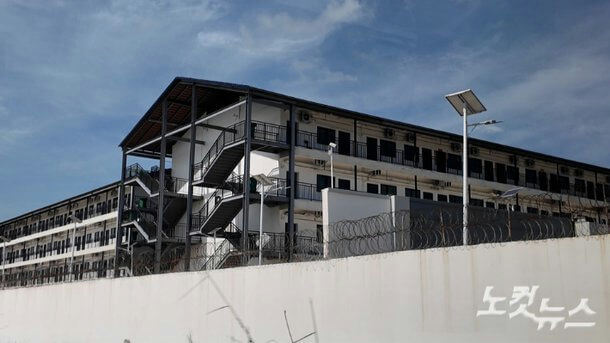
But according to recent investigations by the U.S. and U.K., the conglomerate’s empire was allegedly built on crime. Sanctions from both governments accused the Prince Group of running at least ten online scam compounds, including the now-notorious Taiza site, where kidnapped victims were reportedly forced into online fraud operations.
Locals describe the group’s meteoric rise as inseparable from its close ties to former Prime Minister Hun Sen, whose family has dominated Cambodian politics for decades. Chen Zhi, who received Cambodian citizenship and the prestigious Oknha title, is said to have leveraged political favor to expand his influence unchecked.
“People here used to see Prince Group as an honest corporation,” said one long-term Korean resident. “Now, everyone’s realizing how deep the corruption runs and the government can’t ignore it anymore.”
Inside the Compounds: “No Interest, No Collateral Women’s Services Available”
Reporters visiting the site this week discovered Chinese-language posters advertising “no-interest loans” and “female escort services” likely remnants from its casino operations. Locals confirmed that before police raids months earlier, the compound had hosted hundreds of foreign workers, many of whom were reportedly trafficked or held against their will.
A man identifying himself as a police guard said around 20 officers now monitor the site full-time since most Chinese occupants were arrested or fled earlier this year.
Economic Fallout: Bank Run at Prince Bank
The scandal’s financial ripples are now spreading fast. In Sihanoukville, a coastal hub once thriving on Chinese investment, reporters witnessed mass withdrawals from Prince Bank, one of the group’s flagship financial institutions.

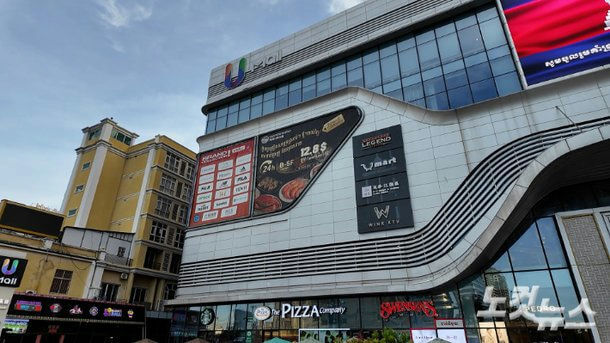
Storefronts and hotels tied to Prince Group including the recently rebranded “U Mall,” formerly “Prince Mall” were nearly empty, a stark contrast to the usual crowds of Chinese tourists and investors.
“Chinese business owners are leaving in droves,” another resident said. “People are afraid. They’re withdrawing cash and disappearing overnight.”
A Crisis of Trust in Cambodia’s Economic Giant
The fall of Prince Group marks one of the largest corporate scandals in modern Cambodian history a case exposing how criminal networks and political patronage intertwined under the guise of economic growth.

With international sanctions intensifying and a domestic bank run underway, questions mount over whether the Cambodian government will move decisively or continue to protect one of its most powerful and controversial corporate allies.
For now, the once-glittering Prince empire is unraveling, leaving behind empty malls, abandoned compounds, and a trail of victims that may redefine Cambodia’s relationship with foreign capital.
Sources: 네이트 뉴스
You must be logged in to post a comment.