
W Korea is facing intense scrutiny as fresh reports expose major inconsistencies in its “Love Your W” breast cancer awareness campaign — including inflated donation figures, opaque accounting practices, and a potential conflict of interest involving its editor-in-chief.
The “₩1.1 Billion Donation” Claim That Wasn’t
According to data released by Democratic Party lawmaker Lee Soo-jin, obtained from the Ministry of Health and Welfare, W Korea donated a total of ₩315.69 million KRW (approx. $230,000 USD) to the Korea Breast Cancer Foundation between 2007 and 2025.

This figure is less than one-third of the ₩1.1 billion KRW that W Korea has publicly claimed to have contributed over the past 20 years.
The discrepancy is particularly glaring in 2016: a press release by Doosan Magazine the publisher of W Korea announced that ₩50 million KRW from its charity gala had been donated. However, the official records from the foundation confirmed that the actual amount was only ₩5 million KRW, ten times lower than stated.

“Even the chairman didn’t know the real amount,” one source told Dispatch, referring to former Doosan Group chairman Park Yong-man, who was listed as a participant in the 2016 event.
Between 2017 and 2023, there were also no recorded donations at all, despite the “Love Your W” event being held annually and heavily promoted through social media and celebrity partnerships.
Lavish Charity or Marketing Spectacle?
Investigations revealed that W Korea charged up to ₩30 million KRW from high-end fashion brands and ₩5 million KRW from jewelry sponsors for participation. In return, the magazine featured celebrities wearing these brands’ items on its photo walls, livestreams, and promotional reels.
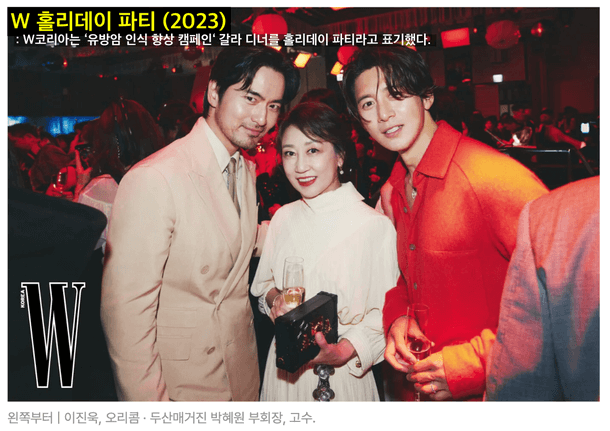
Celebrities reportedly attended without payment, while the brand partnerships were leveraged for content and commercial gain under the label of a “breast cancer awareness campaign.”
One breast cancer survivor told Dispatch: “What kind of patient drinks Moët & Chandon or uses Dyson hair dryers? It hurts to see my illness turned into a marketing tool.”
Critics argue that the campaign has lost sight of its original purpose — awareness and compassion replacing it with commercial glitz and influencer-style branding.
Conflict of Interest Allegations
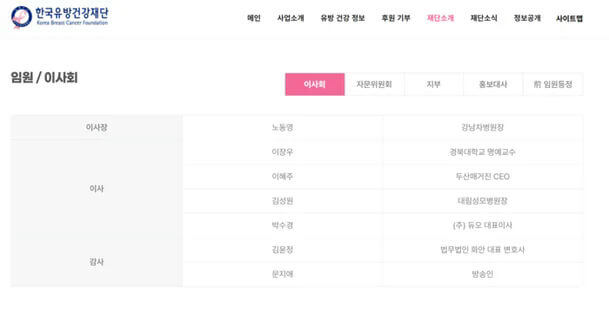
Further deepening the controversy is the revelation that Lee Hye-joo, W Korea’s editor-in-chief and CEO of Doosan Magazine, also holds a board position at the Korea Breast Cancer Foundation, the very organization that receives the campaign’s donations.

This overlap has triggered widespread concern over conflicts of interest, transparency, and ethical governance.
“It’s structurally problematic,” said one nonprofit governance expert quoted by Sports Seoul. “If the person managing the fundraising also oversees the receiving organization, transparency becomes nearly impossible.”
The situation has amplified public skepticism about how the event’s revenue, sponsorships, and donations have been allocated and why those details have never been made public.
Hidden Videos, Silent Years
Adding to suspicion, W Korea has since privatized its 2016 “Love Your W” event video on its website and social channels.
In multiple years including 2008, 2009, and 2017–2023 the campaign continued with extravagant parties but recorded zero donations, raising questions about where the sponsorship profits went.
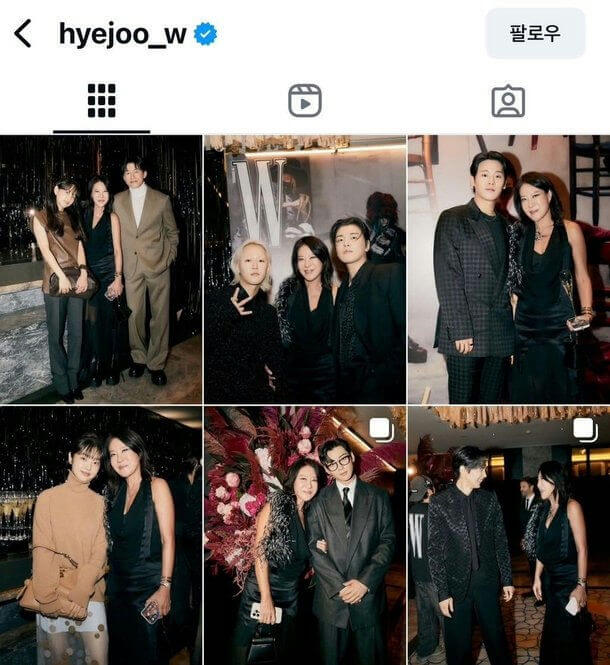
The gala’s exclusive guest rules and manager prohibitions have also drawn backlash from the industry, as artists were allegedly left unaccompanied and pushed into unapproved interviews and viral “challenges” during the 2025 event.
Public and Political Pressure Mounts
With evidence mounting, lawmakers and the public are demanding a full audit of the Love Your W campaign including donation records, sponsorship deals, and expenditure details.
Rep. Lee Soo-jin emphasized: “W Korea must clearly disclose where the donations went and why the amounts were exaggerated. Transparency is the least they owe to the public.”

Despite the growing outcry, W Korea and Doosan Magazine have yet to issue an official statement.
What began as a campaign to “raise awareness and spread love” has now become one of Korea’s most high-profile cases of alleged charity mismanagement and a cautionary tale of what happens when philanthropy meets profit and power.
Sources: Dispatch,Sports Seoul,Ministry of Health and Welfare (Korea)
You must be logged in to post a comment.