

Recently, a post on X (formerly Twitter) quickly went viral after sharing screenshots of seating charts from aespa’s several upcoming U.S. concerts. According to the images, many sections across multiple venues still appeared to have a large number of unsold seats shortly after ticket sales opened.
The situation immediately sparked heated debate among K-pop fans and online communities. Some netizens argued that the issue reflects the increasingly difficult reality for Korean artists touring in the United States. Following the explosive post-pandemic concert boom, many believe the international touring market is now becoming oversaturated, especially as more K-pop groups continue launching large-scale global tours simultaneously.
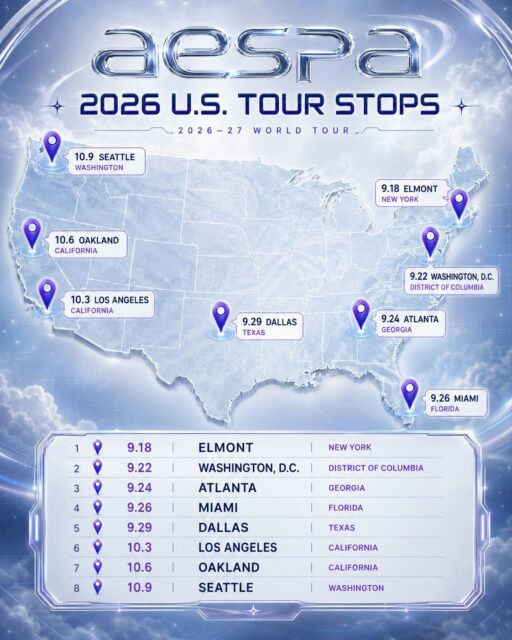
Several internet users pointed out that while aespa enjoys massive popularity across Asia and recently attracted attention after members attended the Met Gala, social media buzz does not always guarantee strong ticket sales in the American market. According to some opinions, online virality and actual consumer purchasing power are often very different things.
However, many fans quickly defended the group and criticized the negative reactions surrounding the ticket sales discussion. Supporters argued that judging a tour’s success immediately after the first sales period is unfair and premature. Some fans also explained that many concertgoers typically wait until closer to the event dates before purchasing tickets, especially amid rising ticket prices and ongoing economic uncertainty.
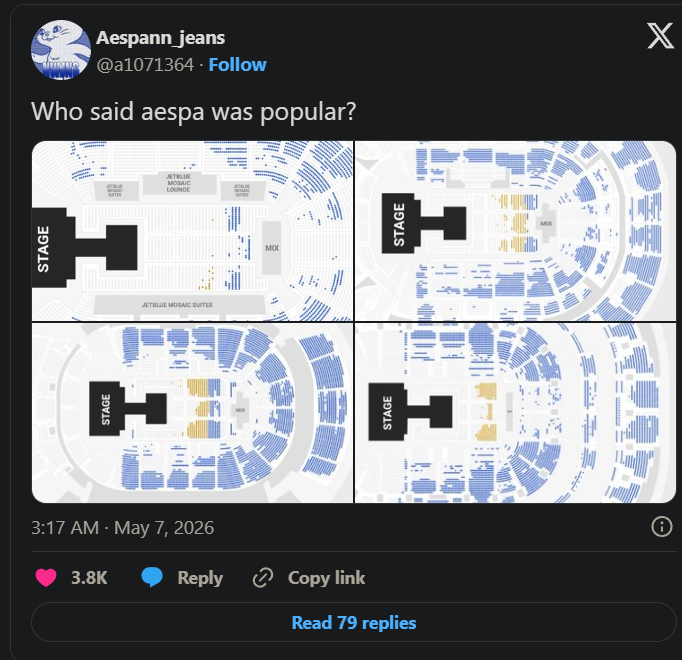
Despite those defenses, the conversation continued growing after additional claims suggested that several concert dates still had substantial ticket availability even after general sales officially began. As a result, the discussion has gradually expanded beyond aespa alone and evolved into a broader conversation about the current state of the K-pop touring industry.
Industry observers noted that failing to sell out venues instantly does not necessarily indicate failure. Many international tours often experience significant sales increases during the weeks leading up to performances. With aespa maintaining strong global brand recognition and a dedicated international fanbase, many still expect the group to successfully deliver energetic and high-attendance shows throughout the tour.

The debate also highlights changing trends within the global concert business. As more K-pop artists compete for the same markets, fans are becoming increasingly selective about which tours they attend, particularly as travel expenses, VIP packages and ticket prices continue climbing worldwide.
For now, neither SM Entertainment nor aespa has publicly addressed the online discussions regarding ticket sales.
You must be logged in to post a comment.