
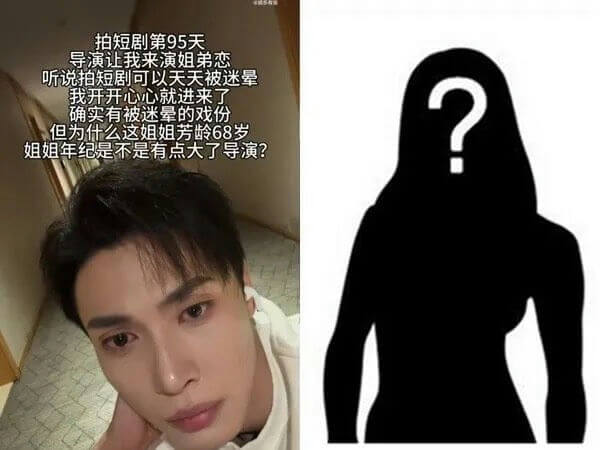
Chinese actor Zheng Kai, 38, has stirred up social media after revealing his shock over being cast in a romantic short film with a 68-year-old actress. The unexpected pairing, described as a “noona romance,” has ignited a wave of criticism and satire online, highlighting growing concerns about the short film industry in China.
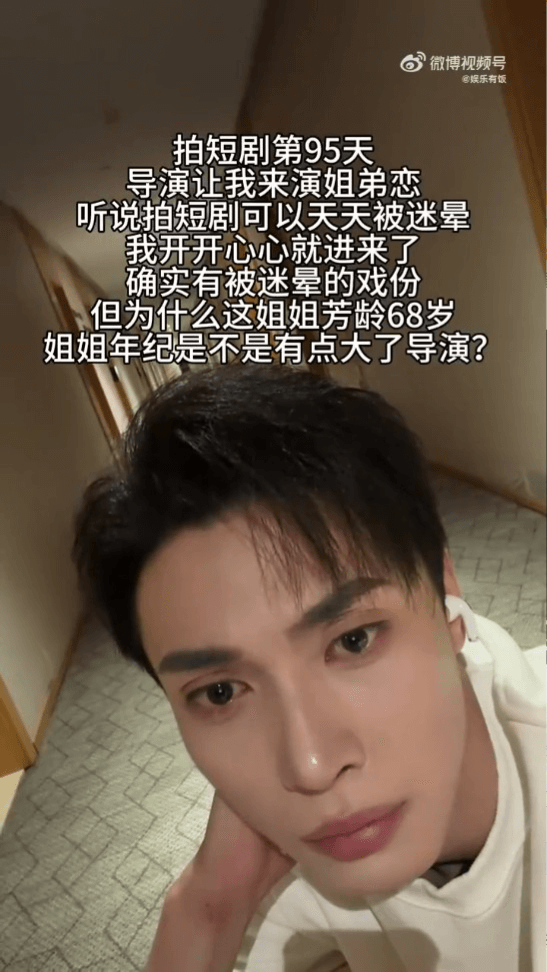
On November 25, Zheng Kai shared his experience on social media, stating that he didn’t know whether to laugh or cry. He accepted the role after the director presented a script about a middle-aged woman falling in love with a CEO. Expecting a classic romantic plot between a domineering, successful executive and a beautiful woman, Zheng was blindsided when he arrived on set to find his co-star was a seasoned 68-year-old actress.

The topic quickly trended on Weibo, entering the platform’s top 10 searches. Many users humorously compared the situation to the infamous scene in Xi Men Wu Hen, where actor Vincent Chiao portrayed a man in love with an older actress playing a young maiden. Comments like “Only Vincent Chiao can understand this” spread online. Some netizens criticized the production team, accusing them of sacrificing artistic integrity for views and insulting viewers’ aesthetic standards.
However, others defended the casting as a rare opportunity for older actresses, who are often sidelined in mainstream media. Some also criticized Zheng Kai for being arrogant, stating, “If the money’s not worth it, just turn down the role. Don’t act like you’re above it.”
This odd casting reflects a broader issue plaguing China’s booming short film industry. According to Sohu, short films are being mass-produced with absurd plots, overuse of beauty filters, and abrupt scene transitions all to boost online engagement. A recent report by 163 noted thousands of repetitive tropes: over 5,000 drugged CEOs, 3,000 female leads mistakenly entering hotel rooms, and 2,000 long-lost heiresses being reunited.
Short films typically ranging from 1 to 40 minutes are favored for their low cost and quick production timelines. They’re a go-to format for student filmmakers and independent creators. However, their ease of access and viral potential have led to an oversaturation of low-quality content, often dubbed “instant noodles” of the film world.

This flood of shallow storytelling has raised concerns, especially about its influence on young viewers. In response, the Chinese government began tightening regulations in early 2025, requiring short films to obtain broadcast licenses and adhere to stricter content guidelines. In a February campaign, the National Radio and Television Administration removed over 25,300 short dramas totaling nearly 1.4 million episodes for non-compliance.
Sources: ETtoday
You must be logged in to post a comment.