
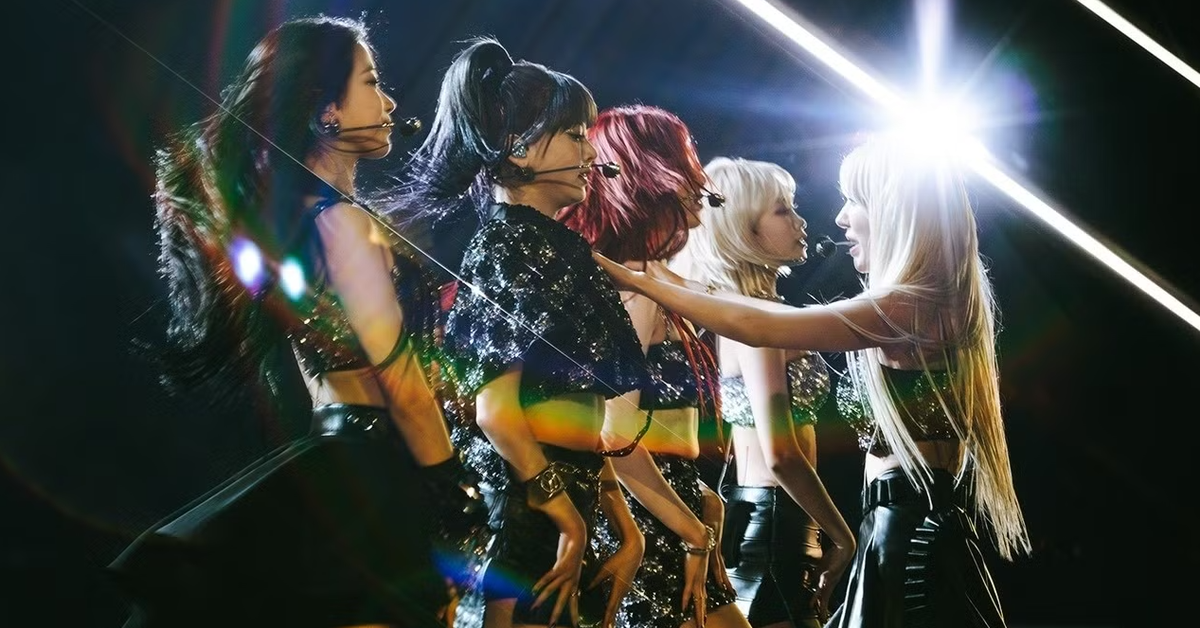
The idea of a “live” performance has long been associated with raw vocals and authentic artistry. However, in today’s music industry especially in high-energy genres like K-pop the reality is far more complex.
Backing Tracks is Lip-syncing?
In modern concerts, backing track has become a standard practice. This means a pre-recorded studio version plays in the background while the artist sings on top with a partially open microphone, creating a blended sound.
According to industry professionals, this is not considered lip-syncing. As one performance expert explained, lip-syncing only occurs when the microphone is completely off and the artist merely mouths the lyrics.

This distinction is widely supported. Music experts point out that singing and executing intense choreography simultaneously makes it extremely difficult to maintain pitch and stability. Backing tracks help ensure consistent quality throughout the performance.
Still, critics argue that when the backing track overpowers the live vocals, the line between “live” and “lip-sync” becomes blurred.
The Growing Use of AR and MR Tracks
Two key terms dominate this discussion:
- AR (All Recorded): Fully pre-recorded vocals + music, often used for lip-syncing
- MR (Music Removed): Instrumental track without vocals, used for true live singing
In reality, many performances use a hybrid approach. Artists often pre-record “live-like” versions in the studio sometimes even adding intentional imperfections to sound authentic. These tracks are then layered with actual live vocals during the show.

This technique has become increasingly sophisticated, making it difficult for audiences to distinguish between real and pre-recorded elements.
So… How Much Is Actually Live?
Industry insiders suggest that in many K-pop performances, idols may sing only 10–20% live, especially in:
- Pre-recorded music shows
- Press showcases
- Large-scale world tours with heavy choreography
Music critic Kim Do Heon noted that lip-syncing has existed throughout pop history and remains common even among global superstars. High-profile performances like the Super Bowl halftime show rarely feature 100% live vocals due to technical and performance constraints.
Similarly, critic Lim Hee Yun emphasized that what audiences perceive as “live” is often a carefully mixed combination of real vocals and pre-recorded tracks—far removed from traditional live singing.
Controversies and Audience Expectations
Cases like Mayday facing backlash over lip-sync allegations, or LE SSERAFIM being criticized for increased AR usage at Coachella Valley Music and Arts Festival, highlight how sensitive this issue remains.

While some fans accept backing tracks as part of modern performance, others see it as a lack of authenticity especially given the high cost of concert tickets.
One industry voice summarized the debate clearly:
“What matters most is whether the audience feels respected.”
The Blurred Line of “Live”
As technology advances, the definition of “live performance” continues to evolve. Today, it is less about whether artists sing entirely live, and more about how convincingly they deliver the experience.
In the end, the question is no longer “Is it live?” but rather, “Does it feel live?”
Sources: The Cover
You must be logged in to post a comment.