

CORTIS is once again at the center of heated online debate after the rookie boy group achieved massive album sales — only to face growing accusations of “inflated” numbers and excessive bulk buying practices.
The controversy erupted shortly after CORTIS released their second mini album GREENGREEN alongside title track “REDRED.” According to first-week sales data published on May 10, the group sold approximately 2.313 million copies during its debut week, instantly placing them among the highest-selling fifth-generation K-pop groups so far.
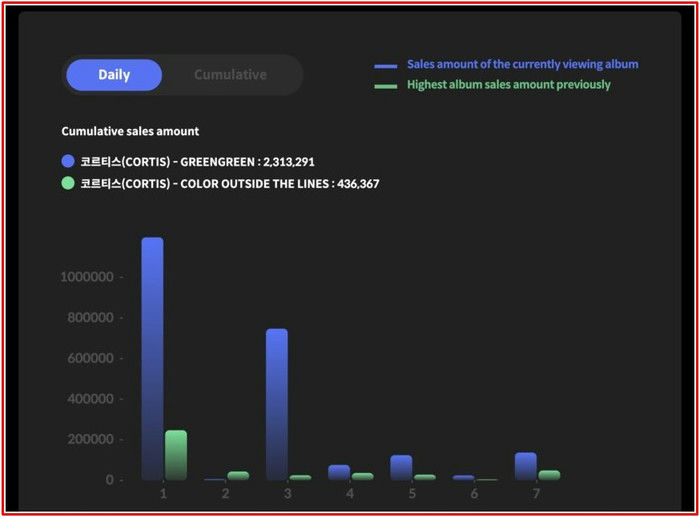
While the achievement initially appeared to confirm CORTIS as HYBE’s next “monster rookie,” the staggering sales numbers quickly triggered skepticism across Korean and international online communities.
On several popular Korean forums, viral discussion posts questioned whether the group’s real-world popularity truly matched its album sales performance. Some netizens pointed out that certain offline events — including reservations for the group’s pop-up stores — reportedly did not sell out as quickly as expected compared to other groups with similarly massive fandoms.
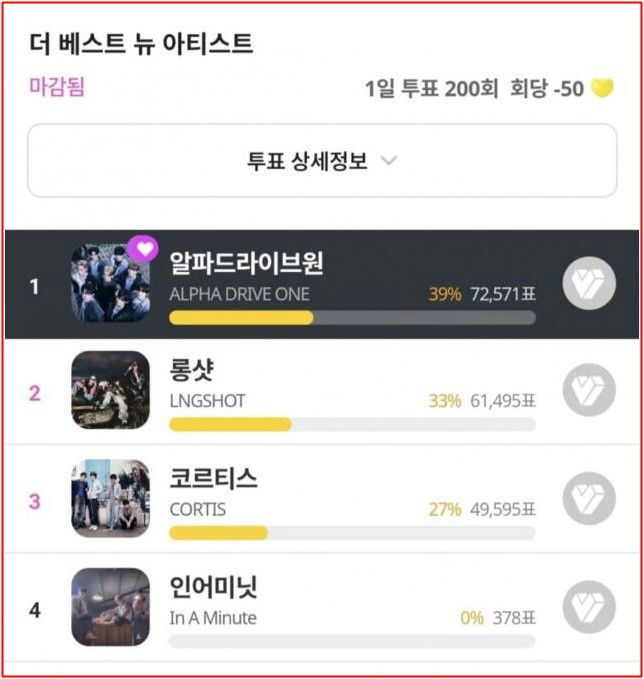
Others additionally noted that CORTIS had recently lost online fan voting competitions against groups with significantly lower physical sales, leading some viewers to question how the group managed to surpass 2 million albums sold so rapidly.
The debate intensified even further after a video began circulating on X allegedly showing large quantities of CORTIS albums stacked near trash disposal areas before being transported away.
The footage immediately reignited conversations surrounding K-pop’s long-running “bulk buying” culture, where fans or distributors purchase enormous quantities of albums primarily to gain access to fan sign events, collectible photocards or chart achievements rather than actual music consumption.
Many critics argued that such practices create misleading sales statistics while contributing to major physical waste.
Some online commenters even referenced past controversies involving alleged “sajaegi” accusations — a Korean term referring to chart or sales manipulation. Although no official evidence of illegal activity involving CORTIS has been presented, the group’s explosive growth has nevertheless caused some netizens to become suspicious.

Comments spreading online included reactions such as:
- “If the fandom was truly large enough to sell over 2 million copies, the public wouldn’t be this shocked.”
- “Seeing albums piled next to trash bags feels disturbing.”
- “Because the company already faced sales-related controversies before, people naturally become suspicious.”
However, many fans strongly pushed back against the accusations and defended CORTIS.
Supporters argued that the group’s online popularity is clearly visible through rapidly growing engagement on YouTube, TikTok and other social platforms. Fans also pointed to the large number of reaction videos, streaming metrics and global fan discussions as proof that the group genuinely possesses enormous momentum among younger international audiences.

Others argued that bulk buying is already deeply embedded within K-pop fandom culture and should not be used exclusively to target CORTIS when many top-selling artists benefit from similar fan-driven purchasing systems.
The controversy has once again highlighted the growing debate surrounding K-pop’s obsession with numbers and record-breaking statistics. As album sales across the industry continue reaching historically unprecedented levels, many viewers are becoming increasingly skeptical about whether physical sales alone still accurately reflect genuine mainstream popularity.
Despite the criticism, CORTIS continues maintaining strong momentum globally. The group recently became one of the fastest-rising rookie acts under HYBE, with “REDRED” performing strongly on streaming platforms and international charts.
For now, neither HYBE nor CORTIS has publicly addressed the online accusations.
You must be logged in to post a comment.