
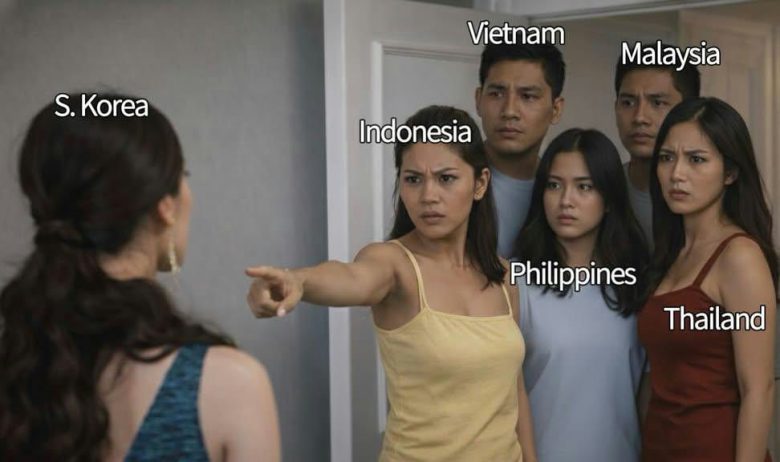
Rising Boycott Campaigns Targeting South Korea
South Korea is reassessing the resilience of its regional soft power following online calls to “boycott Korea” that have circulated across Southeast Asia. According to a senior official at the Ministry of Foreign Affairs, the government is carefully tracking the situation amid concerns that negative sentiment could spread beyond social media.
As reported by The Korea Times, the official in charge of ASEAN affairs confirmed that authorities have been monitoring signs of anti-Korean sentiment, particularly the online hashtag “SEAblings,” which gained traction after a recent K-pop concert in Malaysia.
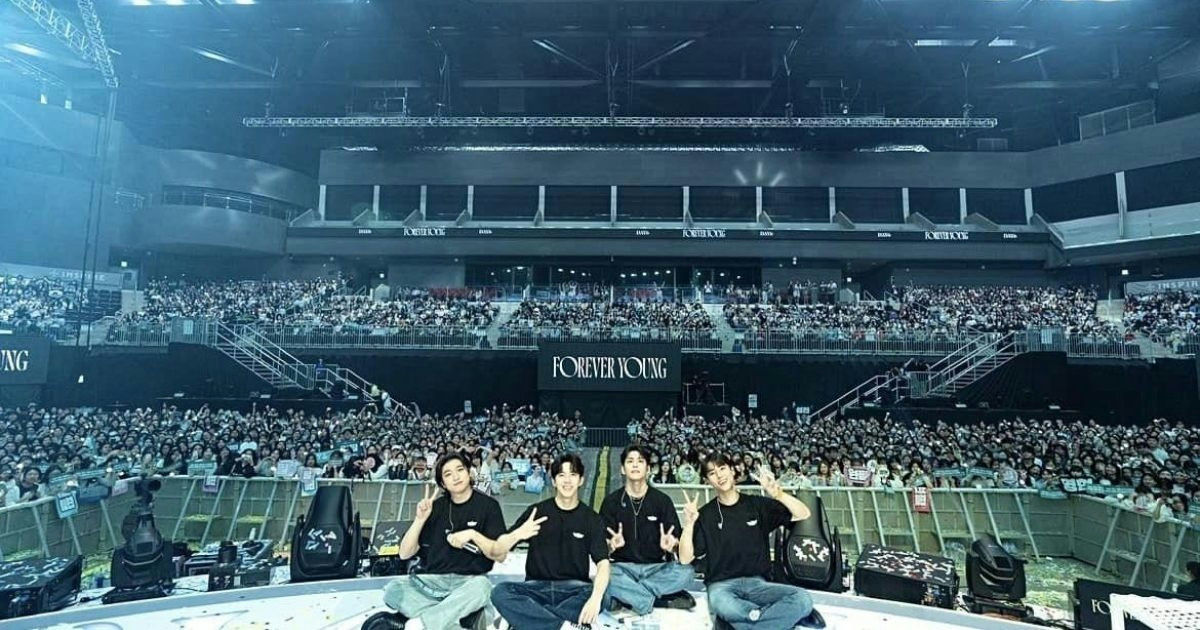
The controversy reportedly began after a January 31 concert by South Korean band DAY6 in Kuala Lumpur. Korean fan site photographers were accused of bringing high-resolution cameras despite strict venue rules prohibiting such equipment. Local fans shared videos and screenshots criticizing the photographers for allegedly disregarding local regulations and obstructing views.
Initially framed as a matter of concert etiquette, the dispute quickly escalated into heated online exchanges. Some Korean netizens reportedly mocked Southeast Asians and their countries, prompting backlash. In response, Southeast Asian users amplified the comments using the hashtag “SEAblings” a term symbolizing regional solidarity while some called for boycotts of Korean products and cultural content.
A Foreign Ministry official stated on February 26 that although signs indicate the movement may be “cooling down,” Seoul still considers the issue serious. Authorities have intensified monitoring of online discourse in Malay, Indonesian, and other Southeast Asian languages to gauge the spread of anti-Korean sentiment.

While the backlash did not expand significantly beyond its initial surge, officials noted how quickly frustrations can ignite when a specific incident intersects with preexisting grievances. “As Korean culture becomes more prominent globally, we cannot completely rule out the possibility of backlash,” the official emphasized.
Similar online disputes have surfaced in recent years, including tensions related to immigration issues, airport conflicts, and social media arguments involving citizens of Thailand, the Philippines, and Malaysia. Observers say these trends highlight the need for systematic risk management in ASEAN relations, rather than relying solely on short-term crisis responses.
Officials stressed that ASEAN remains one of South Korea’s top three trading partners, underscoring the importance of sustaining long-term goodwill. Initiatives such as the ASEAN–Korea ROUND music festival and youth sports exchange programs are being cited as examples of efforts to strengthen mutual understanding and prevent temporary online disputes from overshadowing broader bilateral ties.
Deeper Frustrations Beneath the Surface
Some Southeast Asians living in South Korea argue that the recent backlash reflects more than just a single concert dispute. A Filipino resident, speaking anonymously, suggested that online anger may also stem from accumulated experiences of discrimination.
According to this perspective, certain Koreans hold implicit biases toward Southeast Asians, particularly migrant workers, in a society that places strong emphasis on hierarchy and economic status. The resident described this as a form of “economic-driven racism,” claiming that Southeast Asians are sometimes perceived as occupying a lower social tier.

She believes the concert controversy acted as a catalyst that brought these deeper frustrations to the surface. Many Southeast Asian fans feel a strong sense of ownership in the global success of K-pop, having supported the genre passionately and produced foreign-language content long before it achieved mainstream international recognition. Yet some feel that their contributions are not always met with equal respect.
However, not all Southeast Asian voices view the boycott calls as significant. A Vietnamese resident described the incident as a “simple matter,” saying there is no evidence of any organized anti-Korean movement within the Vietnamese community either in South Korea or at home.
Despite differing opinions, South Korean authorities are not taking the situation lightly. Beyond the Foreign Ministry, public diplomacy organizations such as the Korea Foundation are also closely monitoring public sentiment.

An official from the foundation acknowledged that as South Korea’s global reputation grows, so too do critical perspectives. “As a public diplomacy organization, we will continue developing programs that consider each country’s unique view of Korea, in order to strengthen positive perceptions of our nation,” the official said.
As South Korea continues expanding its cultural influence worldwide, the episode serves as a reminder that soft power, while powerful, remains sensitive to public perception and cross-cultural tensions.
Sources: The Korea Times
You must be logged in to post a comment.