
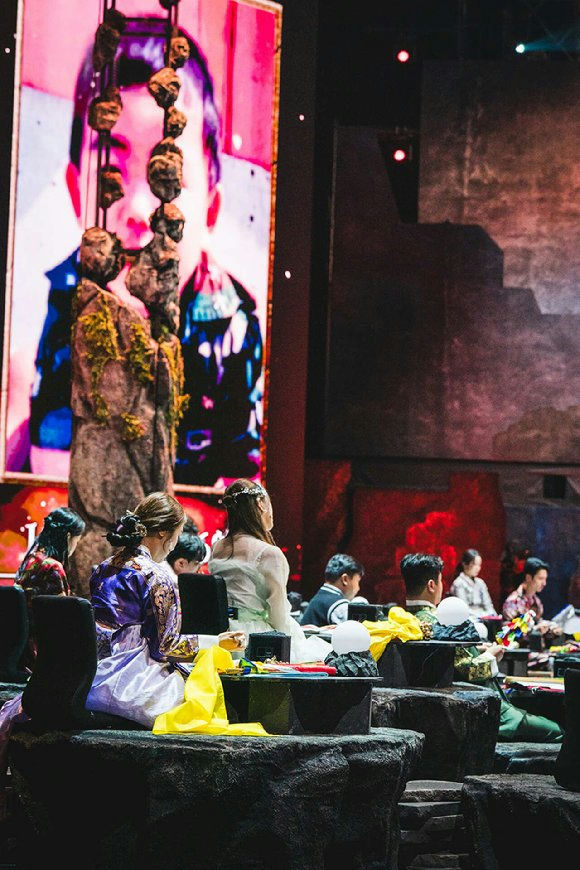
Battle of Fates, which premiered on Disney+, features 49 fortune-tellers—including shamans, saju (Four Pillars) experts, tarot readers, and physiognomists—who compete in missions by analyzing the birth data of deceased individuals and speculating about the circumstances of their deaths. In Episode 2, the show introduced the case of Kim Cheol Hong, a firefighter who died in the 2001 Hongje-dong arson fire in Seodaemun-gu, Seoul. Contestants were given only his photo, birth date and time, and the date of his death, and were asked to infer how he passed away.
During the broadcast, some participants suggested that his fate was “connected to fire,” while others speculated about possibilities such as structural collapse or being crushed. In reality, Kim Cheol Hong died after being trapped under debris when a building collapsed during the firefighting operation.
After the episode aired, a person identifying themselves as the firefighter’s nephew took to social media, questioning whether the family had genuinely agreed to such content. The relative claimed that the family had been told the show would be produced in the spirit of honoring heroes and fallen martyrs, similar to a documentary. According to the post, the deceased’s sister had consented under that understanding—but was allegedly unaware that the format would involve shamans guessing the cause of death on air.
“I don’t understand how this was meant to honor his noble sacrifice,” the nephew wrote. He expressed anger over what he described as entertainers reacting with surprise and amusement while fortune-tellers speculated about the details of his uncle’s death. “Even 25 years later, our family still tears up when we talk about him. I cannot understand why his sacrifice is being treated this way,” he added.
The controversy quickly escalated online, with viewers debating whether the program crossed ethical lines by turning a real-life tragedy into a competitive guessing mission. Critics argued that framing a fallen firefighter’s death as part of a supernatural deduction challenge risked trivializing his sacrifice.
In response to the growing backlash, a representative from Disney+ stated on February 18 that all episodes had obtained “basic consent.”
The production team of Battle of Fates issued a formal apology following controversy over using a fallen firefighter’s death as material for a fortune-telling mission.
On February 21, the producers released an official statement explaining their intent. They said that because the program introduces various stories of life and death as part of its concept, they hoped to use meaningful and noble stories as an opportunity for reflection. The team stated that prior to filming, they had informed the bereaved family that the show is a survival-format program featuring fortune tellers and that it would examine the deceased’s fate through saju (traditional fortune reading). They added that they had received written consent from a family member.
However, the producers acknowledged that they later learned some relatives and acquaintances of the deceased had only been informed about the consent process after the episode aired. “We sincerely apologize to the bereaved family members and fellow firefighters who were hurt,” the statement read.

Since its release on February 11, Battle of Fates has drawn attention for its unconventional format combining survival competition with mysticism. Yet the Kim Cheol Hong episode has overshadowed its launch, raising broader questions about ethical boundaries in entertainment—especially when dealing with real-life heroes and grieving families.
As public scrutiny intensifies, many are waiting to see whether the production team will provide a clearer explanation—or take further action—in response to the bereaved family’s concerns.
Sources: Nate, Daum
You must be logged in to post a comment.