
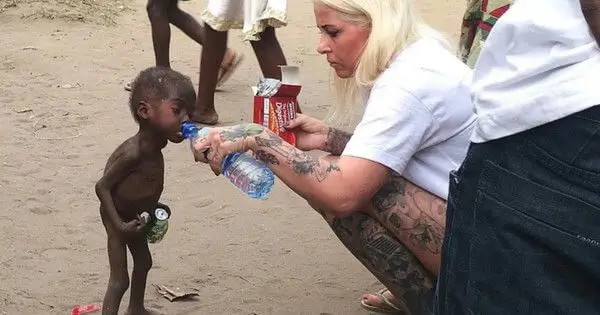
In 2016, a photograph of a frail two-year-old boy drinking water from the hands of social activist Anja Ringgren Loven shocked the world. The boy, clutching a worn-out doll, stared with tired eyes into the void. He was named Hope – a symbol of life amidst despair.
Hope’s life began under tragic circumstances. His parents and local villagers believed the toddler was possessed by evil spirits, a superstition that forced him onto the streets to survive on scraps of food. When volunteers from the organization Land of Hope found him, he weighed only 3.2 kg, as light as a newborn.
Anja Ringgren Loven, founder of Land of Hope, recalled: “When I saw him, I thought he would die in my arms. I couldn’t understand how he survived, but he did.”
Hope spent three months in the hospital recovering from severe malnutrition. During this time, the viral photo capturing his rescue drew global attention, inspiring millions. Once healed, Hope was welcomed into the Land of Hope center, joining over 80 other children abandoned due to superstition.
Now 11 years old, Hope is hearing-impaired, communicating through writing and sign language. He has earned the nickname “Little Picasso” thanks to his extraordinary artistic talent and passion for drawing. In late July, he graduated from elementary school with top scores, celebrated by teachers and peers alike.
Anja shared: “Hope is not only intelligent but also a talented artist, a skilled dancer, kind, and humorous. Today, he is strong, independent, and surrounded by friends. I am so proud that he is living fully up to his name, Hope.”
The organization Land of Hope works tirelessly to combat harmful beliefs about witchcraft, which have led to thousands of children in Nigeria being abandoned, tortured, or killed. By educating rural communities, the group teaches that poverty and ignorance, not supernatural forces, are the true culprits behind such tragedies.

Unfortunately, not all children accused of witchcraft are as fortunate as Hope. According to the Daily Mail, in 2024, over 2,180 children were identified as potential victims of superstition-related abuse, marking nearly a 50% increase since 2017. Children most at risk include twins, those with disabilities, or children with developmental disorders such as autism or epilepsy.
Professor Charlotte Baker of Lancaster University emphasized: “Faith-based abuse can cause profound physical and psychological harm.”
Leethan Bartholemow, a member of the International Network Against Witchcraft Accusations, added: “This issue is far more serious than many realize. More action is needed to protect these vulnerable children.”
From a starving toddler abandoned on the roadside to a thriving, talented young boy, Hope is living proof that human kindness can overcome superstition. Yet, countless other children remain in peril, waiting for a helping hand and a chance to live.
Sources: K14
You must be logged in to post a comment.