

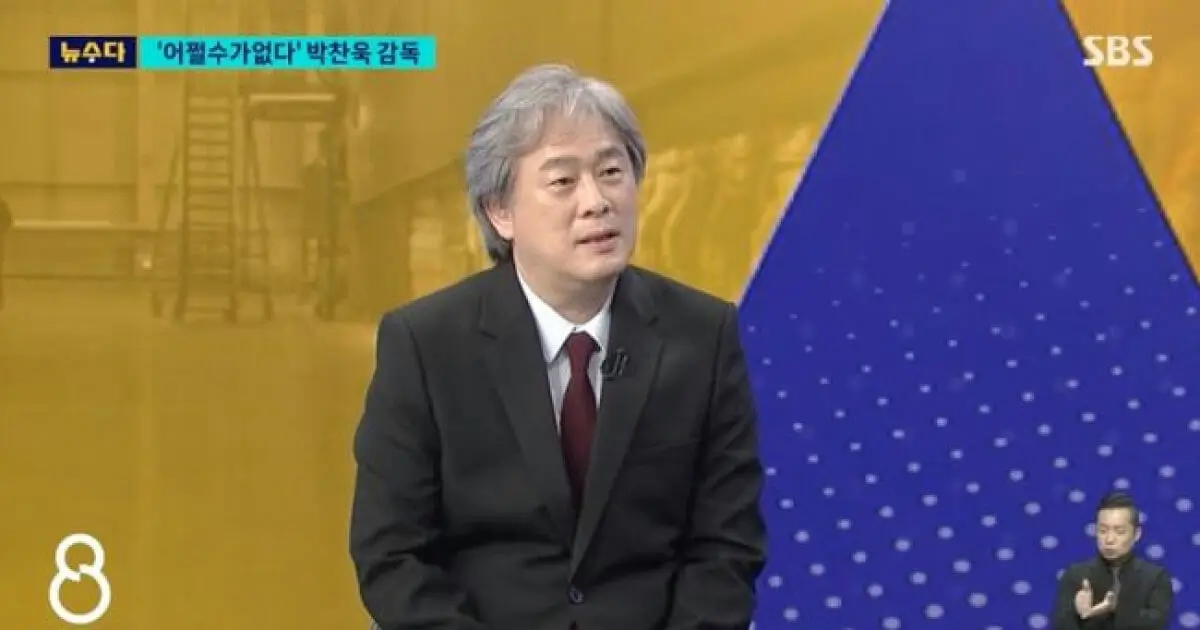
In a September 21 interview on SBS’s 8 O’Clock News, Park Chan-wook discussed his latest film No Other Choice, which premiered in competition at the 82nd Venice International Film Festival. Although the film received rave reviews from critics and was considered a strong contender, it ultimately did not win an award.
“I did have expectations,” Park admitted. “When you see the critics’ reviews and rankings placing you at the top, it would be a lie to say I wasn’t hopeful.” Despite the loss, he emphasized that the audience’s response itself felt like winning a prize. “It was extraordinary. For the first time with one of my films, everyone seemed to enjoy it without division, with laughter and applause throughout. I could hardly believe it.”
No Other Choice tells the story of Mansoo (Lee Byung-hun), a man who seemed to have it all until he is suddenly laid off. Determined to protect his wife, children, and hard-earned home, he embarks on his own battle for survival and reemployment. Park explained that he wanted to portray the house as a central “character,” highlighting its symbolic role in the narrative.
On the film’s title, he revealed that the original novel was called The Ax, a metaphor for job termination. “But keeping that title might have caused people to associate it with my violent past works or think of it literally as a weapon. I wanted something that conveyed the inevitability of the situation instead,” he explained.
Park shared that he had been working on the adaptation for over a decade. “From the moment I read the novel, I knew I wanted to make it into a film. Its power didn’t fade over time, and I believed it would always resonate,” he said.

With the film set for domestic release on September 24, it has already risen to the top of advance booking charts. Still, Park acknowledged the pressure: “Korean theaters lost many audiences after the pandemic, and people haven’t returned in full. There’s a sense of responsibility that my film might help bring them back. I hope it persuades them to return to cinemas.”
Addressing concerns about the so-called “crisis of Korean cinema,” Park was frank: “It’s a vicious cycle. We can’t keep asking audiences to come if movies aren’t entertaining. The solution lies with us—filmmakers must create fresher, richer works to overcome this.”
Looking ahead, Park teased his next project: “I’ve been working on a Western I’d like to make in the U.S. for years. Seeing No Other Choice finally completed encouraged me not to give up. I still want to give it a try.”
Sources: Daum
You must be logged in to post a comment.