
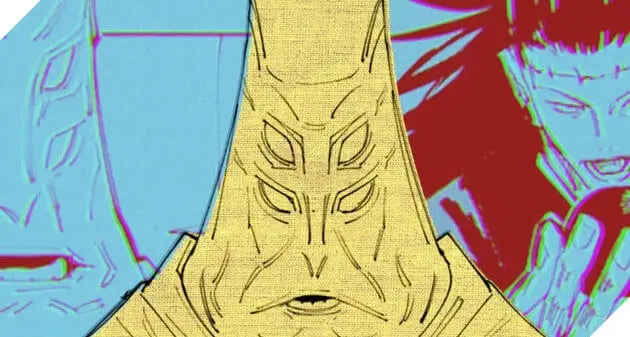
A shocking fan theory has been making waves in the Jujutsu Kaisen community: Tengen might not be human at all, but the first alien in the series . According to the theory, he could be a member of the mysterious Simurian race , stranded on Earth and laying the foundation for modern jujutsu.
This bold speculation has drawn comparisons to Naruto , where the origins of ninjutsu were tied to the extraterrestrial Otsutsuki clan. Could Jujutsu Kaisen be hiding a similar cosmic twist?


The roots of this theory come from Jujutsu Kaisen: Modulo , where a Simurian member notes that sorcerers in Japan have powers similar to theirs. This raises the possibility that Tengen himself could have been the first Simurian to arrive on Earth , passing down his techniques to shape the jujutsu system.
Tengen is often referred to as Hoshi (“star” in Japanese). Both his followers and fellow sorcerers call him by this celestial title. Fans speculate this could be a deliberate hint that Tengen’s origins lie beyond Earth , making him a cosmic being rather than a mere sorcerer.
Tengen’s cursed immortality technique requires him to merge with a Star Plasma Vessel every 500 years. Without it, he loses his humanity and evolves into a dangerous, inhuman entity. Some fans suggest this biological process doesn’t align with human physiology at all—hinting that Tengen’s body is alien in nature.
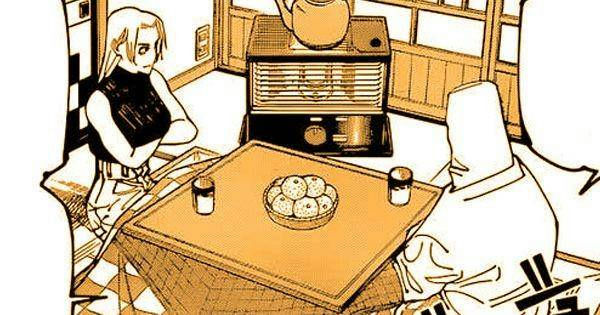

Although curses are tied to negative human emotions, the structured culture of jujutsu exists only in Japan. Why? The theory suggests that Tengen—possibly a Simurian— introduced jujutsu specifically in Japan , replicating elements of his own civilization. This mirrors the way the Otsutsuki introduced chakra in Naruto .
Of course, this is still just a fan theory. But the parallels to Naruto , the alien-like conditions of Tengen’s body, and the suspicious “Star” symbolism make this speculation hard to ignore. Could Jujutsu Kaisen really take a cosmic turn and reveal that its foundation lies in an alien being? Fans will be watching closely for future revelations in Modulo .
Sources: GameK
You must be logged in to post a comment.