

Netflix original series Teach You a Lesson has taken the world by storm. Just three days after release, the drama recorded 6.4 million views and climbed to No.1 in Netflix’s global non-English TV rankings. Breaking into the Top 10 in 48 countries, the series has proven itself to be an undeniably gripping piece of entertainment, powered by fast pacing, explosive tension, and unapologetic catharsis.
Yet public reaction remains deeply divided. While many viewers praise the drama enthusiastically, others see it as a troublingly violent work. Critics have voiced sharp disapproval, with some describing the series in harsh terms and questioning whether its brutal approach crosses ethical lines.
The question now is whether overwhelming commercial success can overshadow the growing controversy surrounding the show’s themes.

In truth, Teach You a Lesson nearly collapsed before production even began. The original webtoon faced major backlash overseas due to accusations of racist and sexist content, including controversy surrounding discriminatory depictions that led to its suspension in North America. Reports also suggested that actor Kim Nam Gil had previously declined an offer to star in the adaptation more than once, fueling concerns about the project’s direction.
The drama’s eventual success is largely credited to its reworked adaptation and lead actor Kim Mu Yeol. Together, the production team reportedly stripped away many of the original’s most controversial elements, replacing them with darker but more grounded action and psychological intensity. Kim Mu Yeol’s performance as Na Hwa Jin, a relentless enforcer within the Educational Rights Protection Bureau, has been widely praised for adding weight and charisma to the story’s vigilante-style justice.
Still, removing controversial material does not erase the drama’s central ethical dilemma: the glorification of private punishment.

The series leans heavily into an “eye for an eye” philosophy. Viewers are introduced to a fictional agency that bypasses bureaucracy to confront abusive students, neglectful parents, and broken systems head-on. For many audiences, the appeal is obvious. In recent years, South Korea has faced a series of disturbing incidents involving school violence, teacher mistreatment, youth crime, and education-related scandals. Against that backdrop, Teach You a Lesson offers something reality often cannot — immediate justice.
Na Hwa Jin’s blunt philosophy in the drama — essentially teaching through words when possible and force when necessary — resonates with viewers frustrated by what they perceive as ineffective legal systems and institutional failures. The fantasy of seeing wrongdoers punished directly has turned the series into a form of emotional release for audiences exhausted by real-world headlines.
However, critics warn that the drama walks a dangerous line. Education groups in South Korea have pointed out that what teachers truly need is not a fictional hero delivering punches, but stronger legal protections against harassment and malicious complaints. For them, the drama risks oversimplifying a deeply complicated crisis.
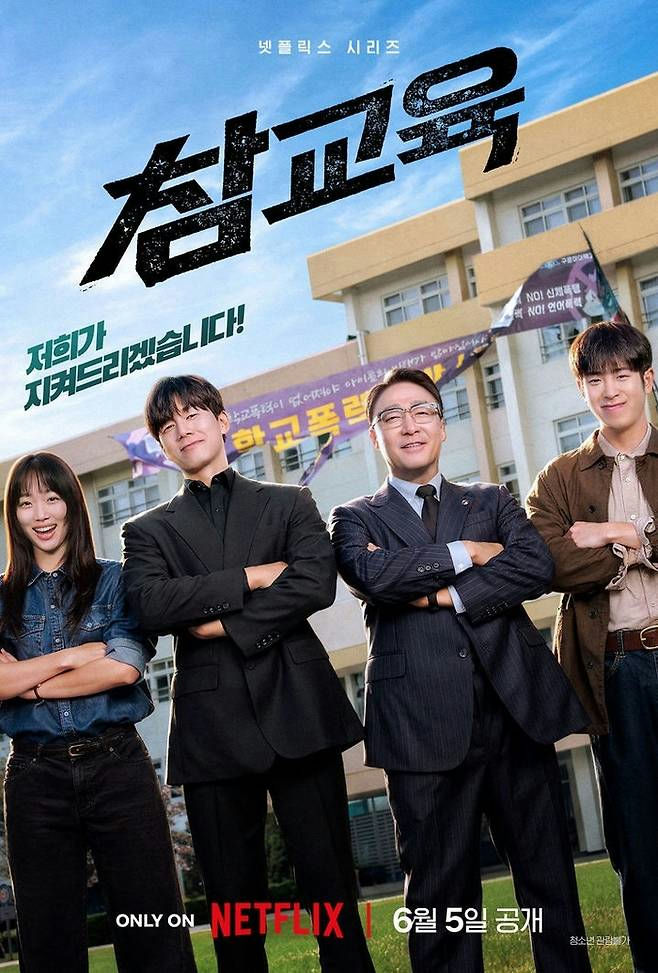
Cultural commentators have also expressed concern. Some argue that repeatedly consuming stories built on violent revenge may gradually desensitize audiences, while others stress that the situations depicted should remain clearly separated from acceptable real-life solutions. The concern is that audiences may begin celebrating punishment itself rather than demanding meaningful structural change.
That contradiction lies at the heart of Teach You a Lesson. It is undeniably entertaining, delivering powerful action and emotional catharsis that keep viewers hooked. But becoming Netflix’s No.1 show does not automatically excuse the questions surrounding its message.
As audiences cheer for justice served through fists rather than institutions, Teach You a Lesson quietly reflects something deeper: a growing public distrust in systems meant to protect people. Beneath its polished action and satisfying revenge lies an uncomfortable portrait of a society increasingly drawn to vigilante fantasies because faith in real solutions feels harder to find.
Sources: Daum
You must be logged in to post a comment.