

On March 24, Pitchfork widely regarded as one of the most demanding music review outlets published its critique of BTS’s latest album ARIRANG, assigning it a score of 5.3. The review, written by critic Joshua Minsoo Kim, quickly drew attention for its blunt tone toward one of the most anticipated comebacks in global pop.
According to the critic, ARIRANG carried immense expectations but ultimately failed to live up to them. Many tracks were described as overly generic, lacking the sharpness and intensity that once defined BTS at their peak. One of the most unusual highlights mentioned was track “No. 29,” which consists of 98 seconds of near silence an ambient recording of the sacred bell of King Seongdeok. The review framed BTS not just as a music act but as a symbol of South Korea’s cultural soft power, especially given the album’s release following their military hiatus and its connection to a large-scale comeback concert at Gwanghumun.
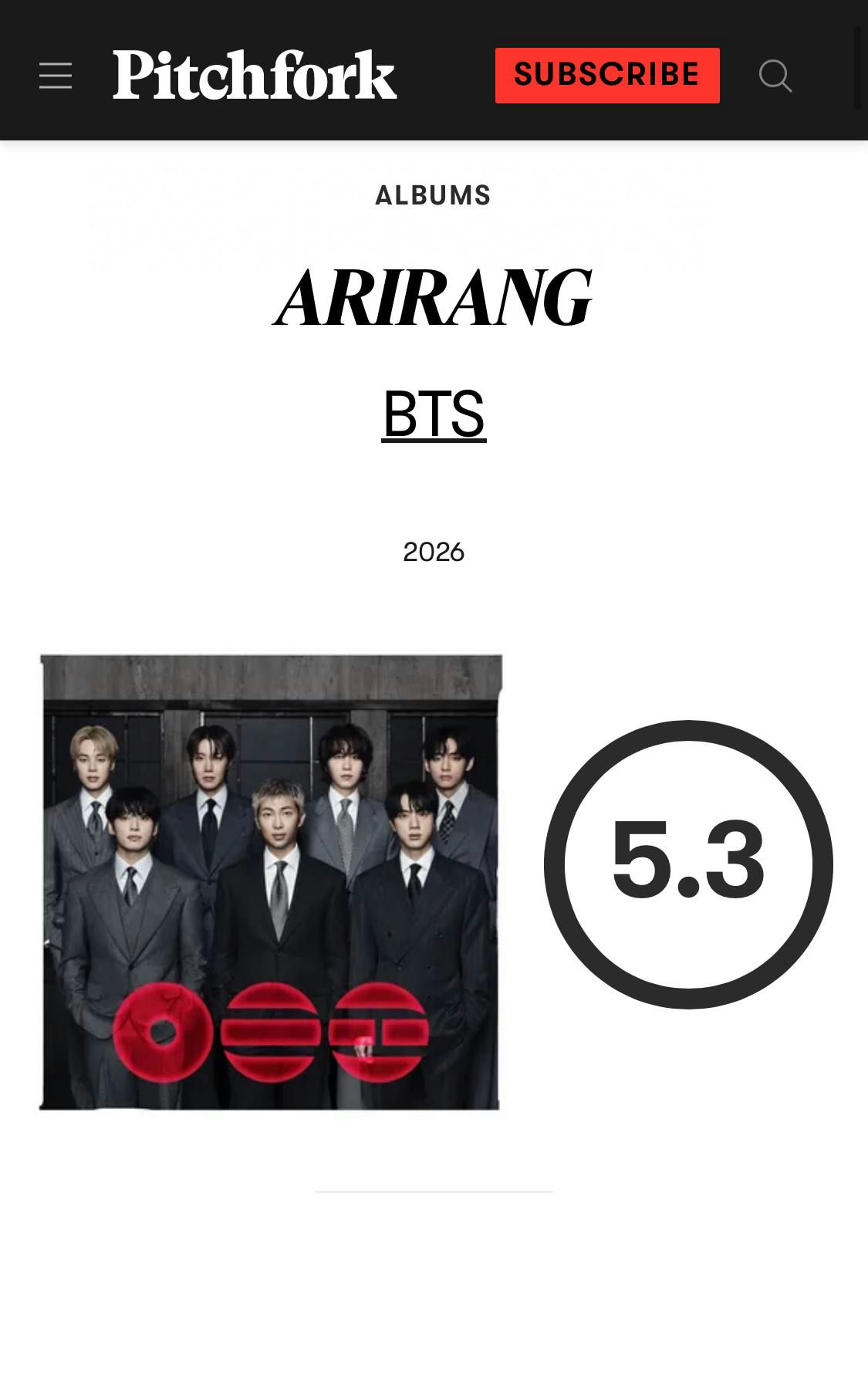
The involvement of global producers such as Diplo and Mike WiLL Made-It, alongside artists like Teezo Touchdown and JPEGMAFIA, gave the album a strong Western rap and pop influence. However, rather than creating a cohesive fusion, the review argued that these elements felt disjointed, weakening the album’s overall identity.
Still, the album was not without its bright spots. “Hooligan” stood out for its dramatic orchestration and dynamic contrast, allowing members like RM, V, and Jimin to showcase their expressive range. Yet, such highlights were described as too scattered to carry the entire project. The core issue, according to the critique, was the album’s inability to deliver genuine emotion or conviction, leaving its message feeling hollow.

One of the few conceptually praised moments came from the opening track “Body to Body,” which integrates the traditional Korean folk song “Arirang” into its climax. This attempt to emphasize cultural identity was seen as meaningful, though not enough to elevate the project as a whole.
The review further elaborated that while BTS’s earlier works thrived on raw energy and emotional sincerity, several tracks here felt fatigued, as if the group were merely fulfilling expectations rather than pushing creative boundaries. Songs like “Like Animals” were criticized for lacking emotional depth compared to past hits, while others leaned too heavily on stylistic trends without strong execution.

Despite the mixed-to-negative critical reception, ARIRANG remains a commercial powerhouse. Released on March 20, 2026, the album sold nearly 4 million copies on its first day, surpassed 110 million streams on Spotify, topped iTunes charts in 88 countries, and achieved a Realtime All-Kill in South Korea with its title track “SWIM.”
The contrast between critical reception and commercial success highlights BTS’s enduring global influence. Even as critics question the album’s artistic direction, its record-breaking performance reaffirms the group’s unmatched position in the international music industry.
Sources: K14
You must be logged in to post a comment.