
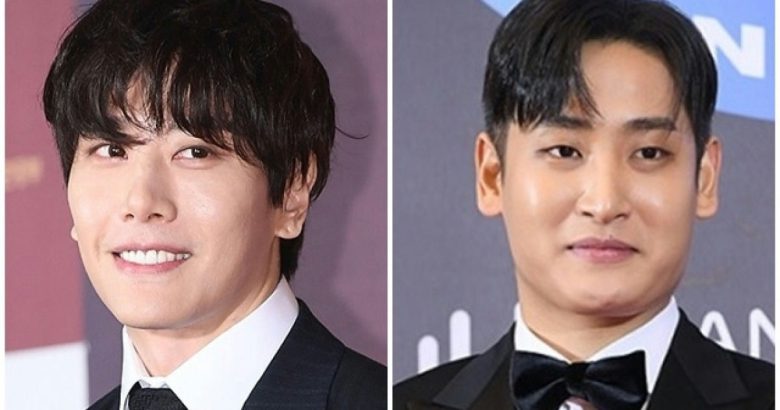
On June 20, Parc Jae Jung’s agency, Romantic Factory, announced, “We previously revealed that the first official fan club would be named ‘Namu (Tree).’ However, we later confirmed that fans of Park Hyo Shin’s official fan club, Soul Tree, have long been affectionately referred to as ‘Namu.’ We have therefore decided to reconsider the fan club name.”
A day earlier, Parc Jae Jung launched recruitment for his first official fan club since debuting 13 years ago. The singer introduced the name “Namu,” inspired by his well-known nickname, “Tree Prince.”
However, shortly after the announcement, some members of Park Hyo Shin’s fandom voiced objections, arguing that “Namu” had been a symbolic nickname associated with their fan community for many years. Following the backlash, Parc Jae Jung’s side ultimately decided to withdraw the name and review alternatives.
The controversy soon took an unexpected turn online.
Rather than focusing solely on the naming issue, many netizens began criticizing what they viewed as an excessive attempt to claim ownership over a common Korean word. Debate quickly spread across online communities and social media platforms.
Attention also turned to the fact that Park Hyo Shin’s fans frequently refer to the singer as “Daejang Namu” (Captain Tree) or simply “Daejang” (Captain).
In the Korean music industry, however, the nickname “Daejang” has long been strongly associated with singer-songwriter Seo Taiji, who has been widely known by the title for decades.
As a result, some internet users questioned the consistency of the objections. Comments included: “If that logic applies, doesn’t ‘Daejang’ belong to Seo Taiji?”, “Using ‘Daejang’ is fine, but ‘Namu’ is not?”, “People seem overly sensitive about a common noun,” “Blocking a younger artist’s fan club name feels excessive,” and “This is the definition of a double standard.”
Others pointed out that Park Hyo Shin’s fandom already has an official name, Soul Tree, arguing that attempting to claim exclusive rights to an informal nickname goes too far.
Additional reactions included: “Parc Jae Jung ended up getting hurt for no reason,” “Fandom culture is becoming increasingly closed off,” and “Fans are taking ownership of ordinary words too seriously.”
As discussions continue online, the incident has evolved beyond a simple fan club naming dispute into a broader conversation about fandom culture, identity, and where the boundaries should lie when it comes to shared symbols and common language.
Sources: Daum