
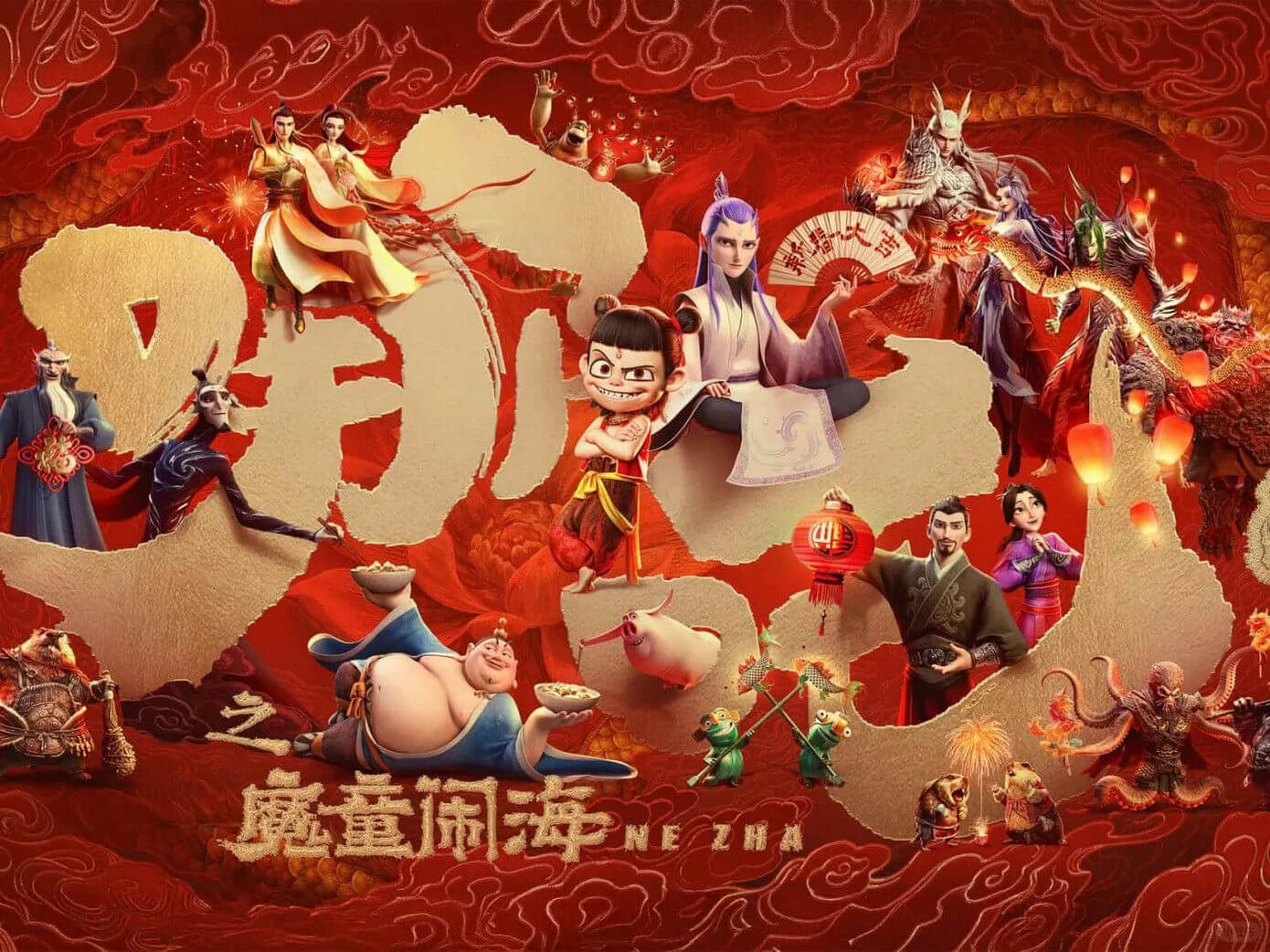
Despite grossing over $2.2 billion globally and setting 113 box office records, Ne Zha 2 shocked fans and critics alike by not appearing on the Oscar shortlist for Best Animated Feature. What’s more surprising: the decision came from within the film’s own production team.
According to the Academy of Motion Picture Arts and Sciences, 35 films met the criteria to compete in the animated feature category this year—but Ne Zha 2 was notably absent. While some initially assumed the film was disqualified, distribution companies later confirmed that it had fulfilled all technical requirements, including its North American theatrical release and meeting the 75% animation content threshold.
The key issue: CMC Pictures, the film’s North American distributor, did not submit the application, effectively pulling the film from contention. American film critics verified this detail, confirming that the withdrawal was voluntary.
This unexpected move has sparked intense discussion. One major factor appears to be financial Oscar campaigns can cost tens of millions of dollars in promotional activities, screenings, and jury outreach. However, Ne Zha 2 earned only $20.72 million in North America, about 1.3% of its global revenue, making the return on a costly campaign uncertain.
The experience with Ne Zha 1 in 2020 may also have contributed to the hesitation. Despite being China’s official submission, the original film failed to secure a nomination. Many critics at the time pointed to the cultural and artistic divide between Chinese aesthetics and Hollywood standards. These unresolved tensions likely fueled caution among the production team, who feared a repeat disappointment.
Additionally, director Jiaozi is said to be fully focused on developing Ne Zha 3. According to team members, improving technical quality and advancing storytelling take priority over awards recognition.

When news of the Oscar absence broke, Chinese social media exploded with conflicting opinions. Some netizens praised the decision as a sign of self-confidence, asserting that Chinese animation no longer needs Western validation. Others lamented what they saw as a lost opportunity for broader international acclaim—especially given Ne Zha 2‘s modest performance in the U.S. box office.
The controversy intensified when past frustrations resurfaced. World Journal reported that director Jiaozi was twice denied a visa to attend Oscar-related events in 2020, despite having official invitations. Producer Xu Xi confirmed that the U.S. consulate provided no explanation for the refusals. Many believe this experience left a lasting scar and influenced this year’s decision.
Interestingly, multiple awards prediction websites had placed Ne Zha 2 among the top contenders, with some ranking it sixth for a likely Oscar nomination. This only amplified the public’s confusion and disappointment over the withdrawal.

Some analysts suggest the team never prioritized awards to begin with. They even skipped the prestigious Golden Rooster Awards despite being named a winner, perhaps to avoid excessive media attention after their overwhelming success. In this context, pursuing an Oscar might have triggered domestic criticism over “Western validation obsession,” making the team even more hesitant.
According to Sohu, Ne Zha 2 was disqualified not because of any rule violation but purely because the application was never submitted. As of now, the only Chinese animated film officially in the Oscar running is The Legend of Hei II.
Sources: TP
You must be logged in to post a comment.