

On January 5, JTBC’s current affairs program Case Chief aired testimony from an informant who claimed to have met the suspect, identified as A, while being held at a detention center over an unrelated fine. The suspect is currently under arrest for breaking into Nana’s residence and later sending a prison letter claiming innocence.
According to the informant, A casually explained that he had been caught committing robberies in affluent residential areas of Guri, Gyeonggi Province. Recounting the incident at Nana’s home, the informant said A described entering through the veranda and encountering Nana’s mother first.
“He said there was a person in front of him—her mother—and while trying to subdue her, he dropped the weapon,” the informant recalled. “Then a woman (Nana) came out of the room, grabbed that weapon, and stabbed his neck.”
The suspect allegedly claimed that during subsequent discussions with the victims, he began to think, “Maybe I could get compensation too,” which led him to provide his bank account details, name, and phone number.

More troubling, the informant said A showed no sense of seriousness about the situation. “He said that if he ends up in prison, he has nothing to lose, so he’d countersue to get something out of it,” the witness stated. “He kept laughing while talking about it.”
The incident occurred last year in Acheon-dong, Guri City, when A broke into Nana’s home, threatened her mother, and demanded valuables. Nana and her mother resisted, successfully subduing the intruder. Nana sustained injuries during the struggle, while her mother suffered strangulation injuries and required hospital treatment.
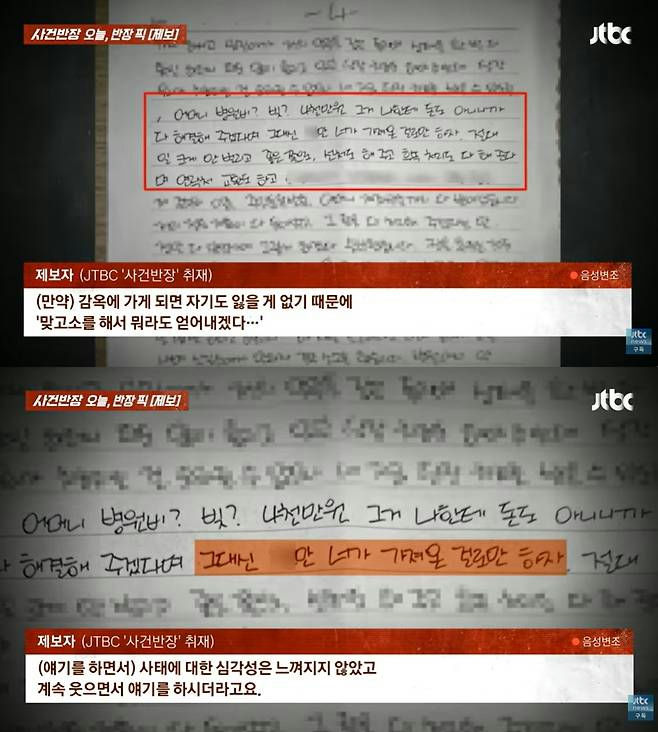
In a handwritten prison letter sent through an acquaintance, A insisted, “I did not prepare a weapon in advance,” claiming he was only wearing gloves and a headset and that his bag was left outside the veranda.
Nana’s agency strongly refuted his claims, stating, “The perpetrator is showing no remorse and is exploiting the victim’s celebrity status to cause secondary harm through a retaliatory lawsuit. There will be no leniency, and we will pursue all possible civil and criminal legal action.”
Attorney Park Ji-hoon commented that South Korea’s strict standards for recognizing self-defense may have influenced the suspect’s legal strategy. “In countries like the U.S., self-defense is recognized more broadly, making such lawsuits difficult,” he explained. “But if this goes to trial, it will not be favorable for the perpetrator. This is a case of robbery resulting in injury, which can be punished very severely.”
As public outrage continues to grow, the case has reignited debate over retaliatory lawsuits, secondary victimization, and the limits of self-defense protections in South Korea’s legal system.
Sources: News1,JTBC
You must be logged in to post a comment.