

A recent analysis suggests that the popularity of K-pop and Western pop in Southeast Asia has been gradually declining between 2023 and 2026, while local music is experiencing a strong surge.
Data based on the Top 50 daily Spotify charts across five countries Indonesia, the Philippines, Thailand, Malaysia, and Singapore reveals a clear shift in listening habits.
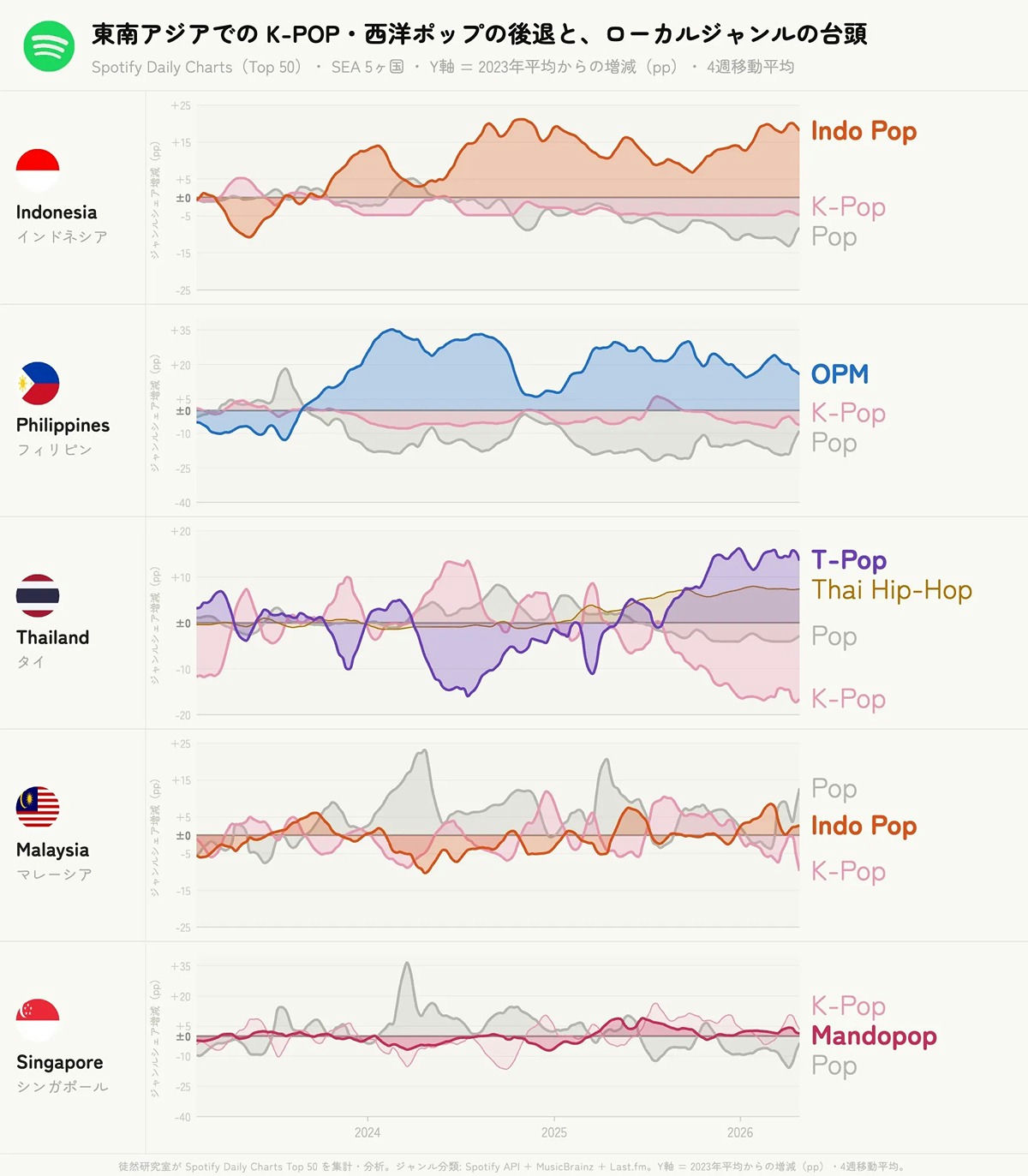
- In Thailand, local music increased from 65% to 78%, while K-pop dropped significantly from 27% to just 11%.
- In the Philippines, domestic music rose from 44% to 63%, whereas Western pop declined from 29% to 14%.
- Indonesia showed the most dramatic change. Local music jumped from 60% to 78%, while K-pop plummeted from 5% to only 1%.
- In Malaysia, Indonesian music grew from 18% to 22%, while K-pop decreased from 18% to 13%.
- Singapore remains more balanced, with Western pop holding around 30–40% and K-pop around 30%, while local, Indonesian, and Filipino tracks are steadily filling the gaps left by declining Western hits.
Overall, local music in Southeast Asia is increasingly replacing both K-pop and Western pop, reflecting a growing preference for homegrown sounds.
Online, Korean netizens shared mixed and often controversial reactions to this trend.
Some expressed blunt opinions such as, “If Southeast Asia doesn’t like K-pop anymore, then stop debuting idols from those countries,” while others welcomed the shift, saying, “It’s actually a good thing people should listen to their own country’s music.”
Others pointed out cultural reasons behind the shift, noting that people naturally gravitate toward their own language, emotions, and cultural identity once local industries develop enough to compete.

There were also more positive perspectives, with some commenting that it is “a joyful and meaningful thing” for a country’s own culture to grow and be appreciated by its people.
However, more critical remarks also surfaced, including claims that Southeast Asian fans do not contribute significantly to revenue, or that the market is not as profitable despite high streaming numbers opinions that sparked further debate.

At the same time, some netizens admitted that Southeast Asian pop, such as T-pop, has become increasingly similar in styling and presentation to K-pop, sometimes making it difficult to distinguish between them.
While opinions remain divided, the data clearly highlights a major shift: Southeast Asia is no longer just a strong consumer of global music trends but is rapidly becoming a powerhouse for its own local music scene.
Sources: theqoo
You must be logged in to post a comment.