
A recent article by The Korea Herald explored why Koreans favor monochrome fashion, highlighting cultural psychology and practical reasons behind the trend.
Koreans’ Love for Monochrome Fashion
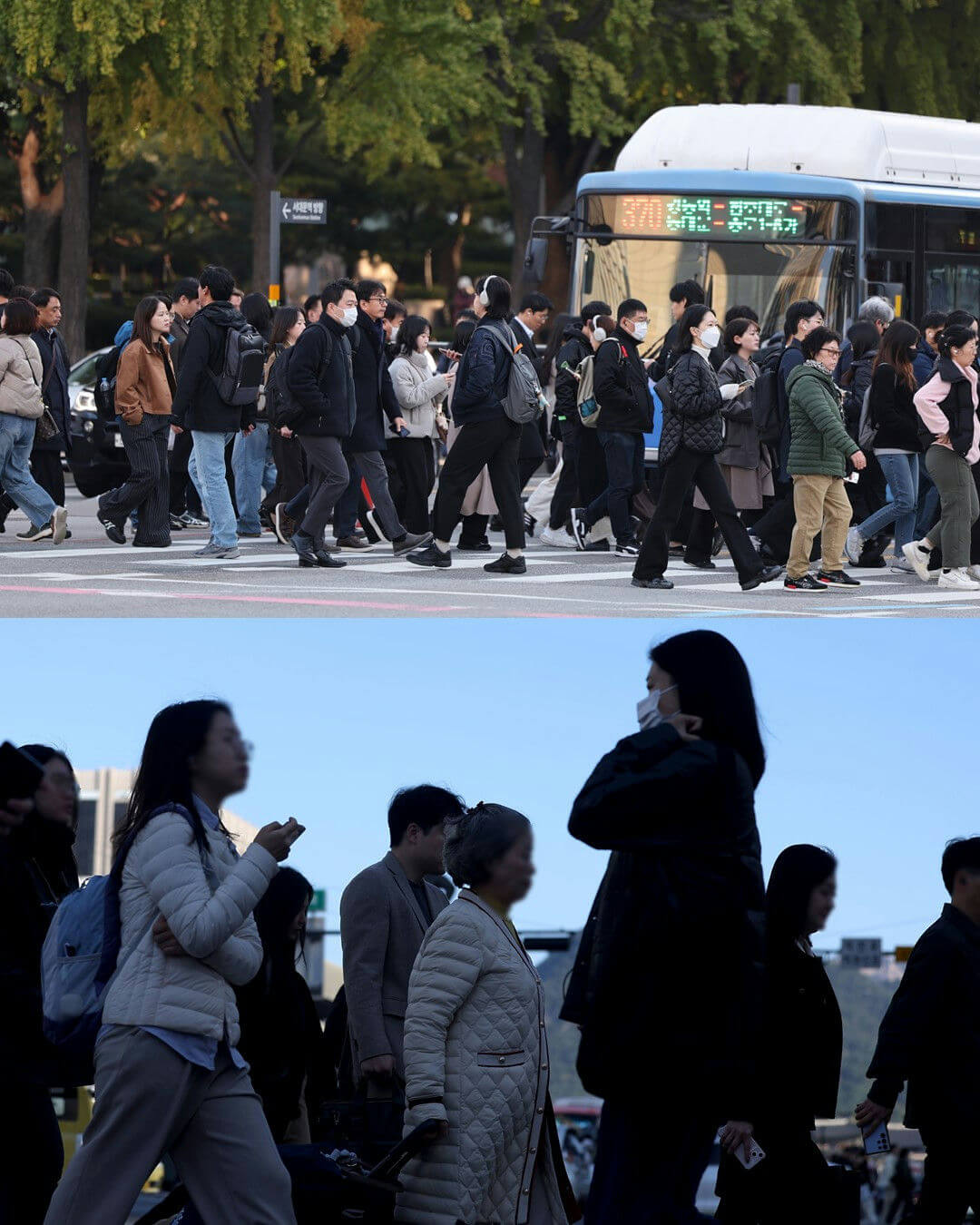
Isabel Smith, a 32-year-old English teacher from the U.S., was struck by Seoul’s streets when she moved there a year ago—not by the food or subway system, but by the absence of color.
“Everyone wears black, white, or gray,” she said. “In the U.S., I loved bold makeup and colorful clothes. Here, it made me stand out everywhere I went.”
Even her students commented: “Your outfit looks nice, but it doesn’t suit us.”
Smith recalled visiting a Chanel store to buy bright orange earrings she had seen online. The staff smiled and explained: “We don’t carry that color in Korea—it doesn’t sell.”
Data supports her observation. According to CJ Logistics’ 2021 report, 38% of purchased clothing was black, 15% white, and 9% gray—over 62% monochrome. Experts say this reflects cultural psychology and practicality.
Desire to Avoid Attention
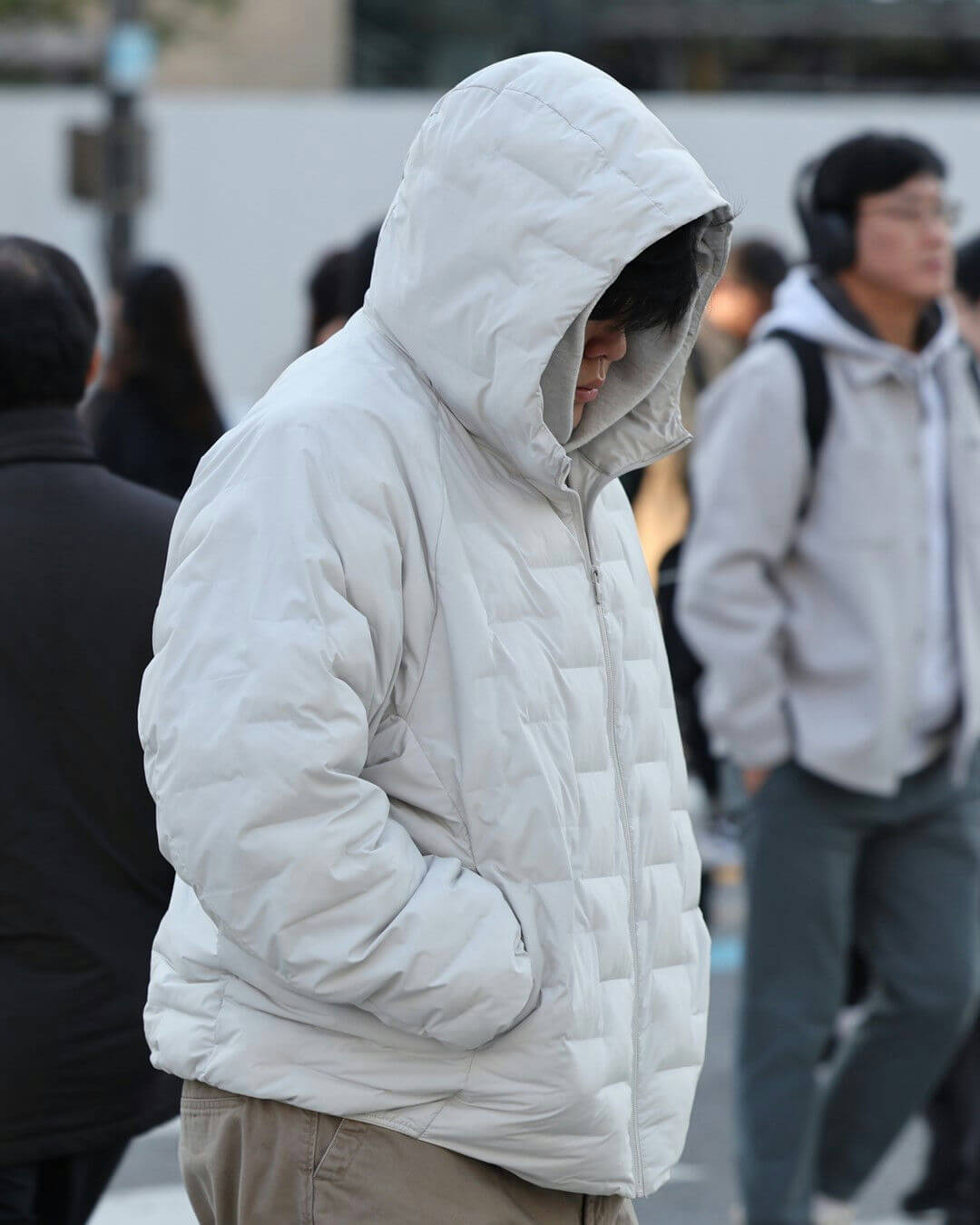
Kwon Eun-ji, 34, admitted her wardrobe is mostly black, white, and navy, occasionally muted green. She recalled buying a navy polo instead of a red striped one to avoid standing out.
“Once I wore a yellow cardigan, and everyone commented: ‘So bright today,’ ‘This suits you,’ ‘Are you going on a date?’ I didn’t want people to notice. I just wanted to blend in.”
Professor Lee Ji-kyung of Kyungsung University explained: “Neutral tones convey humility and harmony—core Korean cultural values. Wearing overly bright colors can make people uncomfortable.”
Historically, Koreans were known as the “white-clothed nation” for favoring white hanbok. Today, neutral tones like black, gray, and navy dominate modern fashion.
A survey of 176 college students revealed:
- 41.5% chose neutral colors to avoid attention
- 33.5% found bright colors hard to match or risky
- 8% worried bright clothes stain easily
- Others cited comfort or reserved colorful clothes for special occasions
Practicality of Monochrome Fashion
Besides psychological reasons, practicality drives monochrome trends. Park Nam-jin, 33, said: “I’m too busy to coordinate colors. Neutral pieces go with everything. I focus on shape and material. Simplicity looks neat.”
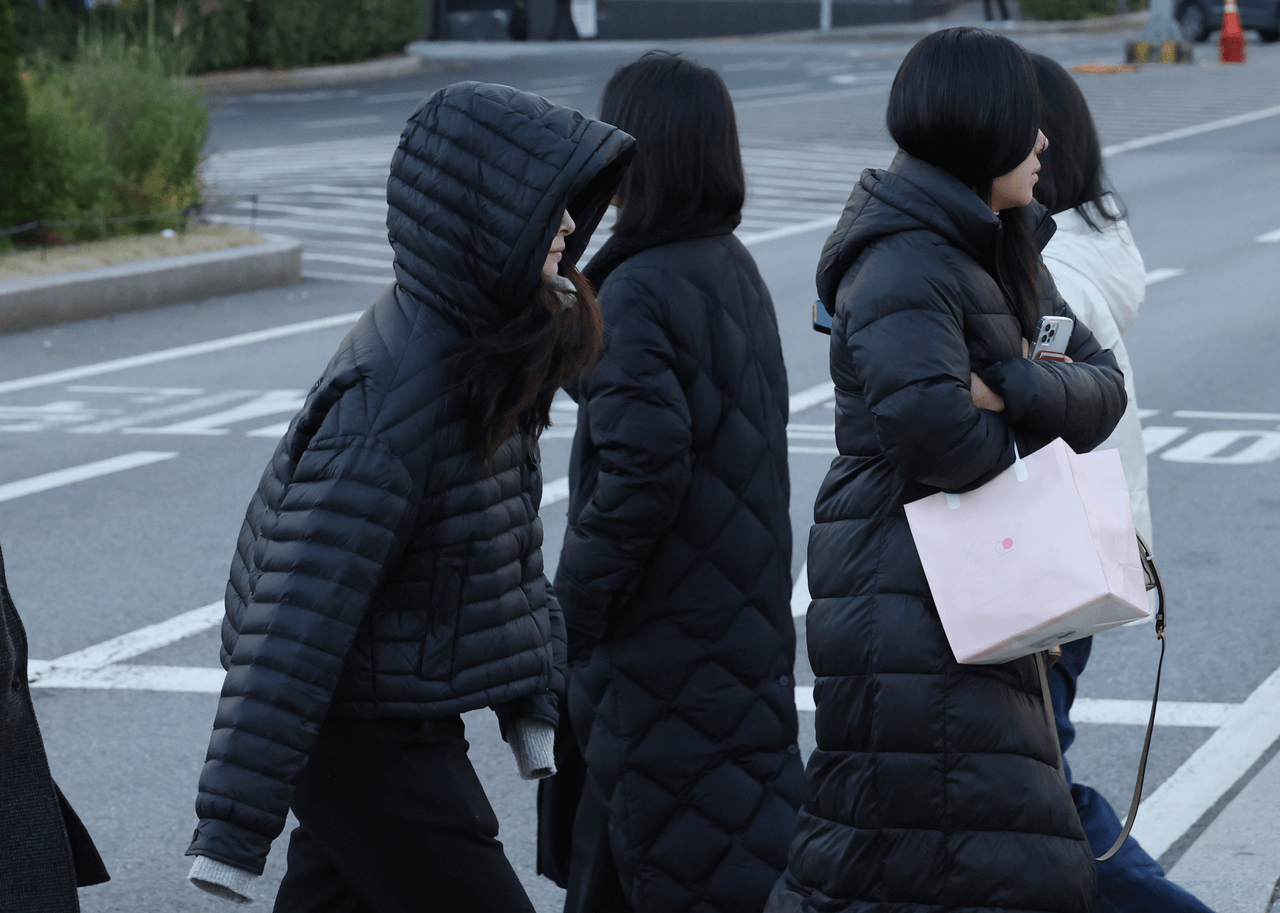
Professor Lee Jee-hyun from Yonsei University noted neutral colors simplify layering, reduce matching mistakes, allow reuse, and stay stylish longer. In winter, expensive coats are often black for durability, ease of maintenance, and versatility.
Fashion as Social Psychology
In a society prioritizing order and conformity, monochrome fashion reflects collective social psychology.
Isabel Smith observed: “Here, color is not just fashion; it’s harmony.”
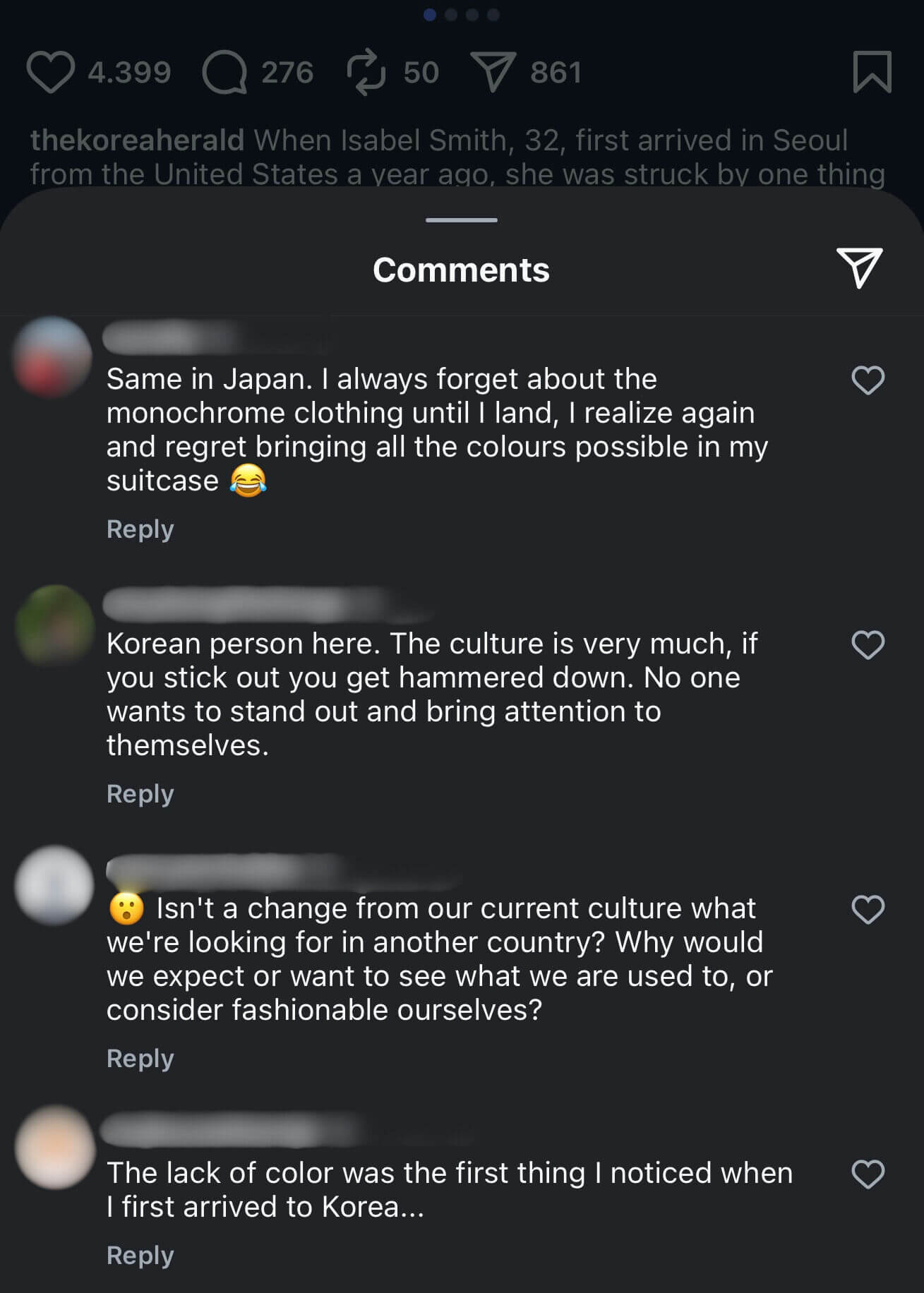
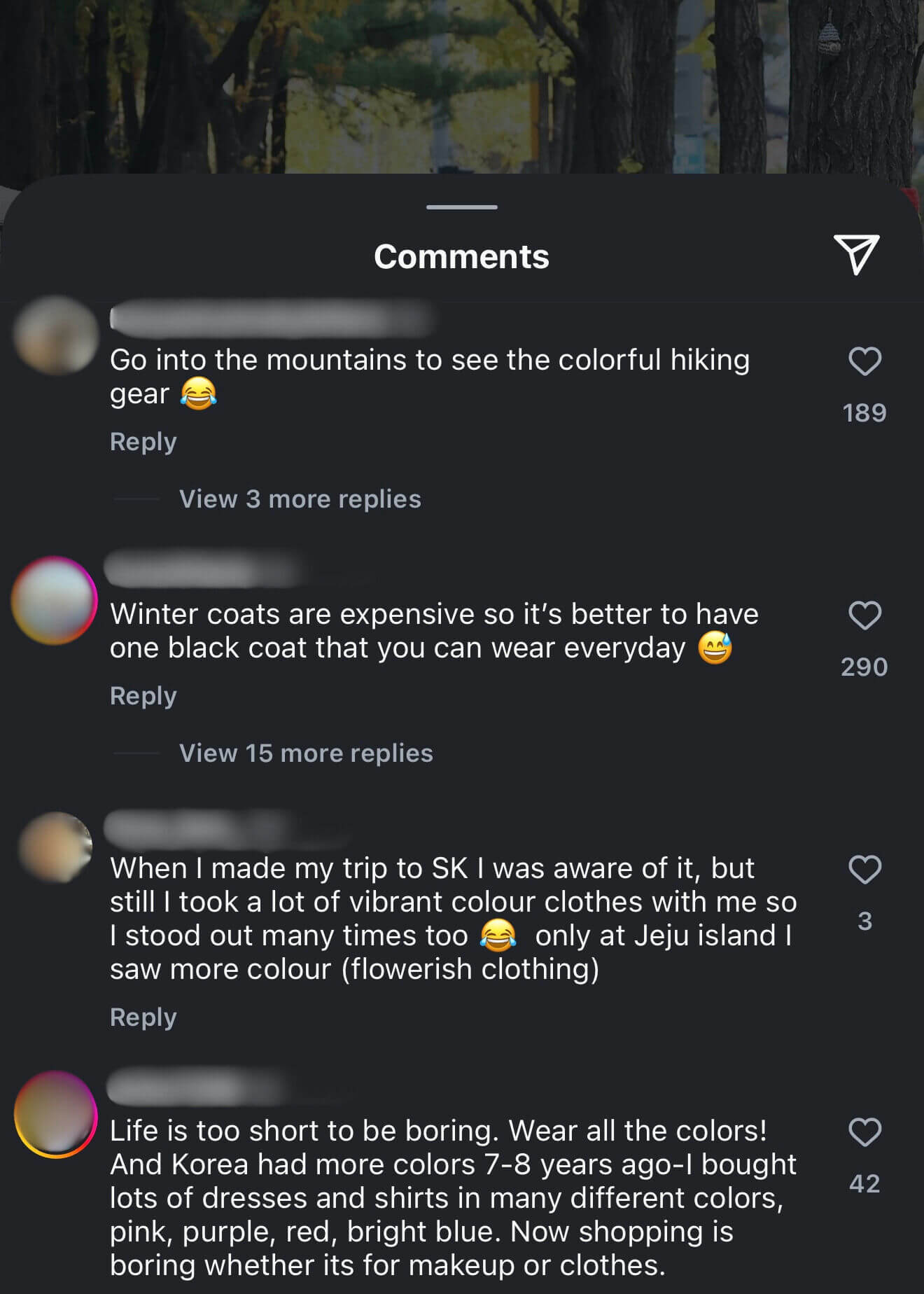
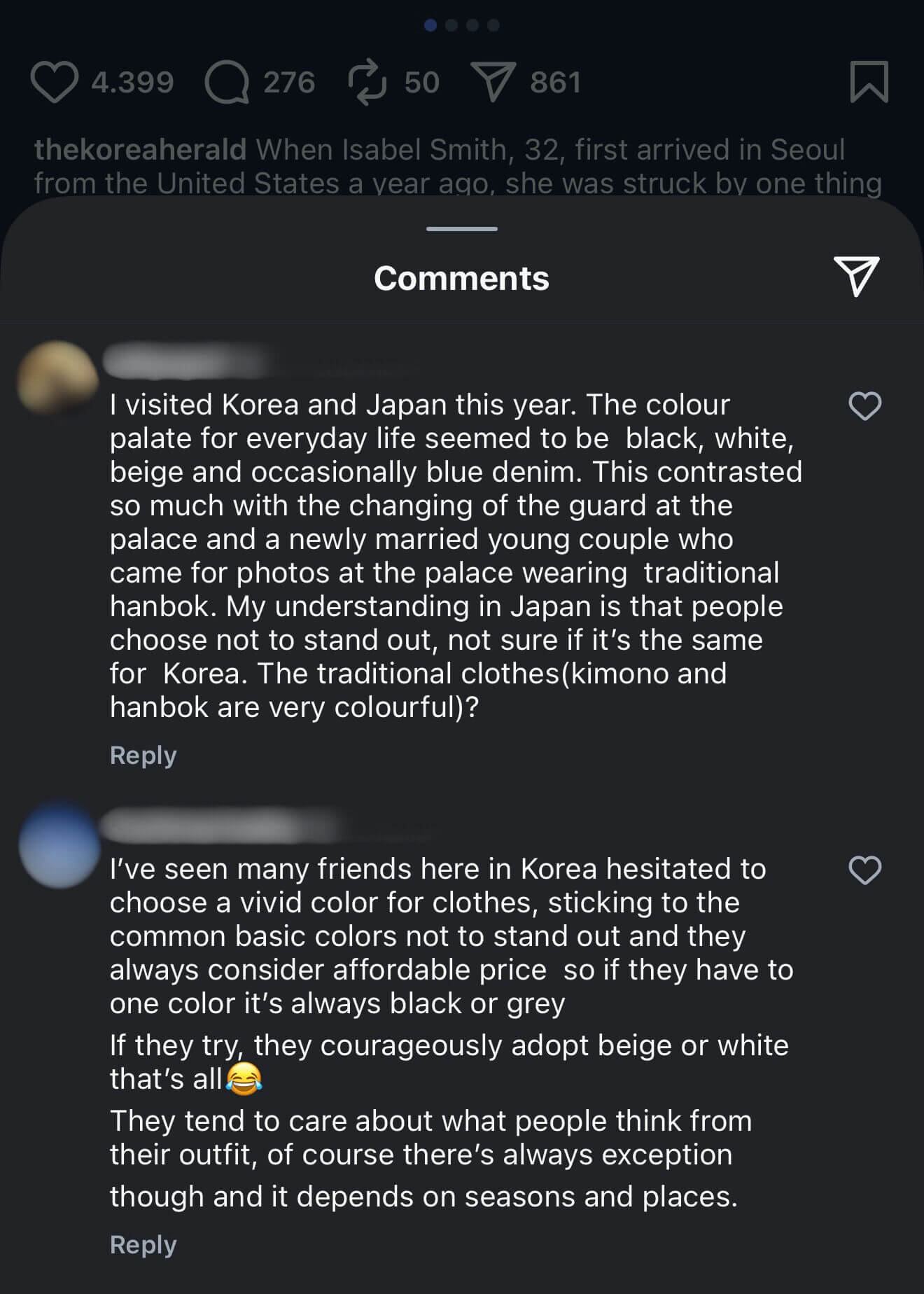
Under The Korea Herald’s Instagram post, international netizens shared surprise and nostalgia. Many recalled feeling conspicuous in colorful outfits in Seoul or Tokyo.
“I packed a suitcase full of bright clothes, and everywhere I went, I stood out. Only in Jeju did I see a bit more color.”
Some agreed on practicality: “Winter coats are expensive, so black is easiest,” and “If buying one color, black or gray is safest.”
Others noted cultural intrigue: “Visiting another country is to see the difference. Why expect them to dress like us?” and “The contrast between monochrome streetwear and vibrant hanbok at palaces is fascinating.”
Monochrome fashion in Korea is not merely a trend. It reflects cultural values, social psychology, and practical considerations, shaping a unique identity on the streets of Seoul.
Sources: kenh14
You must be logged in to post a comment.