
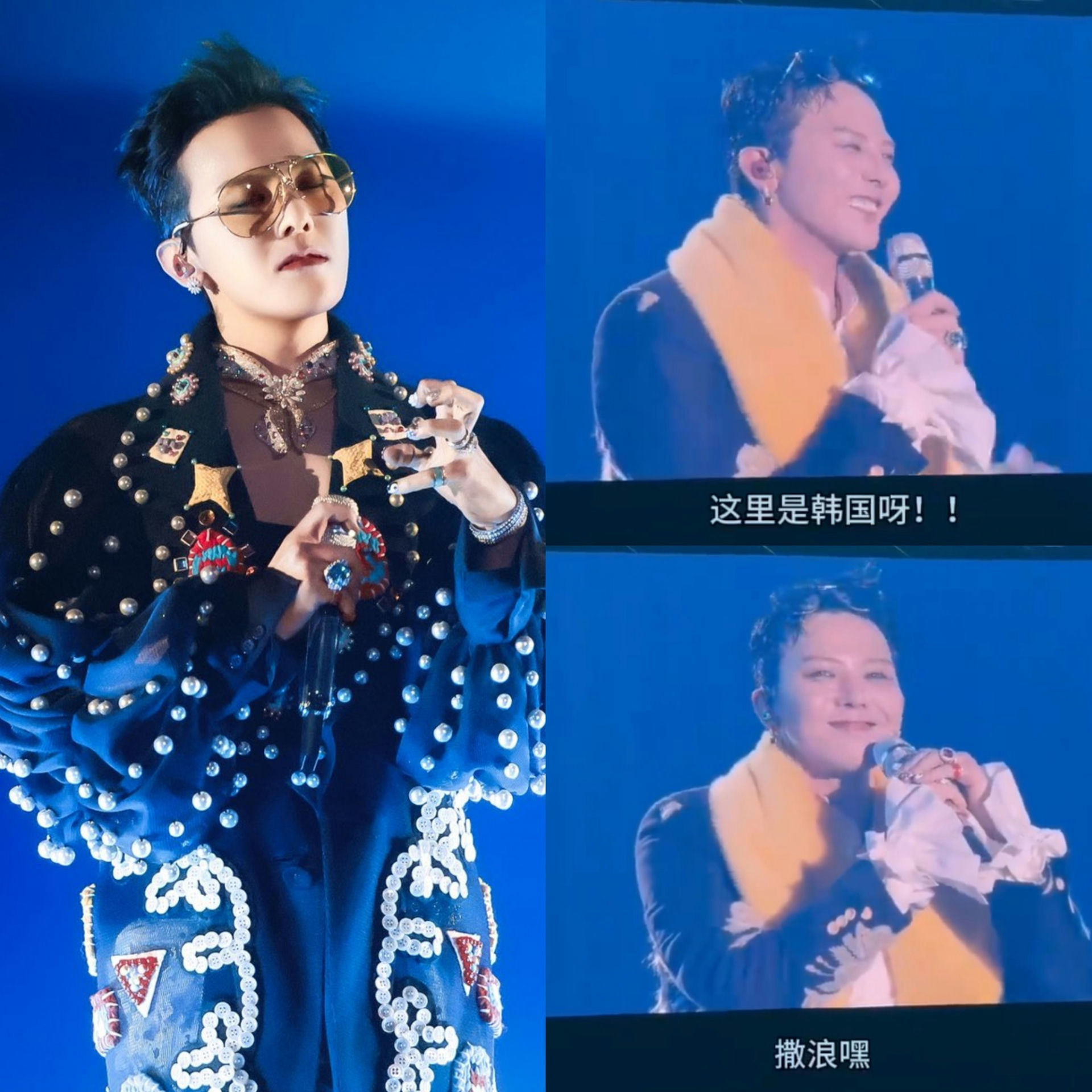
From December 12 to 14, G-Dragon officially wrapped up his world tour Übermensch with three encore concerts at Gocheok Sky Dome in Seoul. According to Galaxy Corporation, the tour attracted an estimated 825,000 attendees worldwide, making it the largest tour of G-Dragon’s career to date.
The Seoul encore concerts alone welcomed 18,700 fans per night, totaling 56,100 attendees across three shows. Spanning 39 performances, Übermensch marked a major milestone that reaffirmed G-Dragon’s enduring influence as the “King of K-pop,” even after years of activity in the industry.
Shortly after the encore concerts concluded, G-Dragon unexpectedly found himself at the center of controversy on Chinese social media.
A short clip capturing his interaction with a fan during the concert spread rapidly online. The related keyword quickly climbed to No.1 on Weibo’s Entertainment Hot Search, amassing nearly 50 million views in a short period.
In the viral clip, a Chinese fan shouted “Wo ai ni” (“I love you”). G-Dragon responded: “I don’t know what you’re saying. What does ‘wo ai ni’ mean?”
He then added, “This is Korea,” and followed up by saying “Saranghae” (“I love you” in Korean).
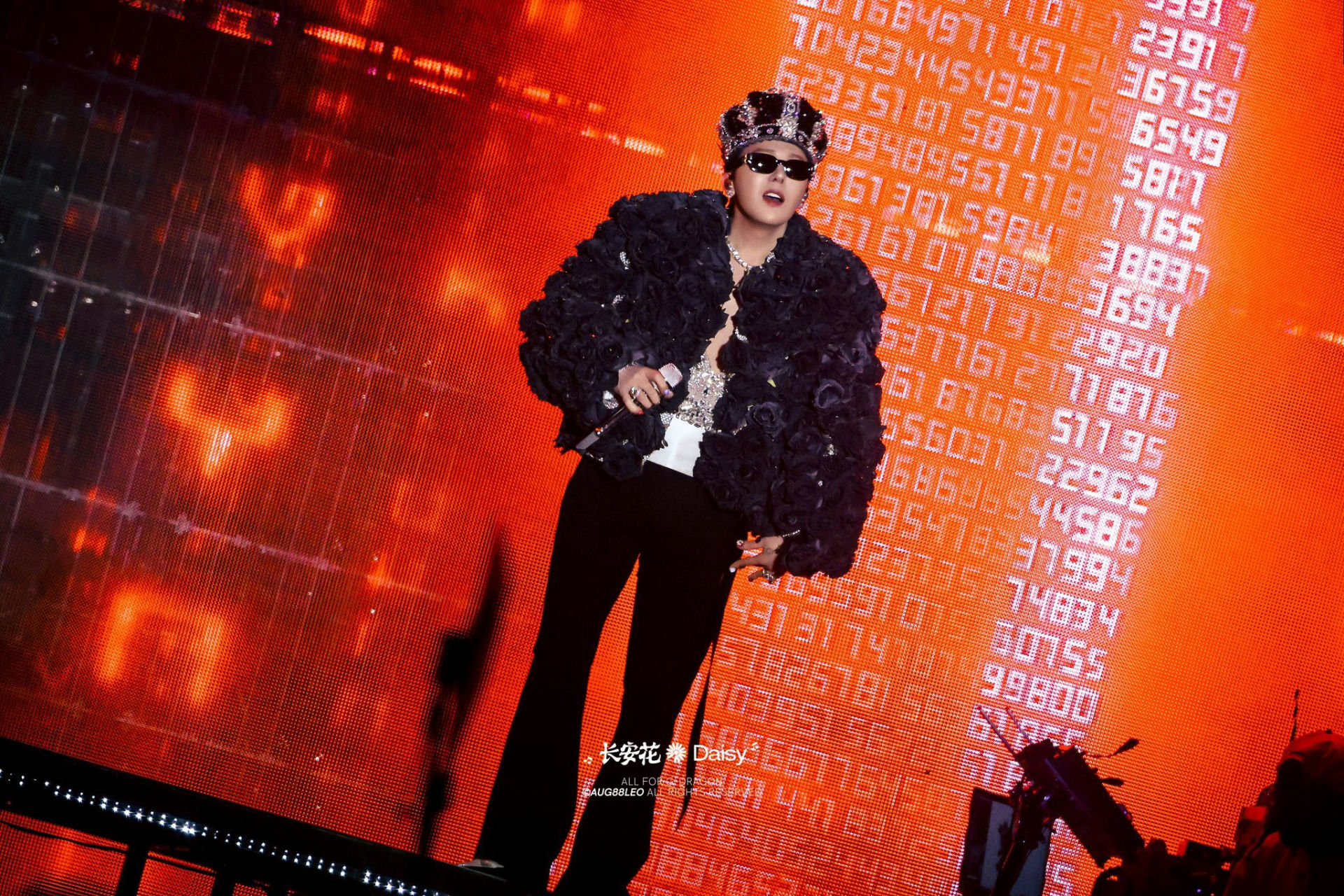
The brief exchange, when isolated from its full context, became the catalyst for intense debate.
On one side, critics accused G-Dragon of being insensitive, with some interpreting his response as dismissive toward Chinese-speaking fans. Harsh comments appeared under trending posts on Weibo, including: “He should learn Chinese—he has so many Chinese fans” and “He’s successfully brainwashed his fans.”
Some critics even resurfaced unrelated personal attacks, ranging from his appearance to past controversies.
On the other hand, many fans and international viewers rushed to G-Dragon’s defense, arguing that the clip was taken out of context and maliciously edited.
One widely supported comment read: “Don’t misunderstand this. He was clearly joking with the fan and explaining the meaning of ‘wo ai ni’ in Korean so everyone could understand not everyone speaks Chinese.”
Another non-fan viewer commented: “I don’t even follow him, but this feels like fake outrage. An artist of G-Dragon’s stature wouldn’t intentionally disrespect fans. The clip doesn’t show the full situation.”
Supporters also pointed out that during concerts, artists often respond in the local language to communicate with the entire audience. Since the show took place in South Korea, switching to Korean was a natural choice rather than a political or cultural statement.
In their view, the moment was a typical idol–fan interaction, blown out of proportion due to G-Dragon’s immense global influence.
With G-Dragon’s level of fame, even the smallest gesture or comment can quickly escalate into a large-scale controversy. What began as a brief, casual exchange on stage soon turned into a viral debate with tens of millions of views and thousands of divided comments across China’s largest social media platform.
Adding to the tension, G-Dragon has recently faced scrutiny over various issues, from live singing performances to past remarks making public sentiment even more volatile.
Once again, the incident highlights how context, editing, and platform dynamics can dramatically reshape public perception especially for a global icon like G-Dragon.
Sources: K14
You must be logged in to post a comment.