
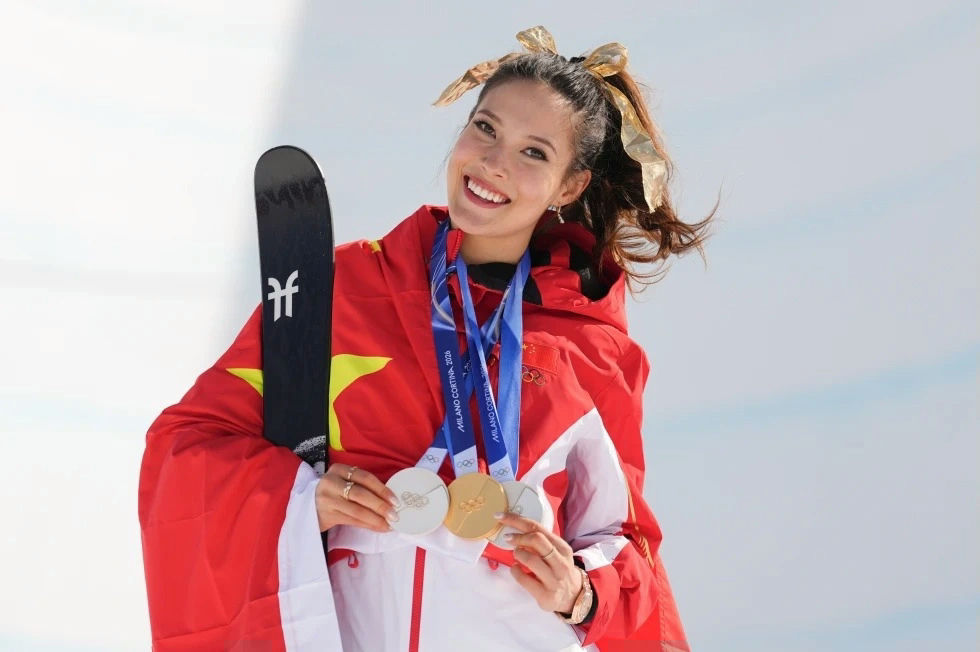
Tensions between Olympic champion Eileen Gu also known in China as Gu Ailing and U.S. political figures continue to escalate following the 2026 Winter Olympics.
Competing for China at the Games, Gu recently made history in freestyle skiing by becoming the first athlete in the sport to win six Olympic medals. However, the skier who was born and raised in San Francisco has remained at the center of controversy for representing China rather than the United States.
The latest spark in the debate is a proposed bill introduced by U.S. Representative Andy Ogles. Although the legislation is framed as promoting sportsmanship, critics say its real target is Gu. The proposal would impose a punitive tax of up to 100% on prize money and sponsorship earnings for athletes who hold U.S. citizenship or permanent residency but compete for what the bill describes as “adversarial nations,” including China and Russia.

Speaking to local media, Ogles stated that the goal is to ensure the Internal Revenue Service could reclaim all of the athlete’s earnings. His comments have led to accusations that the bill amounts to political pressure aimed at a specific individual.
Similar sentiments have also appeared within the U.S. administration. Vice President JD Vance openly criticized Gu’s decision, noting that she benefited from the American education system but chose to represent China at the Olympics. Meanwhile, Treasury Secretary Scott Bessent questioned why she would choose China despite the opportunities she received in the United States, with some remarks interpreted as labeling her choice a betrayal.
Amid growing political pressure from Congress and the executive branch, Gu eventually broke her silence on social media to explain her position. She emphasized that her decision at the age of 15 was not driven by politics but by personal conviction.

According to Gu, representing China offered the opportunity to create the broadest and most positive impact. She explained that freestyle skiing was still relatively unfamiliar in China and that she wanted to introduce the sport to hundreds of millions of people especially young girls who might see new possibilities through it.
Gu also spoke about the personal ties she developed through attending training camps in China every summer since she was eight years old. Those experiences, she said, helped shape her sense of identity and ultimately influenced her decision. “Now many girls no longer doubt their place on the ski slopes,” she wrote, emphasizing that inspiring change meant more to her than the number of medals she wins.
The pressure she faces has gone beyond political debate and has even raised concerns about personal safety. Since joining the Chinese national team, Gu has reportedly faced both online and offline threats. During her time studying at Stanford University, she allegedly had to seek police assistance 37 times over six months due to harassment and threats.

Despite the controversy, Gu has maintained a resolute stance, stating that while the situation may not become easier, it will only make her stronger.
Chinese outlet Sina Sports analyzed the situation as reflecting anxiety within parts of American society. The publication argued that the unusually hostile response toward a young athlete reveals fears about China’s growing soft power, suggesting that Gu became a target simply because she chose to represent China.
Sources: Nate
You must be logged in to post a comment.