

Unlike previous project groups Wanna One with a 1.5-year contract and ZEROBASEONE with 2.5 years contestants selected for Boys II Planet face a binding 5+1 year contract. The initial five years are the mandatory promotion period, while the additional “+1” year requires the group to release another single and hold special performances, effectively tying them to CJ ENM for six years.
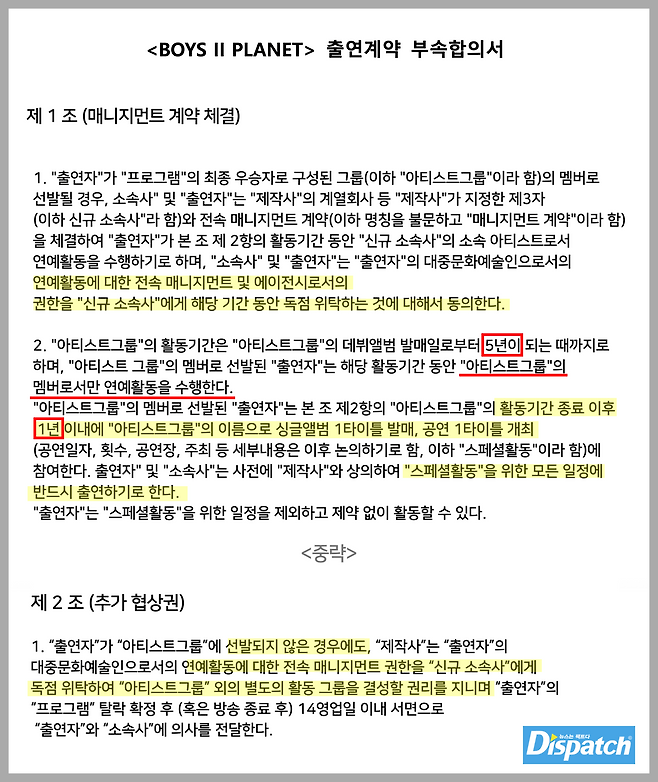
According to the contract obtained by Dispatch, members must debut under WAKEONE (a CJ subsidiary) and remain exclusively managed by the company throughout this period. Even contestants who were eliminated in the final selection are not exempt: CJ ENM reserves the right to sign exclusive management contracts with them and form separate groups.
Critics argue this contradicts CJ ENM’s public stance of “providing opportunities to talented artists” and “collaborating with smaller agencies.” Instead, the deal highlights an aggressive strategy to monopolize the industry by using its broadcasting platform to secure talent and control their careers for nearly an entire idol life cycle.

Industry insiders note that six years is a critical period in any idol’s career, often referred to as the “seven-year curse” due to the difficulty of sustaining popularity. “It’s basically saying, ‘Give us your trainees, and we’ll keep them until they’re burned out,’” one agency representative said.

Had the same deal been applied to IZ*ONE, for example, breakout successes like LE SSERAFIM, IVE, or soloists Jo Yu Ri, Choi Yena, Kwon Eun Bi, and Kim Min Ju might never have had the chance to emerge.
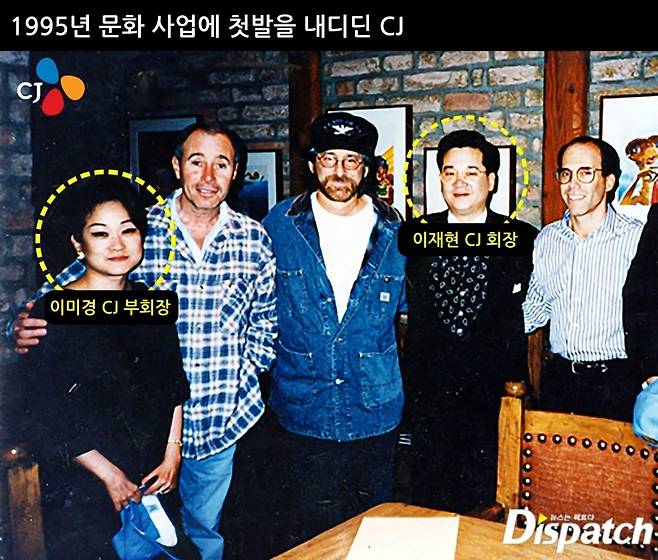
As CJ marks its 30th year in the cultural business under the slogan Only One, questions arise: does “only one” mean innovation or simply monopoly?
Sources: Daum
You must be logged in to post a comment.