

#1. The Origin: Chas Gallery
The tax controversy surrounding Cha Eunwoo began with a company called Chas Gallery. On July 4, 2019, a corporation was registered in Dongan‑gu, Anyang, with Cha Eunwoo listed as its CEO. The internal directors included his mother, Ms. Choi, and the auditor was his father. The company’s official business objectives were extensive reportedly covering 34 different areas, including music production, album distribution, management, event planning, advertising, performance planning, theme parks, character design, cosmetics distribution, food services, and intellectual property management.
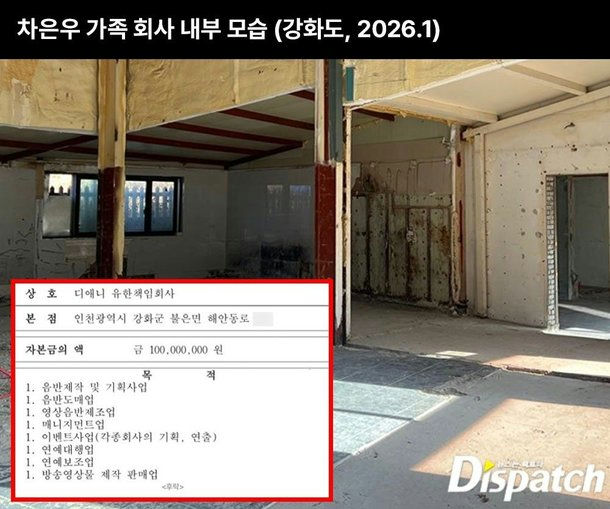
In June 2020, Chas Gallery moved its address from Anyang to Tongjin‑eup, Gimpo City. Two years later, it relocated again, this time to Buleun‑myeon, Ganghwa‑gun the site of a restaurant run by Cha Eunwoo’s parents.
#2. A Mother Takes Over & New Entities Appear
In September 2020, Cha Eunwoo’s mother, Ms. Choi, became the CEO of Chas Gallery. In 2022, she established a new limited liability company called L&C. Though the name differed from Chas Gallery, the business purpose was notably similar: management services.
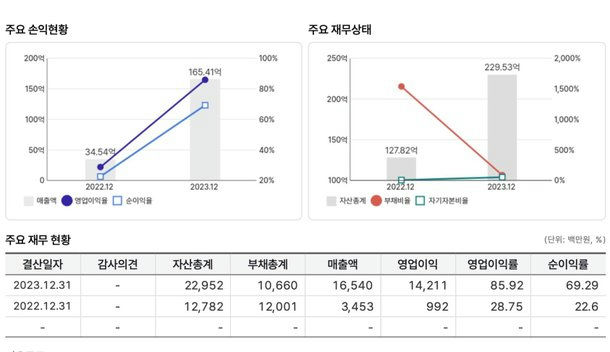
Then, in 2024, another limited liability company named The Any was created reportedly to manage real estate and related assets. If L&C focused on active business operations, The Any seemed to serve as an asset‑holding entity. Its registered address was again the Ganghwa eel restaurant.
Chronologically, Cha Eunwoo’s family business structure evolved from Chas Gallery → L&C → The Any. Structurally, Chas Gallery had been a joint‑stock company, while L&C and The Any are limited liability companies. Chas Gallery was eventually dissolved in 2024.
#3. Why the Rebranding Matters
Chas Gallery and The Any reportedly shared similar business goals raising questions about why a new company needed to be formed at all. The answer may lie in the nature of limited liability companies (LLCs): they are not subject to mandatory public disclosure or external audits. In other words, an LLC can operate with minimal outside oversight compared to a corporation.

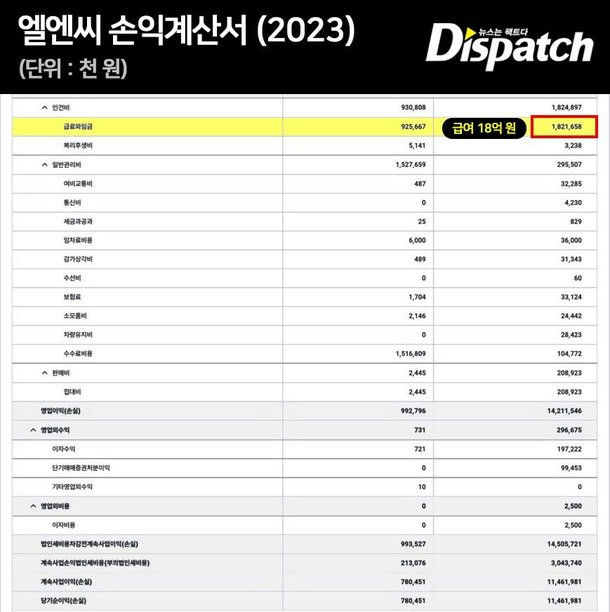
Cha Eunwoo’s tax discrepancy is estimated at around ₩20 billion. Assuming a 20% corporate tax rate, the taxable income involved would have to exceed ₩100 billion (after deducting operating costs like salaries and rent), suggesting that actual revenue may have been quite substantial.
Because the family companies were exempt from public reporting and external audits, major decisions could be made internally, with directors (e.g., the mother, father, and a sibling) agreeing behind closed doors. Even property transactions could remain private.
#4. Cha Eunwoo’s Possible Context
Cha Eunwoo’s agency, Fantagio, faced financial hardship in 2016, entering a period of capital erosion. At that time, a Chinese investor was brought in, leading to eventual management disputes and the original CEO being pushed out. By 2019, when Chas Gallery was formed, Fantagio’s majority shareholder, the Chinese JC Group, faced bankruptcy amidst allegations of illegal fundraising and fraud.
Given this backdrop, Cha Eunwoo may have been considering his own corporate structures around the time Fantagio was unstable. In 2022, when his mother obtained official registration as a public culture and arts planning company, L&C was launched simultaneously. Reportedly, her prior experience in the entertainment industry was recognized as meeting the registration requirements.
#5. Yet There’s No Excuse
Despite these contextual factors, critics argue there’s no justification for the sequence of corporate changes. Notably, Cha Eunwoo re‑signed with Fantagio in 2022, around the same time L&C was established meaning both parties were legally aligned and presumably aware of corporate arrangements. Again in 2024, when he was actively promoting as the public face of the company, The Any was created.

If Cha Eunwoo’s mother was routinely present on set acting as support or managerial assistance, a family company would only need to be paid service fees not a cut of the artist’s actual earnings. In other words, there would be no clear reason for that company to collect a portion of Cha Eunwoo’s personal guarantee or performance fees.
This is precisely why the National Tax Service is seeking to recover ₩20 billion in additional taxes. In South Korea, the top individual income tax rate can reach about 49.5%, while the effective corporate tax rate tops out near 26.4%. For high earners, using a corporate structure can legally and illegally reduce tax burdens by roughly 20 percentage points especially when business expenses like salaries and rents are factored in.

Whether or not Cha Eunwoo personally directed these corporate decisions, the rapid succession of companies, changes in legal form, and lack of external oversight have become central to the tax issue that continues to draw public attention.
Sources: Nate
You must be logged in to post a comment.