

According to FlixPatrol, BTS’s comeback live show ARIRANG ranked No.1 in over 80 countries immediately after release, even dominating the U.S. market. As Netflix’s first-ever live-streamed music concert and the first global live event broadcast from Korea, the production carried immense symbolic weight.
The concert’s direction was led by world-renowned director Hamish Hamilton, who described Gwanghwamun—the main gate of Gyeongbokgung Palace—as the “eighth member” of BTS. A massive 14-meter LED structure enveloping the palace, combined with media façades inspired by ink brush strokes and traditional Korean music performances, promised to showcase the essence of Korean aesthetics to the world. But in reality, that promise was only briefly fulfilled.
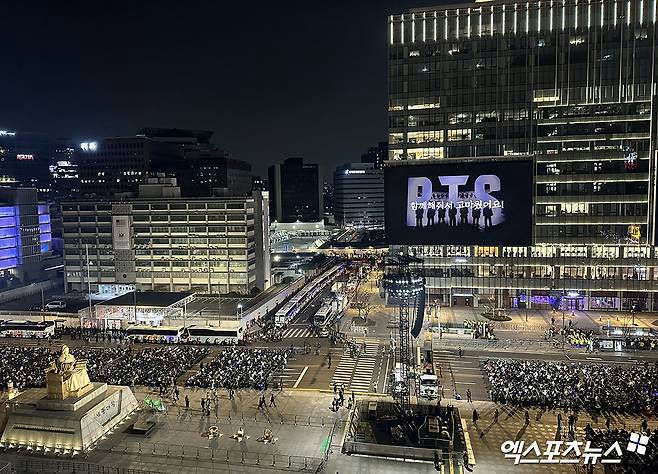
The symbolic use of Gwanghwamun was visible only during the opening stage with the National Gugak Center, appearing like a fleeting flash. Once the main performance began, the structures and graphics overshadowed the setting, diminishing its intended significance. The production team’s ambition to immerse viewers in the square was lost in confusing camera work. While the opening aerial shots sweeping from the gate to the plaza were grand, Gwanghwamun quickly faded into the background once the LED stage took over. Ironically, wide shots of the venue even made the crowd appear smaller than it actually was.
Poor lighting design further weakened the visual impact. Instead of highlighting the grandeur of the historic site, Gwanghwamun was left in darkness, making it difficult to distinguish whether the stage was set in a culturally significant landmark or just another urban roadway. Strangely, one of the most visible elements during the broadcast was a nearby building’s electronic billboard, which repeatedly appeared in aerial shots.
The most critical flaw, however, was the failure to capture the essence of the artists themselves. BTS’s signature strengths—precise choreography and powerful group performances—were fragmented by experimental camera angles, diminishing their impact. Even fans voiced dissatisfaction with the editing and direction.
Considering the extensive city-wide restrictions imposed for the event, which caused inconvenience to nearby residents and businesses, the final outcome felt overly superficial. Achieving No.1 on Netflix cannot justify these strategic shortcomings. In terms of substance, the concert fell short of fully delivering both the group’s artistic depth and the cultural significance of its setting, focusing instead on the format of a “live broadcast.”
Despite the scale, resources, and global platform involved, the production ultimately struggled to define what it truly wanted to showcase. As such, this event stands as a striking and costly lesson—one that future large-scale productions would do well to remember.
Sources: Daum
You must be logged in to post a comment.