

In April 2026, Chinese actor Zhang Xiaolei used 400,000 yuan of his savings to rent farmland in Qinghai and start growing chili peppers. Just two years ago, he was one of the familiar “CEO-type” leading men dominating China’s booming short drama industry.
At the peak of the market, Zhang earned between 20,000 to 30,000 yuan per month, with filming schedules packed nonstop. Today, his situation has drastically changed.
“If there’s filming, I act. If not, I go home and farm,” he told reporters.

His story is no longer unusual. It has become symbolic of an entire entertainment sector that exploded into a goldmine — and then collapsed almost overnight under the combined pressure of platform restructuring and artificial intelligence.
China’s Short Drama Boom Became Too Big, Too Fast
Short dramas, known in China as weiduanju (微短剧), are mobile-first vertical series usually consisting of 60–100 episodes, each running only one to five minutes long. Their plots often revolve around highly addictive formulas: cold CEOs, revenge fantasies, time travel, romance, and “sweet love” storylines.
The model proved massively profitable.
By January 2026, ByteDance’s Hongguo Short Drama platform reportedly reached 100 million daily active users and nearly 300 million monthly users. Industry revenue estimates for 2025 exceeded 15 billion yuan. Nearly 500 short dramas surpassed one billion views on Hongguo alone.
Production exploded because platforms guaranteed minimum profits for producers. Even low-performing projects could still receive guaranteed revenue between 200,000 and 350,000 yuan.

Actors benefited enormously:
- Mid-tier actors earned thousands of yuan per filming day.
- Popular “CEO actors” could make up to 50,000 yuan daily.
- Thousands of newcomers flooded into Hengdian and Zhengzhou hoping to break into the industry.
By 2025, China produced roughly 50,000 short dramas in a single year.
The Double Collapse: Platforms Pulled Funding While AI Took Over
The crash came from two directions simultaneously.
First, Hongguo gradually removed its guaranteed revenue system at the end of 2025. By January 2026, most ordinary guarantee programs had disappeared completely.

Platforms argued the system encouraged massive amounts of low-quality content known internally as “three-no dramas”:
- no original scripts,
- no proper production,
- no real storytelling quality.
Some small teams reportedly spent only 3,000 yuan producing a drama while still collecting 200,000 yuan through platform guarantees.
Once the guarantees vanished, cash flow across the industry collapsed immediately.
Then came AI.

ByteDance launched Seedance 2.0 shortly before Lunar New Year 2026. Within weeks, AI-generated “sim-real” dramas accounted for 38% of the platform’s Top 100 chart, up from only 7% during all of 2025.
The economics were devastating:
- A human-produced episode cost tens of thousands of yuan.
- An AI-generated episode could cost under 500 yuan.
- A complete polished AI short drama could be produced for under 200,000 yuan — roughly one-tenth the cost of traditional productions.
No actors. No filming locations. No costumes. No sets.
The Three Layers Of Victims
Background Actors Are Disappearing Completely
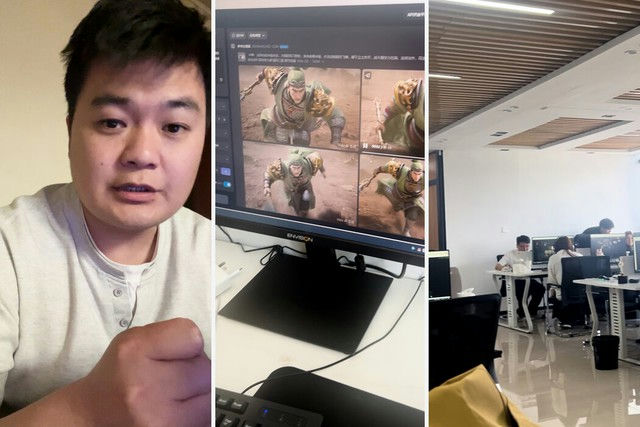
Chat groups for extras in Hengdian reportedly became nearly silent after Lunar New Year.
Daily wages fell from around 150 yuan to as low as 80 yuan, assuming work was available at all. Dangerous stunt scenes also disappeared because AI could simulate explosions and action sequences far more cheaply.
Mid-Tier Actors Were Trapped By Their Own Formulas
This group may have suffered the hardest blow.
The “CEO,” “revenge heroine,” and “poor-boy-success” archetypes became the easiest templates for AI systems to replicate because the performances were already highly formulaic and repetitive.

Algorithms learned the expressions, delivery styles, and emotional patterns faster than expected.
One actress reportedly submitted 10 scripts without receiving a single callback. Even after lowering her fees to one-third of previous rates, she still could not find work.
Even Top Actors Lost Half Their Income
Even actors with billion-view dramas were hit hard.
According to Hengdian industry data, short drama acting opportunities fell more than 70% in the first quarter of 2026 compared to the previous year, while salaries were cut roughly in half.
Only performers with millions of platform followers still retained strong bargaining power.
AI Is Creating New Ethical Nightmares
The crisis is no longer just economic.
One of the most alarming stories involved 26-year-old influencer Christine Li, who discovered her face had been used without permission in an AI-generated short drama.
The AI character using her likeness reportedly appeared in violent scenes, including animal abuse. Li said she never signed any agreement or received payment.

“I felt deep fear,” she told AFP.
“I kept wondering how someone could do this.”
The platform later removed the content for violating regulations.
Entire Filming Cities Are Emptying Out
The impact has spread beyond actors.
At the height of the boom, Zhengzhou reportedly hosted more than 100 active film crews per day. In early 2026, production numbers fell between 30% and 75% depending on the district.
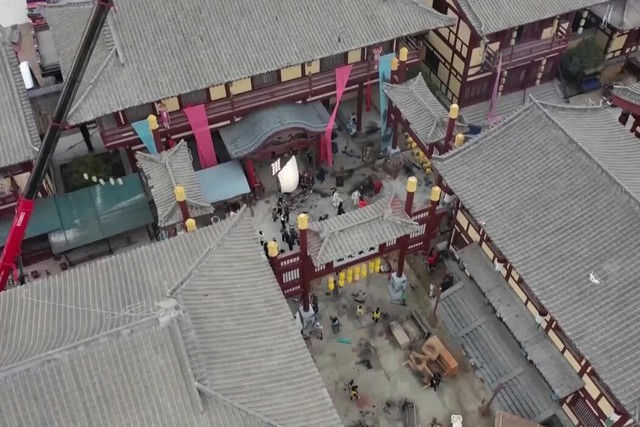
Costume warehouses now sit unused. Makeup artists have been replaced by AI filter technicians. Many former production workers now deliver food or operate small street businesses.
Some unemployed actors have even begun filming “jobless actor street vending” vlogs in hopes a director might notice them online.
Platforms Insist Human Dramas Will Survive
ByteDance executives have denied abandoning human productions entirely.
Hongguo executives stated their 2026 content investment budget increased more than 40% year-over-year, while new funding initiatives can provide selected projects with up to 2 million yuan in support.
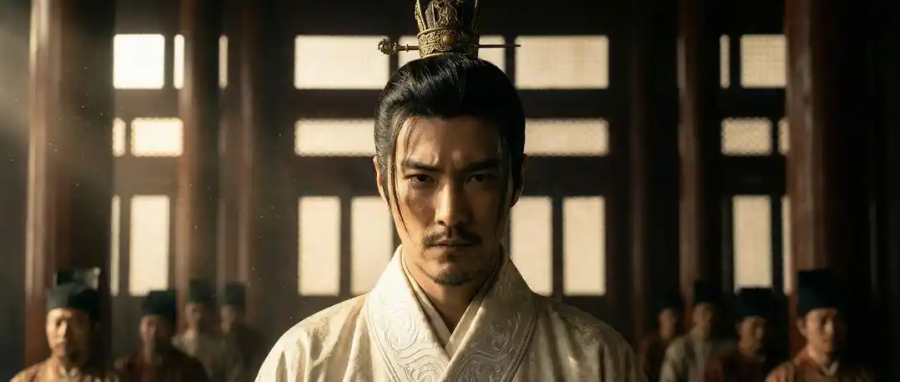
However, many workers inside the industry say those opportunities now only benefit large established studios rather than ordinary actors and small production teams.

The Future May Belong To “Luxury Human Cinema”
At the 2026 China Television Production Conference in Shenzhen, iCapital CEO Wang Ran predicted AI could eliminate one-third to one-half of all entertainment industry jobs.
He specifically warned:
- extras would largely disappear,
- stunt performers would become obsolete,
- mid-level actors would be heavily replaced.
Yet he also offered one striking prediction:
Human-made productions with real actors and real locations may eventually become the “Hermès” version of entertainment — rare, premium, and expensive.

That future may still come.
But for now, many former stars of China’s short drama boom are simply trying to survive — whether through livestreaming, delivery work, or farming chili peppers far away from the cameras that once defined their lives.
Sources: Netizenbuzz
You must be logged in to post a comment.