

Every few months, the K-pop industry finds itself under fire when idols perform abroad, only to be met with criticism for lackluster or uninspired stages. This time, the spotlight is on aespa, the girl group under SM Entertainment.
On September 12, aespa appeared on ABC’s Good Morning America to perform Rich Man. Unlike the dazzling, heavily produced stages often seen in Korea, the performance featured no backup dancers, no dramatic lighting, no camera effects, and no signature visual spectacle. The stripped-down setup made small mistakes in choreography and uneven coordination between members more noticeable, sparking a wave of disappointment online.
Thousands of comments flooded YouTube, many in Korean, criticizing the stage. One viewer wrote, “Idols are the product of countless professionals. When you take away the elaborate setup, they don’t seem as appealing.” The comment gained over 6,000 likes. Another bluntly asked, “Why did they choose to perform this way? I was shocked after watching.”
aespa is hardly the first group to face such backlash. Le Sserafim, Illit, Lisa of BLACKPINK, and even BTS have previously been criticized for live performances that failed to meet sky-high expectations. The recurring cycle of criticism highlights a deeper issue: idols often appear less impressive without the powerful production elements—stage lighting, camera work, backing tracks, and dance crews—that have become synonymous with K-pop.
This raises a larger question: Should K-pop idols be judged on raw performance ability, or on the total package created by their agencies?
For fans, K-pop has always been more than music—it is an immersive blend of fashion, choreography, brand storytelling, and the unique bond between idols and their supporters. When these layers are stripped away, audiences feel as though they are watching an “unfinished version” of their stars.

Le Sserafim’s heavily criticized 2024 Coachella stage is a prime example. Their unstable live vocals prompted comparisons to aespa and fueled concerns that idols are becoming overly dependent on staging and post-production. Music critic Choi I Sak noted at the time: “K-pop needs to be more honest about the impossible demands placed on artists. That pressure creates a system of ‘vocal labor division,’ where each member only handles part of the perfect whole.”
Even BTS leader RM admitted in an interview with El País that the K-pop trainee system can feel “inhumane,” requiring children to maintain flawless singing, dancing, and appearances from a young age. While this harshness sets K-pop apart globally, it also exposes its limitations.
An industry insider added, “Fans today expect idols not only to look good and dance well but also to sing live perfectly and express raw emotion. But at the end of the day, they are human. Unrealistic expectations make people forget that.”
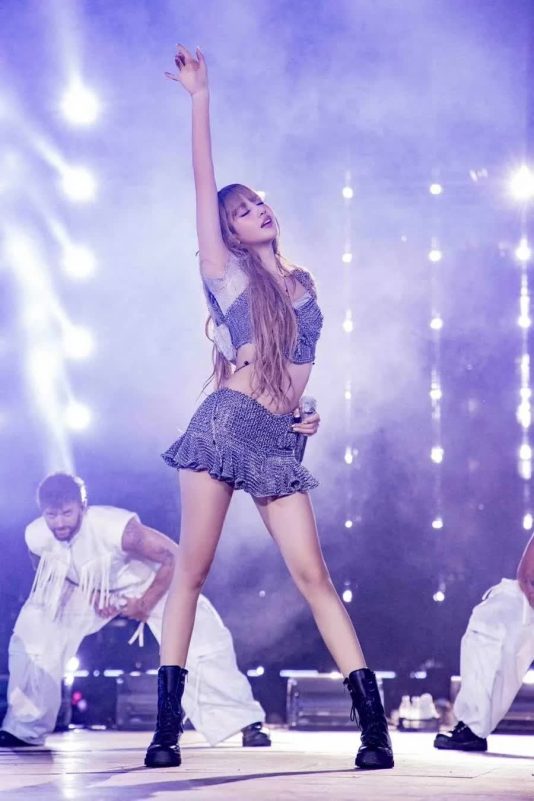
The repeated debates over aespa, Le Sserafim, and others reveal a turning point for K-pop. After more than two decades of growth, audiences are beginning to demand authenticity—real vocals, genuine emotions, and natural presence on stage. Yet in such a tightly controlled industry, where every outfit and camera angle is meticulously planned, delivering pure spontaneity is nearly impossible.
aespa’s U.S. stage, stripped of its usual spectacle, exposed the fragile side of idols trained to shine under controlled conditions. It served as a reminder that while perfection helped K-pop conquer the world, it may also be the very thing holding its artists back.
Sources: kenh14
You must be logged in to post a comment.