

HYBE’s rookie boy group CORTIS has found itself at the center of a new controversy after a statement from one of its Chinese fan communities triggered heated debate over chart manipulation and organized fan support.
The issue surfaced shortly after reports emerged that two Chinese fans had been arrested for allegedly trespassing into the group’s residence. As criticism toward the fandom intensified, a Chinese fanbase released a public statement attempting to distance the wider community from the individuals involved.
In the statement, the fanbase defended the broader Chinese fandom while highlighting the extensive support it had provided for CORTIS. Fans acknowledged spending significant amounts of money on album purchases and organizing large-scale streaming efforts to help improve the group’s performance and visibility.
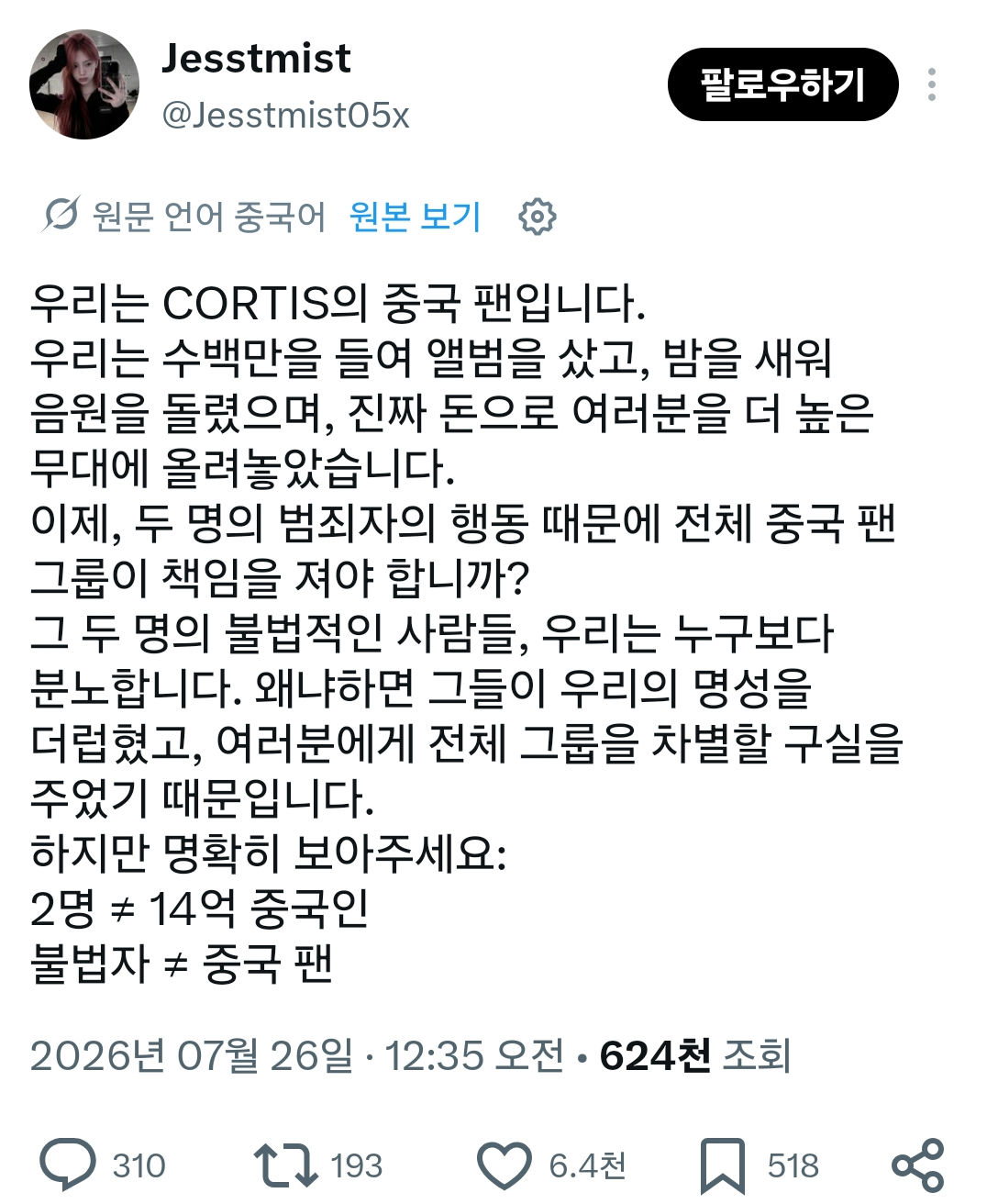
“We are CORTIS’s Chinese fans.
We spent millions buying albums, stayed up all night streaming their songs, and used our own money to help raise them to bigger stages.
Now, because of the actions of two criminals, does the entire Chinese fandom have to take responsibility?
We are angrier than anyone else at those two people who acted illegally.
They damaged our reputation and gave people an excuse to discriminate against the entire fandom.
But please be clear about this:
Two people do not represent 1.4 billion Chinese citizens.
Criminals do not represent Chinese fans.”
Although the statement was intended to separate the larger fandom from the two individuals accused of illegal behavior, many Korean netizens focused instead on the fanbase’s acknowledgment of large-scale album buying and overnight streaming campaigns. The remarks quickly spread across Korean online communities, where users questioned how much coordinated fan activity influences domestic music charts.
The discussion soon expanded beyond CORTIS. Many commenters argued that overseas fanbases from China, Japan, and Southeast Asia have long played a significant role in chart performance, while others claimed the issue reflects broader problems within the K-pop industry rather than the actions of a single fandom.
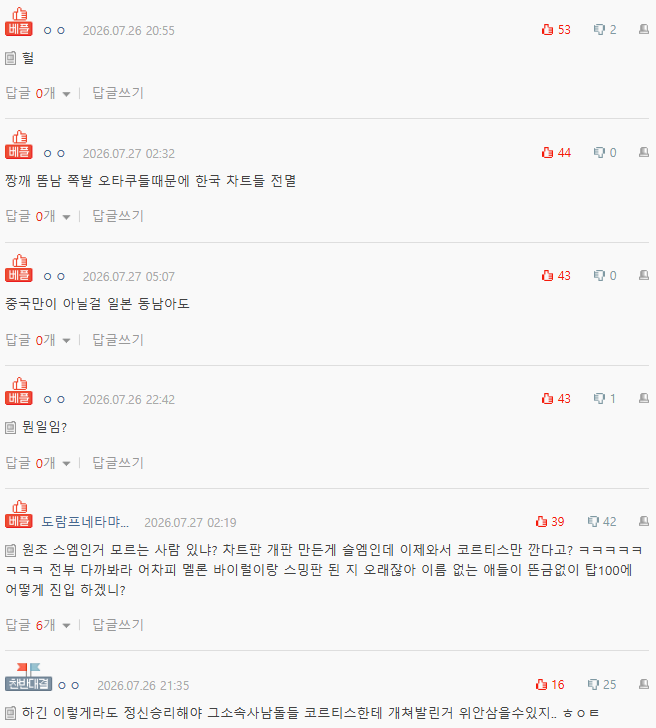
Some online reactions included:
- “Wow.”
- “Chinese, Japanese, and Southeast Asian fandoms have completely changed the Korean charts.”
- “This isn’t just about China. Japan and Southeast Asia are part of it too.”
- “What exactly happened?”
- “People act like this only started with CORTIS, but chart manipulation and aggressive streaming campaigns have existed for years. How else do unknown groups suddenly enter the Top 100?”
As debate continues, the controversy has reignited long-standing discussions about the influence of organized fandoms, mass streaming, and bulk album purchases on the credibility of South Korea’s digital music charts.
Sources: Koreaboo
You must be logged in to post a comment.