

According to a recent report by Money Today, major universities across the country are operating festival budgets ranging from approximately 100 million to 400 million KRW ($72,000–$290,000). A large share of those funds is reportedly being allocated to celebrity booking fees.
A student council representative from a university in Seoul revealed that as schools increasingly prioritize star-studded lineups, talent booking costs can account for as much as 80% of an event’s total budget.
One university reportedly allocated 170 million KRW (approximately $123,000) of its 400 million KRW festival budget solely to celebrity appearances. Another institution spent around 40% of its 300 million KRW budget on performers.
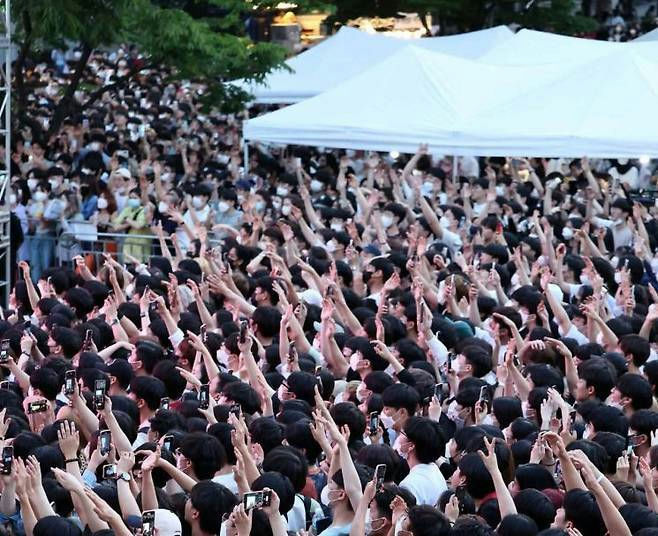
In addition to artist fees, universities often pay agency or event management commissions, which industry insiders say typically amount to around 10% of the booking cost.
The growing demand for idol groups has fueled a steady increase in appearance fees.
According to entertainment booking agency Star Korea, top-tier K-pop groups currently command between 65 million KRW and 120 million KRW (approximately $47,000–$87,000) per appearance.
Mid-tier groups are said to charge between 35 million KRW and 55 million KRW, while rookie groups in their first one to three years after debut generally receive between 12 million KRW and 25 million KRW.

Industry insiders specifically cited aespa as an example of the current market.
According to one entertainment industry source, booking a performance from the SM Entertainment girl group often requires a fee exceeding 100 million KRW (around $72,000), reflecting the group’s immense popularity and strong demand during festival season.
The group remains one of the most sought-after acts among universities thanks to its string of chart-topping releases, strong public recognition, and reputation for delivering energetic live performances.

The rising costs have sparked discussions among students and the public regarding the role of university festivals and whether such large expenditures on celebrity appearances are justified.
Supporters argue that major artists attract significant attention, boost school pride, and create memorable experiences for students. Critics, however, question whether tuition-related funds and student fees should be used so heavily on entertainment bookings.
As university festivals continue evolving into large-scale entertainment events, competition to secure top K-pop stars is expected to intensify, potentially driving artist fees even higher in the coming years.
Sources: Daum | 스포츠조선
You must be logged in to post a comment.