
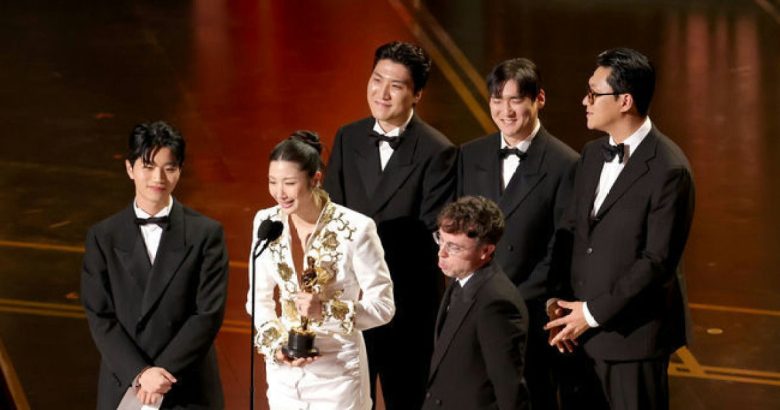
The 98th Academy Awards has become the center of online debate after the acceptance speech for the song “Golden” was abruptly cut short, sparking accusations of unfair treatment from some viewers.
The track “Golden” from the Netflix animated film KPop Demon Hunters won Best Original Song during the ceremony held at the Dolby Theatre in Los Angeles on March 16 (Korean time). The film celebrated a major achievement that night, securing two awards at the prestigious event.
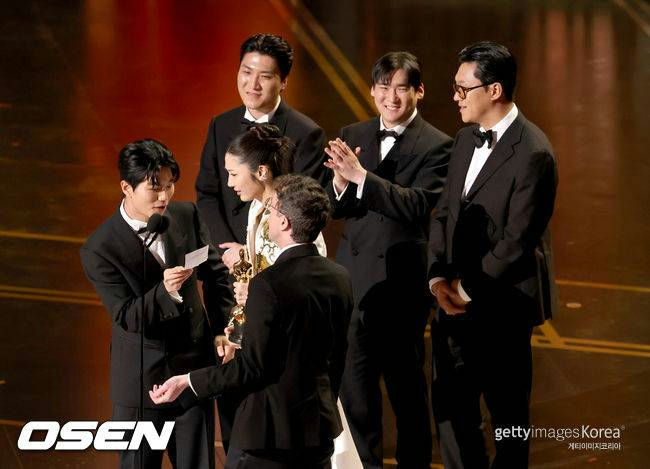
The win had been widely anticipated, especially after “Golden” was selected for a special performance stage during the ceremony. Ultimately, the song triumphed over nominees including “Dear Me” from Diane Never Dies, “Train Dreams” from Train Dreams, “Sweet Dreams Of Joy” from Viva Verdi!, and “I Lied To You” from Sinners.
When the award was announced, singer-songwriter Ejae stepped onto the stage and delivered an emotional speech.
“Thank you. I’m truly grateful to the Academy for giving us this incredible award,” Ejae said while appearing moved. “Growing up, people teased me for liking K-pop, but now everyone sings along to these songs. Like the lyrics say, this award isn’t about success—it’s about resilience.”
She continued by thanking her family and the team behind the project, adding, “I’m grateful for everyone who stood by me. Thank you to Netflix.”
However, while Ejae shared her message, the orchestra began playing the customary music used to signal the end of acceptance speeches. Although the artist quickly grabbed the microphone to continue, the music did not stop, forcing the winners to end their remarks prematurely. Co-creators including IDO, 24, Teddy Park, and Mark Lee had also come on stage but were unable to share their thoughts.
The moment did not go unnoticed by viewers. Korean broadcaster Ahn Hyun‑mo, who was commentating on the ceremony, remarked during the live broadcast that the acceptance speech for the short film category had been given noticeably more time, expressing disappointment that the Best Original Song winners were cut off so quickly.
Following the broadcast, some netizens questioned whether the situation reflected unequal treatment. Comments circulating online included reactions such as “Is this discrimination?” and “They were just reading prepared notes—why not give them a little more time?” Others simply expressed frustration that the creators could not finish their speech during such a significant moment.

Foreign media outlets also pointed this out. CNN stated, “The Academy Awards should not treat K-pop this way.” The outlet commented, “An incident at the Oscars has angered K-pop fans,” adding, “Ejae began tearing up as she handed the microphone to another member of the group, but at that exact moment the music signaling her to wrap up started playing.”
The report continued, “It seems likely that K-pop fans will erupt on social media in protest,” and added, “It was a truly meaningful moment, and it could have been even more wonderful if they had been given enough time. This is genuinely an embarrassing situation.”
Despite the controversy, K-Pop Demon Hunters continues to stand as one of Netflix’s biggest global hits. The animated film follows a K-pop girl group that secretly fights demons while protecting the world, blending music, fantasy, and idol culture.
Since its release in June last year, the film has surpassed 500 million cumulative views worldwide, making it one of the most-watched titles in Netflix history. Its soundtrack also achieved remarkable success, with “Golden” reaching No.1 on the Billboard Hot 100, further cementing the film’s cultural impact.
Meanwhile, the organizers of the 98th Academy Awards have officially addressed the controversy surrounding the abruptly cut acceptance speech by the team behind KPop Demon Hunters.
According to Variety, Rob Mills, Executive Vice President at Walt Disney Television, spoke out in an interview to clarify the situation during the live broadcast.
Rob Mills emphasized that time limits apply to all winners, regardless of how many people take the stage. “An Oscar-winning team can have one speaker or five to six people, but everyone is still subject to the same time constraints,” he explained. He added that the Academy is considering encouraging teams to appoint a single representative for speeches, while allowing others to share their thoughts backstage or via social media.
He also acknowledged the emotional weight of the moment, stating, “Cutting someone off during what may be a once-in-a-lifetime experience is extremely difficult.” Mills noted that time guidelines are communicated in advance, including during pre-ceremony events, but enforcing them remains a challenge. He added that the Academy plans to review and improve how acceptance speeches are managed ahead of next year’s ceremony.
Sources: Daum
You must be logged in to post a comment.