
Once regarded as the highest honor for actors and a celebratory finale for viewers wrapping up the year, the annual Drama Awards have increasingly come to resemble internal company events. As public attention shifts toward OTT platforms and diverse media outlets, terrestrial dramas have struggled to command the same level of cultural impact they once did.
Despite broadcasters’ continued efforts to produce varied content and refresh their awards formats, the 2025 ceremonies failed to escape criticism over their lack of presence and excitement. The core issue, many argue, is the absence of a truly dominant hit drama one that audiences across the board could agree deserved top honors.
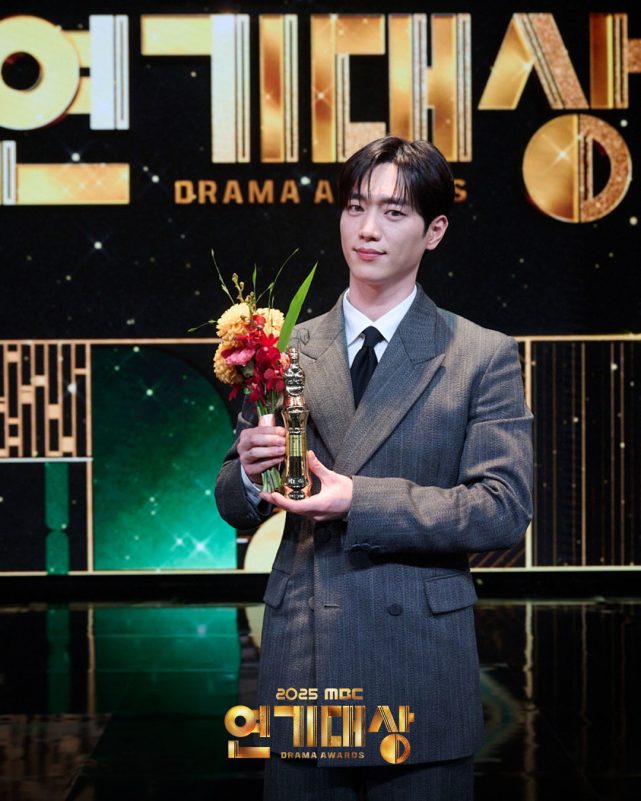
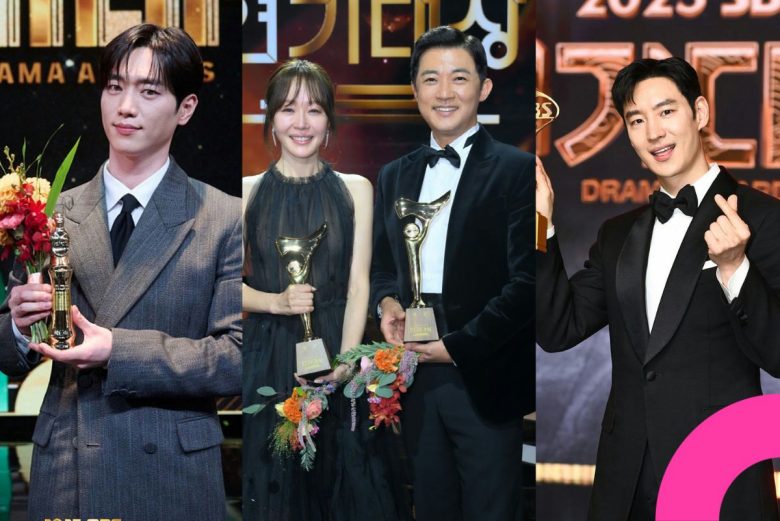
At the 2025 MBC Drama Awards, aired on December 30, 2025, the Daesang (Grand Prize) went to Seo Kang Joon for Undercover High School, which originally aired in February 2025. Given that MBC failed to produce a single drama that surpassed double-digit ratings throughout the year, the decision raised eyebrows. Seo Kang Joon himself admitted on stage that he felt more surprised than joyful, an honest reaction that reflected the public’s mixed feelings. While his humility was appreciated, the moment underscored how far the awards have drifted from the era of nationally beloved dramas that defined past generations.

The following day, the 2025 KBS Drama Awards opted for what many considered the safest but least impactful choice: a shared Grand Prize. Ahn Jae Wook and Uhm Ji Won were jointly awarded for For Eagle Brothers, a weekend drama that aired for six months starting in February 2025. Although the series reached a respectable peak rating of 21.9%, it had already concluded long before the awards, and critics questioned whether it truly stood out compared to traditional weekend dramas. While joint awards can be interpreted as equal recognition, they also risk diluting the prestige of the top honor reinforcing perceptions that no single performance or production clearly rose above the rest.

SBS fared slightly better at its 2025 SBS Drama Awards, thanks to the strength of an established franchise. Lee Je Hoon claimed the Daesang for Taxi Driver 3, marking his second Grand Prize win for the series after 2023. With the latest season achieving ratings of up to 14%, the award was largely uncontested and showcased both Lee Je Hoon’s acting prowess and the enduring power of the Taxi Driver IP. However, from a broadcaster’s perspective, the reliance on proven series rather than new breakout hits sparked criticism that SBS, too, is leaning heavily on safe bets.

Concerns extended beyond the top awards. SBS faced backlash for what some described as “participation-style” trophies, with an unusually large number of winners. Eight recipients were announced each for the Best New Actor and Best Supporting Actor categories, leading to awkward moments where some actors initially failed to realize they had won, assuming they were merely nominees. Critics argued that such practices undermined the value of awards, even for the few genuinely successful productions.
To be fair, terrestrial broadcasters are operating under increasingly difficult conditions, facing soaring production costs and fierce competition from OTT platforms. Judging dramas across different genres and formats also makes definitive comparisons challenging. Still, for the Drama Awards to move beyond functioning as symbolic year-end wrap-ups and reclaim their role as meaningful cultural events, broadcasters must reconsider not only how to produce compelling hits but also whether their award criteria resonate with viewers.
Awards that confuse audiences and embarrass even the recipients risk diminishing the hard work of actors and production teams. As another year draws to a close, the question remains: will future drama awards once again deliver moments that genuinely move both those watching and those standing on stage?
Sources: Daum
You must be logged in to post a comment.