

Yang Yang is unexpectedly facing one of the most disappointing moments of his recent career after the highly anticipated wuxia drama Wulin Ling failed to maintain its explosive early momentum.
Before its release, Wulin Ling was widely considered one of the biggest Chinese drama projects of 2026. The production brought together an extremely powerful creative team, including the prestigious production company Noon Sunshine, writers connected to The Story of Minglan, and directors previously involved with hit dramas such as Nirvana in Fire and Minning Town.
Combined with Yang Yang’s star power, many viewers believed the series would become the next major wuxia phenomenon in Chinese entertainment.
The drama initially appeared to live up to expectations.

According to reports, Wulin Ling achieved a record-breaking opening heat index of 6,334 on Youku shortly after premiere. Yang Yang’s character Zhan Zhao reportedly surpassed 100 million popularity points within just 15 minutes, becoming one of the platform’s fastest-rising character metrics ever recorded.
Television ratings also showed promising signs, with the drama reportedly boosting CCTV-8’s timeslot viewership significantly during its first broadcast.
However, the excitement quickly collapsed after viewers and industry watchers began questioning the authenticity of the drama’s impressive data performance.

Online discussions pointed to suspicious search trends on Baidu, where some smaller cities unexpectedly ranked unusually high in audience interest compared to major metropolitan areas such as Beijing. This fueled growing accusations involving inflated statistics, artificial traffic manipulation, and purchased online promotion.
The controversy intensified further after users claimed Youku’s system occasionally deleted viewing histories and filtered audience comments during the drama’s broadcast period.
Despite maintaining high rankings on some entertainment data charts, the drama reportedly struggled badly in actual streaming performance. According to discussions surrounding Vanhop data, Wulin Ling managed to surpass 20 million views on only one day during its entire first broadcast week — an underwhelming result for a top-tier S+ production starring one of China’s biggest actors.

Some netizens argued the most worrying sign was not even the criticism itself, but rather public indifference.
Many viewers claimed the drama became so cold commercially that even anti-fans stopped mocking it because audiences simply lost interest entirely.
A large portion of criticism focused on the drama’s confusing promotional direction.
Initially marketed as a serious wuxia production emphasizing martial arts and jianghu spirit, the promotional campaign later shifted heavily toward pushing “couple chemistry” content between Yang Yang and co-star Fang Yilun. This led some fans to accuse Youku of intentionally using “male CP marketing” to artificially boost discussion surrounding the series.
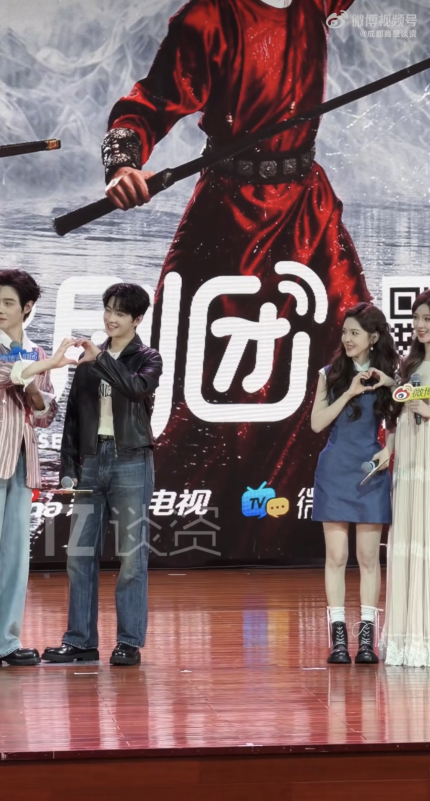
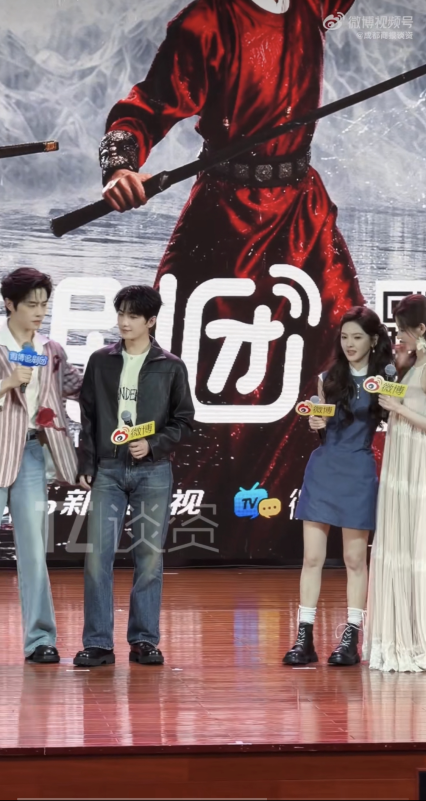
At the same time, other viewers insisted the real issue was simply the drama’s quality itself.
Although many praised the Northern Song Dynasty-inspired set design and noted that Yang Yang personally performed around 95% of his action scenes, audiences still criticized the script for being slow, fragmented, and emotionally weak.
The political storyline reportedly lacked tension, while excessive slow-motion sequences frustrated viewers. Some audiences additionally complained that Yang Yang’s character took too long to properly appear, causing early viewers to lose interest before the story fully developed.

Co-star Zhang Ruonan also became the target of mixed reactions, with some viewers criticizing her line delivery and screen presence.
The disappointing response has now transformed Wulin Ling from one of the most anticipated dramas of the year into what many online commentators describe as one of 2026’s biggest missed opportunities.
For Yang Yang, the situation feels particularly painful because the project seemingly possessed every advantage possible — a famous production team, huge investment, strong promotion, and major platform support — yet still failed to create the explosive cultural phenomenon many expected.
You must be logged in to post a comment.