
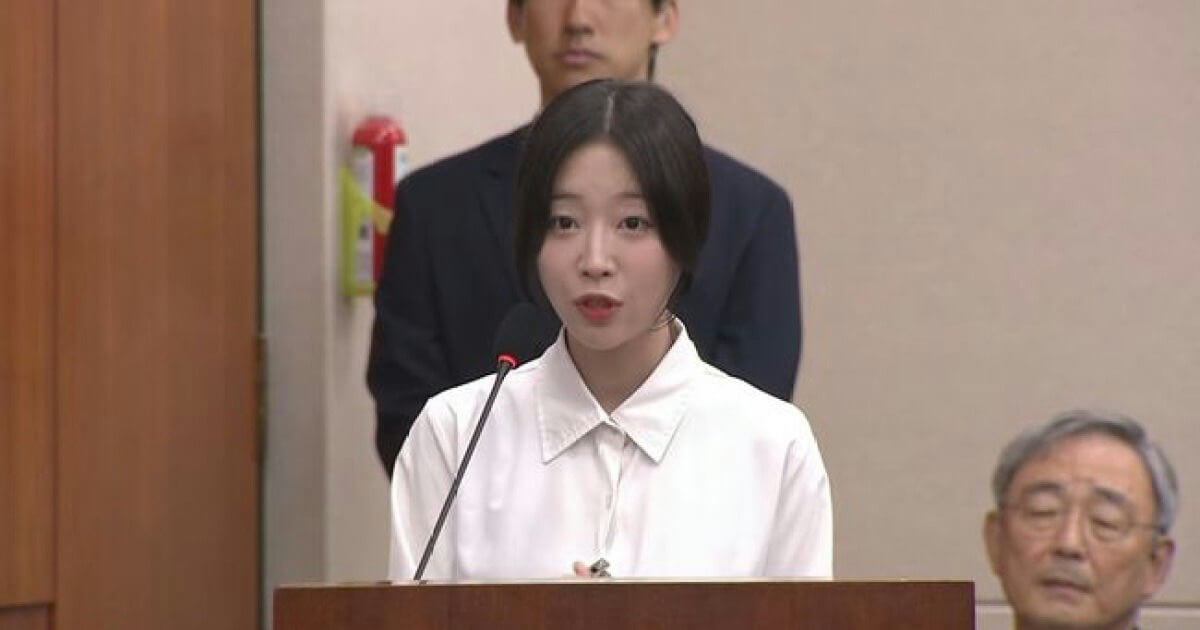
YouTuber Tzuyang (real name Park Jung-won) appeared before the National Assembly on October 14, revealing the emotional trauma she endured as a victim of so-called “cyber wreckers” — creators who spread false or exploitative content about public figures for profit.
Speaking at the Science, ICT, Broadcasting, and Communications Committee’s parliamentary audit held in Yeouido, Seoul, the popular mukbang YouTuber confessed that the attacks left her paralyzed with fear.
“At the time, I was so scared and hopeless that I couldn’t do anything,” she said. “For years, I endured threats and blackmail. As a woman, there were things I didn’t want to reveal publicly, which made it even harder.”
Tzuyang explained that malicious videos exposing her private life — many of which contained false or distorted claims — spread rapidly across YouTube.
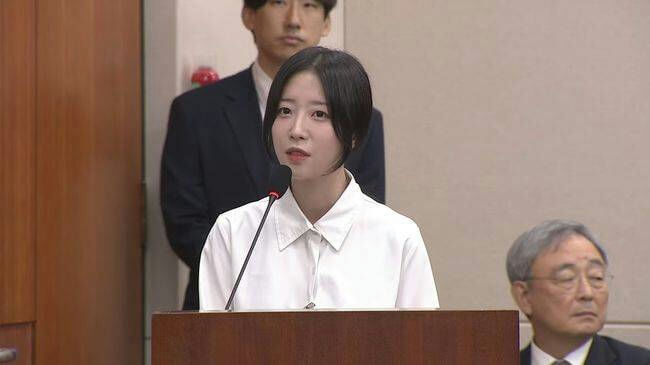
“I was terrified of their retaliation, so I couldn’t respond or even file lawsuits. With help from people around me, I slowly started to fight back. I realized these are things we must confront, not run away from,” she said.
When asked if she had sought help from YouTube, Tzuyang said she followed the platform’s reporting process but found it ineffective.
“I contacted YouTube officials and used the report button, but the response was slow. The videos spread to hundreds of thousands before removal, making it almost impossible to clear misunderstandings. Some videos stayed up for weeks — some never came down,” she explained.
She also shared how expensive and exhausting legal action can be: “I was fortunate to receive public support, but most victims can’t afford this. They have to keep working while covering legal and medical costs. What’s hardest is the secondary harm and public judgment.”
Tzuyang’s attorney Kim Tae-yeon, who attended alongside her, said current laws — such as those under the Information and Communications Network Act — are inadequate for deterring such crimes.
“Defamation under the ICT law carries up to seven years in prison, but creators treat it as a minor offense. They care only about ad revenue and Super Chat profits. The money they earn from exploiting celebrities often exceeds the fines they pay,” Kim Tae-yeon stated.

He added: “Without stronger, enforceable laws to halt monetized harassment, the punishment cannot match the crime.”
Despite her trauma, Tzuyang expressed hope that her testimony might inspire better systems for future victims.
“I’ve suffered from so many false rumors that I do think a stronger law could help. But I also worry that even good laws can be misused,” she said. “I came here not as a celebrity, but as someone who hopes no one else goes through what I did.”
She also appealed to online users directly: “When you leave a comment, please remember the person you’re writing about has feelings too. Some people don’t survive what others dismiss as just words.”
In July 2023, Tzuyang revealed that her former agency CEO also her ex-boyfriend — had conspired with others to blackmail her, paying over ₩216 million KRW (≈ $160,000) to keep personal information from being exposed.

Following a high-profile investigation, several perpetrators were sentenced:
- Goo Jae-yeok (YouTuber “Gu Ja-ryeok”) — 3 years in prison
- “Fake Detector” — 1 year in prison, 3-year probation
- “Caracula” — 1 year in prison, 3-year probation, 240 hours of community service
- “Crocodile” — fined ₩5 million
Two women who blackmailed Tzuyang between 2021–2022 were also convicted, receiving suspended prison sentences for extortion totaling over ₩216 million KRW, with one also charged for an additional failed blackmail attempt in 2023.
Tzuyang’s courage in speaking publicly at the National Assembly has reignited debate about the responsibility of online platforms and the limits of free speech in digital media.
Her testimony has drawn praise from lawmakers and citizens alike, positioning her as a symbol of resilience against South Korea’s growing issue of cyber exploitation.
Sources: Daum
You must be logged in to post a comment.