
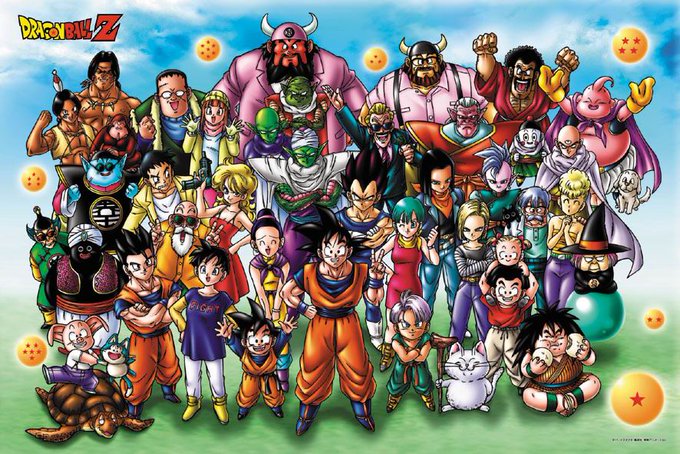
“Dragon Ball” debuted as a manga in 1984 and was quickly adapted into an anime. Goku’s adventures gained immense popularity, establishing their place on the international stage and becoming a phenomenon throughout the 1990s.
However, the series reached a significant turning point when it was time to tell the story of Goku as an adult. The young warrior who had faced countless dangers was now married. Akira Toriyama needed a way to connect Goku to the younger generation while still keeping him as the main character.

This led to the idea of giving Goku a son. However, the new phase of the anime required a title, as the manga itself retained the name “Dragon Ball” until “Dragon Ball Super”. So, the legendary mangaka had to brainstorm suitable titles for the continuation of Goku’s story.
Early Name Ideas Before “Dragon Ball Z”
Before settling on “Dragon Ball Z”, Akira Toriyama considered several other names:
- “New Dragon Ball”
- “Dragon Ball 90”
- “Dragon Ball: Wonder Boy”
- “Dragon Ball: Gohan’s Big Adventure”
Fortunately, none of these names were well-received by Toei Animation, the studio producing the anime at the time, so they were ultimately rejected.
How Did “Dragon Ball Z” Come to Be?

The name “Dragon Ball Z” was not born out of a desire to appeal to Generation Z, nor was it meant to signify the finality of the series because Z is the last letter of the alphabet—both are incorrect assumptions.
The truth is that while brainstorming titles, “”Dragon Ball 2” was written in a draft. One of the designers mistakenly interpreted the “2” as a “Z” and created a logo design that everyone loved. That’s how “Dragon Ball Z” came to life.
By retaining “Dragon Ball” in the title, the sequel maintained brand continuity and connected the two series seamlessly.
The Impact and Legacy of “Dragon Ball Z”
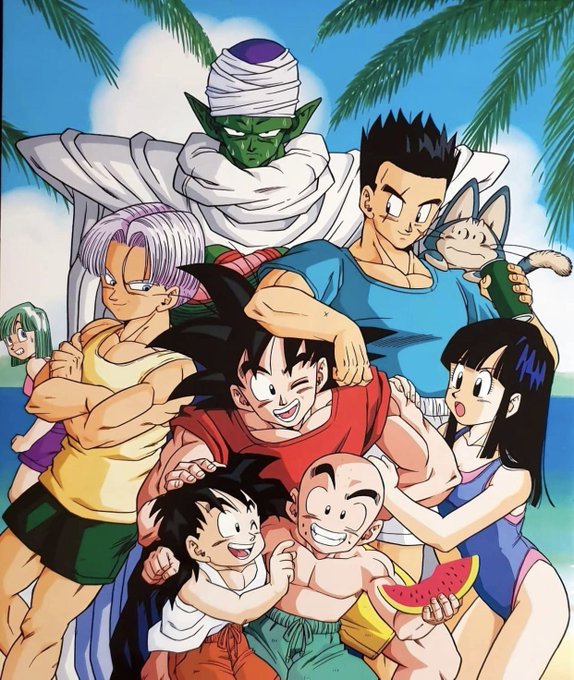
As we know, “Dragon Ball Z” became the direct sequel to the original “Dragon Ball”. However, it introduced a shift in tone and focus, considering that:
- The story expanded to include intense battles and the exploration of power levels.
- It delved deeper into the Saiyan heritage, introducing iconic characters like Vegeta and exploring Goku’s extraterrestrial origins.
- The narrative evolved to include threats on a galactic scale, such as the tyrant Frieza, the androids, and Majin Buu.
Unlike the original series, the mystical Dragon Balls transitioned from being a central plot device to a backdrop for larger, more epic storytelling.
The series’ influence is monumental, solidifying its position as one of the greatest anime of all time. It has left a lasting legacy, inspiring numerous spin-offs, games, movies, and a devoted global fanbase even decades after its release.
Source: GK
You must be logged in to post a comment.