
In August 2009, tragedy struck a family when a 34-year-old supporting actress ended her life by leaping from the 18th floor of a building at 8:18 p.m. She deliberately chose the date and time because the numbers resembled curse words in Korean, leaving behind a note that read, “The only way to live is to die.” Just six days later, her 30-year-old younger sister, also a supporting actress, followed the same path, writing in her will, “Mother, take revenge.” Two months later, their father died of a brain hemorrhage brought on by shock, leaving their mother completely alone.
The elder sister, identified as A, had started working as an extra in 2004 through her younger sister, B. Initially quiet and composed, she soon began to show troubling changes—muttering phrases like “He must die” and scribbling strange notes such as “Drowning is the answer” and “Beware of the manager.”
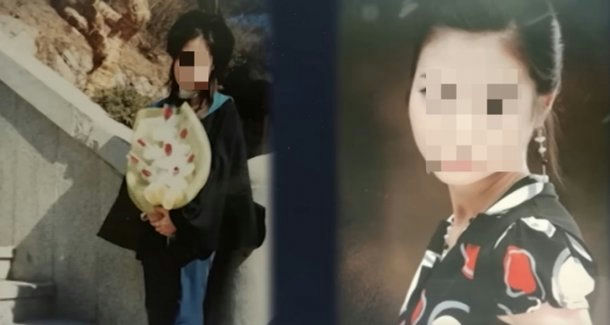
During psychiatric counseling, A confessed a horrifying truth: from August 2004, she was sexually assaulted by 12 men at filming sites, including crew managers, casting staff, and production heads. She revealed that she had been drugged by a crew leader, referred to as C, before being raped. C and others repeatedly assaulted her, introducing her to others as a “lewd woman.” She was threatened with lines such as, “If you speak, we’ll kill your mother and sister.”
With her mother’s encouragement, A filed a police report accusing four men of rape and eight of sexual harassment. But according to her mother, the investigation itself was abusive. Police handed A paper and a ruler, demanding she draw the perpetrators’ genitals—detailing color, length, and girth. With no partitions separating her from the accused, officers asked her to describe assault scenarios aloud, while some perpetrators mocked her, laughing and reenacting sexual positions. Terrified, her mother pulled her from the station, and A even attempted to run into traffic in despair.
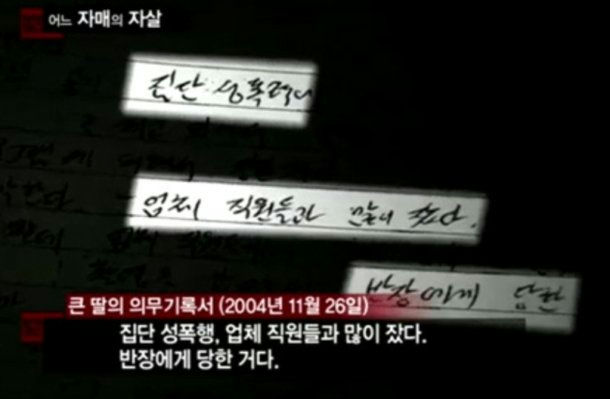
The ordeal worsened as perpetrators visited her home to issue death threats. Under constant harassment and facing police mishandling, A withdrew her complaint in 2006, writing only: “It’s too hard.” Three years later, unable to endure her trauma, she ended her life, leaving behind a devastating note: “I was nothing but their toy. There is no reason to live anymore.”
Her younger sister B, overcome with guilt for having introduced A to the job that led to her abuse, also committed suicide just six days later. The chain of tragedy shattered the family: their father died shortly afterward from a brain hemorrhage, leaving the mother to fight alone.
None of the perpetrators faced criminal punishment. Because A had withdrawn her original complaint, re-filing charges was impossible. In 2015, her mother pursued a civil lawsuit, where the court acknowledged the assaults but dismissed the case due to the statute of limitations.
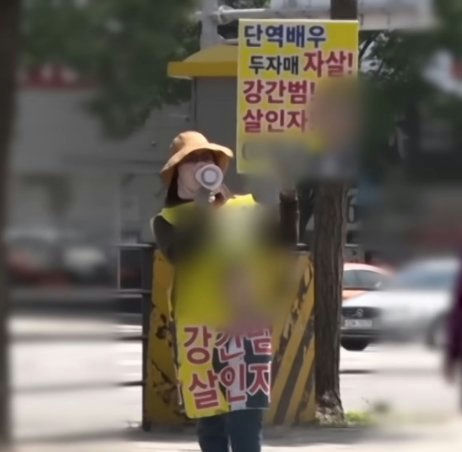
Determined to seek justice, A’s mother began staging one-person protests and later joined the momentum of the 2018 #MeToo movement. However, progress stalled as perpetrators denied involvement and some refused investigation. Instead, the mother faced retaliation—she was sued for defamation and even forcibly taken by police after protesting at the workplace of an officer accused of mishandling the case. Though the court acquitted her, it admitted the justice system had inflicted “unbearable pain” on her daughters.
Even today, A’s mother continues to campaign for accountability. She claims the perpetrators still work in the industry, with one now a CEO of an entertainment agency. By pressuring broadcasters, she has successfully had some of them removed from projects. In 2019, she launched a YouTube channel exposing their names and faces, appealing directly for punishment.
In a recent livestream on August 25, she vowed to push for the abolition of statutes of limitations on such crimes and to seek a retrial. Her fight, now entering its third decade, is not only for her daughters but also to prevent future victims from suffering the same fate.
Sources: Nate
You must be logged in to post a comment.