
One of the greatest masterpieces of Hayao Miyazaki
With boundless creativity and an infinite love for the spiritual culture of his homeland, Hayao Miyazaki crafted an unparalleled spirit world, and the spirit world in “Spirited Away” is perhaps one of the most grandiose worlds ever depicted on screen. Its grandeur lies not only in the meticulously crafted settings but also in the sheer number and intricate designs of the characters, all of which were handled with exceptional care and attention to detail.
Above all, the filmmakers infused these elements with a distinctly oriental touch—unique yet profoundly refined. These qualities have elevated the film to the pinnacle not only of animated cinema but also to what can be considered the very height of art itself.
As for the storyline, “Spirited Away” is built on an astonishingly meticulous script, where every detail and even the smallest line of dialogue holds meaning and can be interpreted in multiple ways.

The film introduces viewers to various characters, skillfully portraying their development in a convincing manner. Through these journeys, it conveys profound and nuanced philosophies about deeply human issues, such as flaws and vices, the nature of humanity, and even life’s transformative experiences that force us to change.
Instead of continuing to praise “Spirited Away”, let’s look at the tremendous achievements this film has accomplished. At the time of its release, “Spirited Away” set a record as the highest-grossing Japanese animated film worldwide. In terms of accolades, it was widely acclaimed by critics, consistently appearing in most lists of the greatest films of all time by renowned publications. The film won numerous awards, both big and small, with its most significant achievement being its victory in the Best Animated Feature category at the 75th Academy Awards.
This victory holds immense significance, as in the 109-year history of the Oscars, “Spirited Away” remains the only Asian animated film to have ever been named the winner in this category.
A spiritual world
The film begins with young Chihiro Ogino and her family moving to a new home. While driving, her father takes a wrong turn down an unfamiliar path, leading to Chihiro’s entire family ending up lost in a strange spiritual realm—the land of spirits, home to Japan’s deities.
However, even before Chihiro’s family decides to take the risk and wander into this place, “Spirited Away” has subtly hinted at the spiritual elements that will later unfold through small details. For instance, when Chihiro’s family realizes they are lost, a gate erected along the roadside can be seen beside. Though it appears much smaller than its real-life counterpart, this is likely a “Torii gate”.
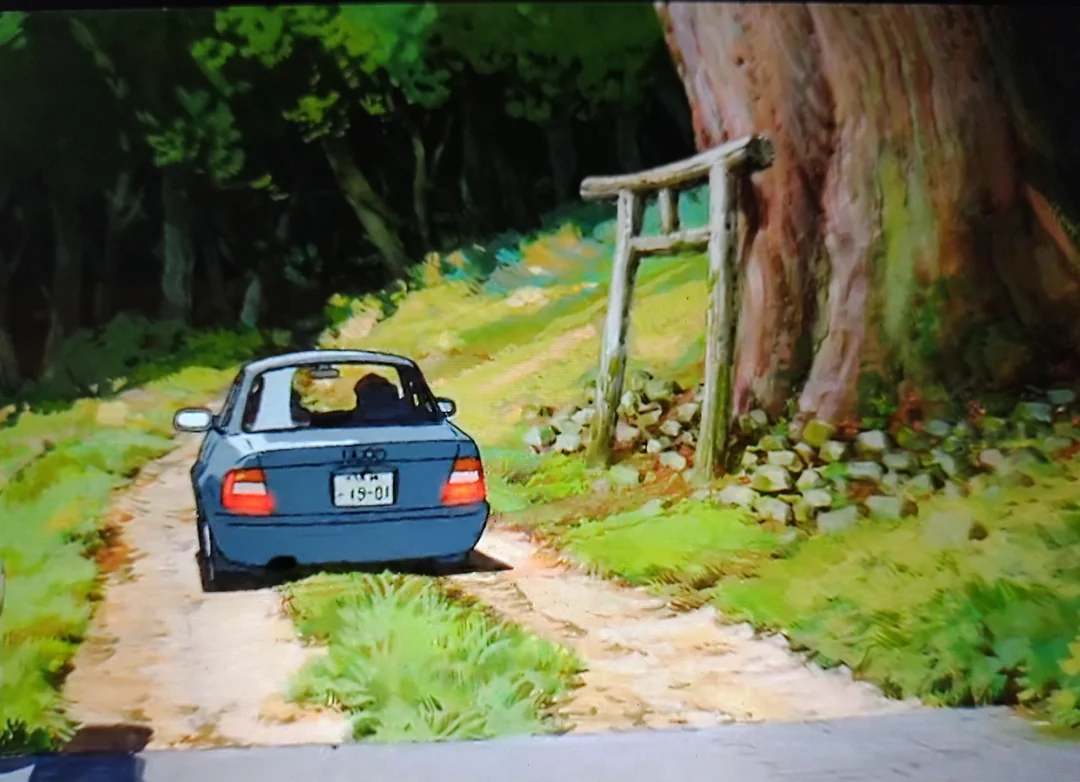
For those unfamiliar, a Torii gate, also known as the “heaven’s gate,” is the entrance to Shinto shrines in Japan and one of the most iconic symbols of Japanese culture. Beyond its symbolic representation of prosperity and abundance, the Torii gate also represents the boundary between the mortal world and the sacred realm of the gods. Therefore, the appearance of the gate in this scene likely signals that Chihiro’s family is about to step into this spiritual realm.
In addition to the Torii gate, the filmmakers incorporated other similar details, such as the small stone mounds stacked by the roadside that resemble miniature houses. Chihiro’s mother refers to these as “Ishi no Hokora”. “Ishi” means stone, and “Hokora” or “Hokura” refers to small Shinto shrines often found scattered near larger shrines, dedicated to local folk gods. Or, as in the film, these could represent homes of deities that don’t belong to the jurisdiction of any major shrine. It’s also possible that these are homes for deities who later come to rest at Yubaba’s bathhouse.
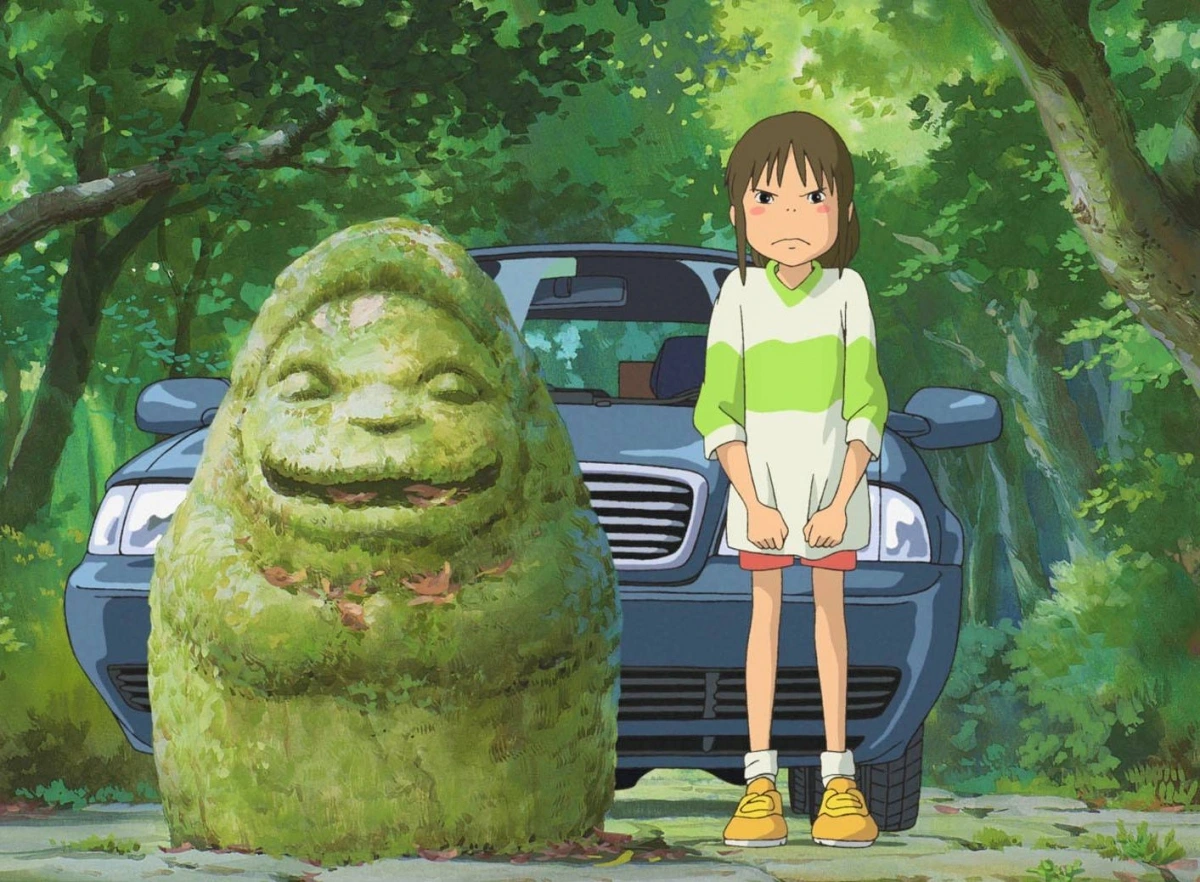
Another detail that strongly hints at the spiritual elements is the statues Chihiro noticed, which also appear near the entrance to the tunnel. These statues’ appearance closely resembles a “Daruma”, a type of traditional doll that is incredibly famous in Japan. Culturally, the Daruma doll is a highly symbolic spiritual object in Japan. It is considered a talisman of good luck and prosperity, representing the hope that the owner’s wishes or dreams will come true.
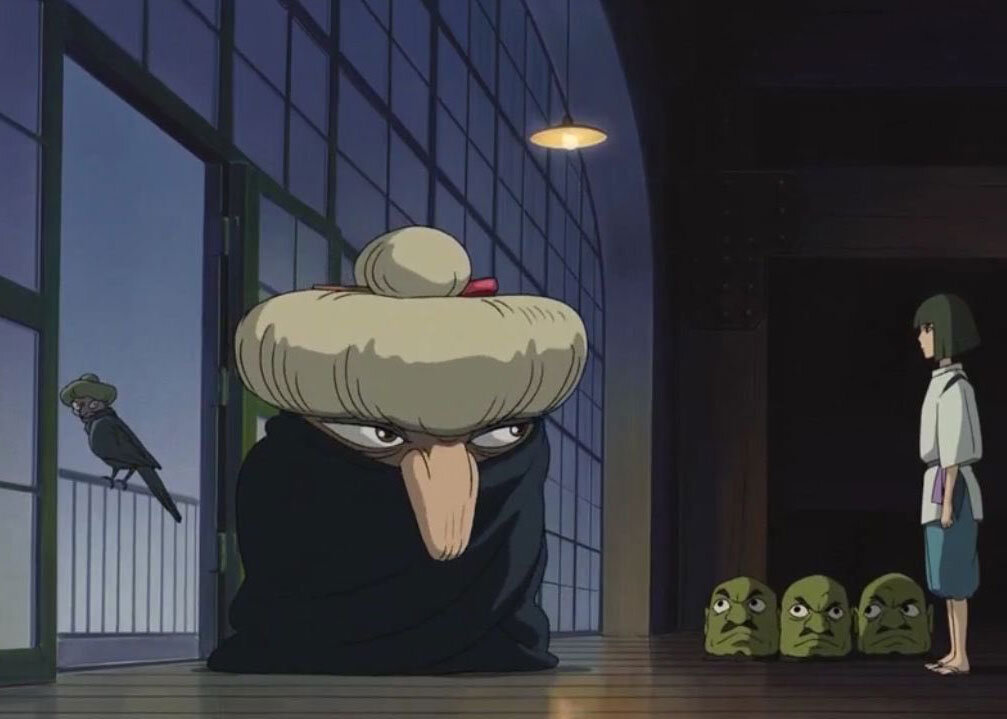
However, judging by how it is portrayed in the film, it seems to carry a more ominous tone. From Chihiro’s facial expression during this scene, it can be speculated that the statue might serve as a warning to any mortal daring to step into the realm of the gods. In the end, despite Chihiro’s hesitation and her attempts to stop them, her parents decide to take the risk and enter the tunnel.
Pigsy Parents vs Greed
Shortly after, a pivotal event occurs, becoming the central turning point and main purpose driving the plot’s development. When Chihiro’s parents recklessly enter an abandoned restaurant and start eating like they’ve never eaten before, Chihiro wanders deeper into the area and unexpectedly discovers a magnificent and luxurious public bathhouse. There, she encounters a mysterious boy named Haku, who warns her to leave immediately before the tide rises. Once that happens, mortals like her will be trapped in this spirit world.
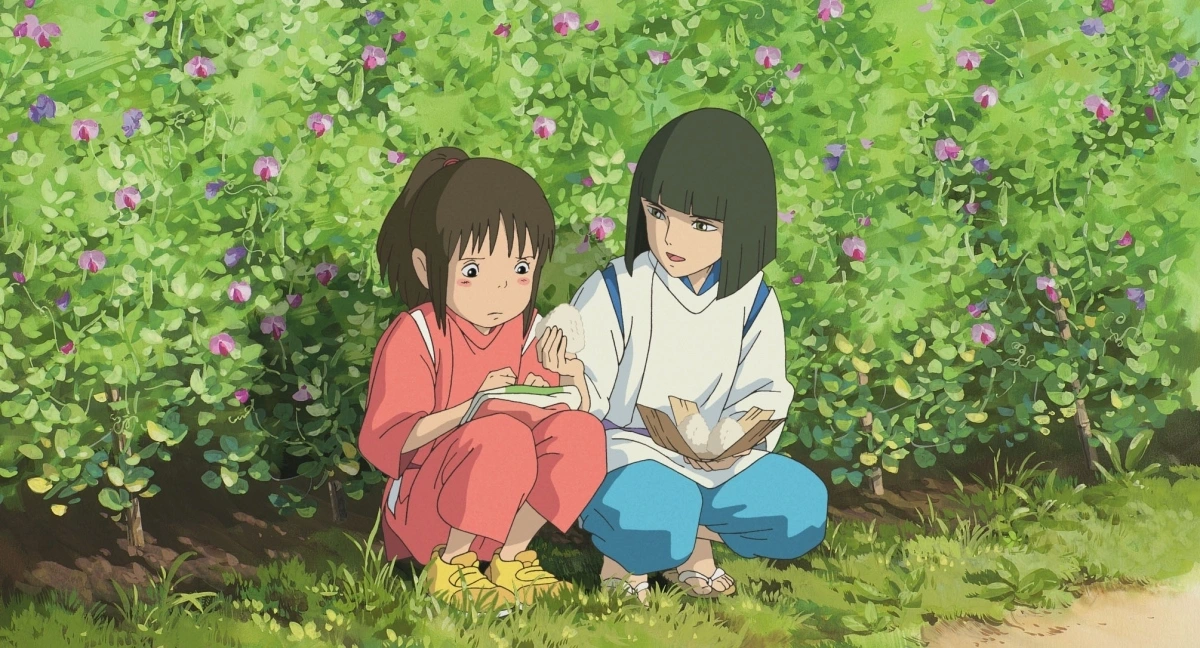
However, by the time Chihiro realizes the gravity of the situation, it is already too late. She rushes outside only to find her parents transformed into pigs, oinking mindlessly, seemingly unaware that they were once human.
Throughout the film, the filmmakers included many symbolic elements meant to critique human flaws, with greed being a prominent theme. The transformation of Chihiro’s parents into pigs vividly underscores this message.
But why were they turned into pigs specifically, and not some other animal?
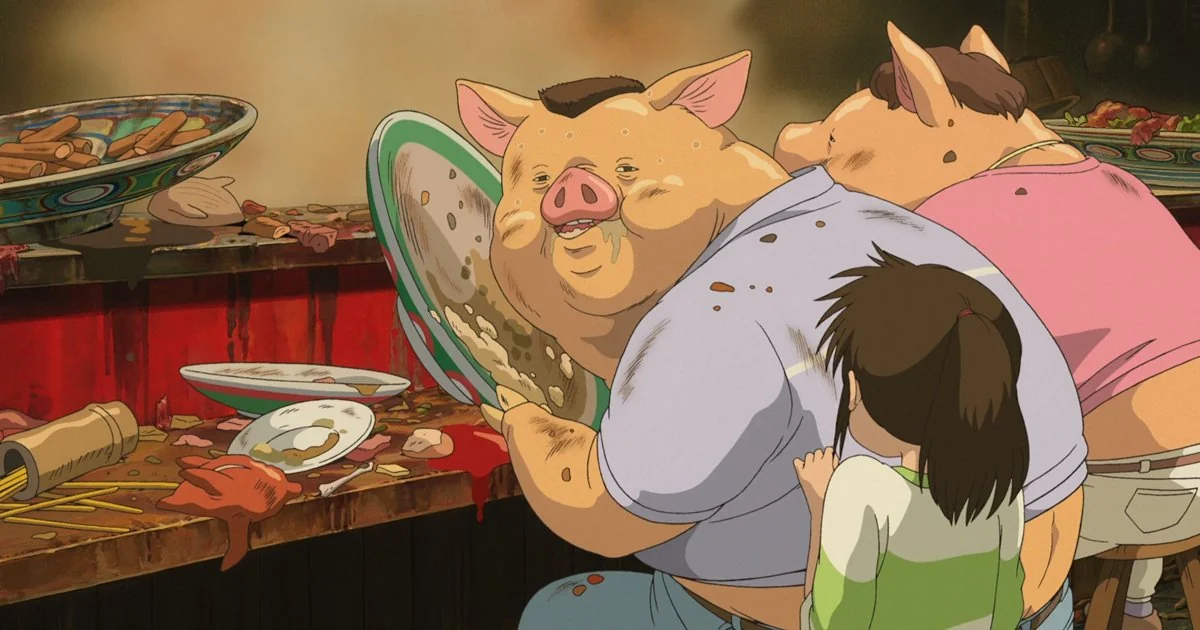
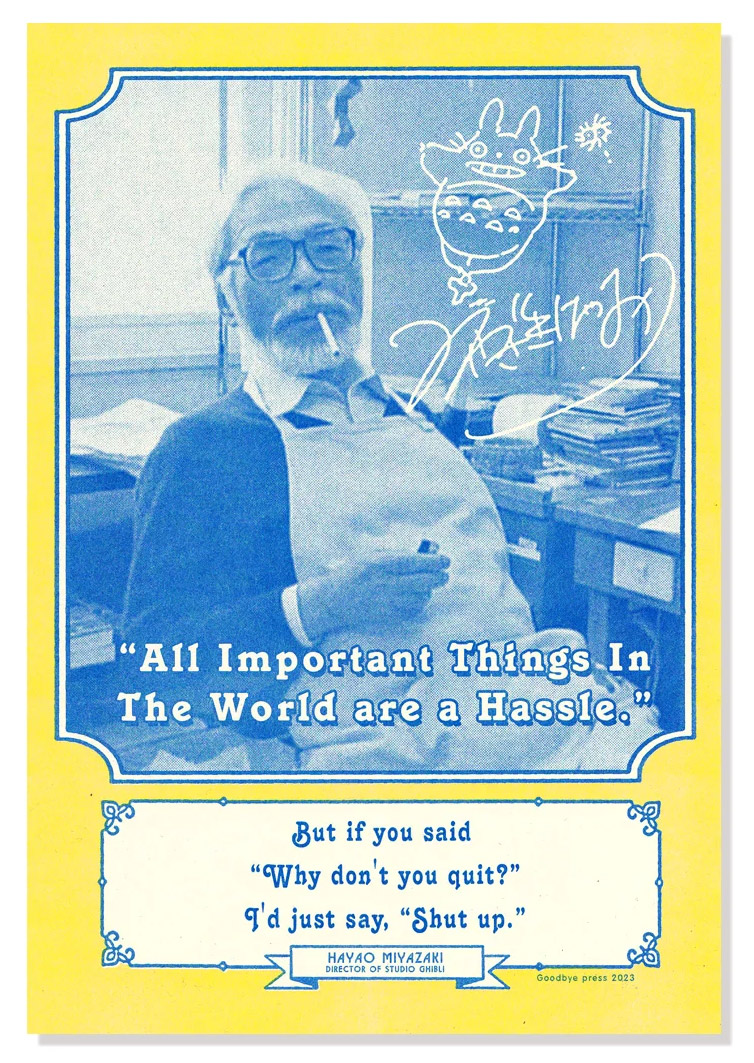
The first, slightly amusing reason could be that the director, Hayao Miyazaki, has a special fondness for pigs. In numerous sketches, Miyazaki humorously depicts himself as a pig. For example, in a drawing showing the process of conceptualizing the Ghibli Museum in Tokyo, Miyazaki portrays himself as a pig. Or in “Hayao Miyazaki’s Daydream Data Notes”, there’s an illustration where he also draws himself as a pig, reminding his assistant animators to work more efficiently. In fact, Miyazaki even directed a film with a protagonist cursed to appear as a pig—Porco Rosso.
Now, let’s move on to the second and more significant reason. In a two-page document sent to a loyal fan of Spirited Away, a Studio Ghibli staff member clearly addressed the debates surrounding the symbolic meaning of this scene. According to this document, the transformation of Chihiro’s parents into pigs was, first and foremost, a critique of humanity’s excessive consumerism. Economically, this reflects a strategy that exploits consumer greed to drive the consumption of goods. In the case of Chihiro’s parents, their transformation stemmed from their decision to eat far too much, a simple yet vivid metaphor for greed.
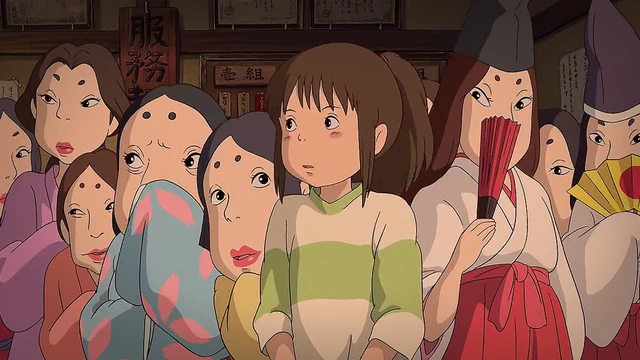
Speaking of greed, the letter mentioned earlier also suggests that their transformation symbolized humanity’s avarice during Japan’s economic crisis. This is shown in the moment when Chihiro’s family first enters the spirit world, and her father remarks that the ruins might be remnants of an abandoned amusement park. In this scene, Chihiro’s father references the “crisis of the ’90s,” a direct nod to Japan’s real-life economic downturn during that period.
The term “Lost Decade” refers to Japan’s prolonged economic stagnation throughout the 1990s. During this time, the nation experienced a dramatic decline in economic growth. Real GDP growth and per capita GDP increased by only 0.5% annually—significantly lower than in most advanced industrialized nations during the same period. This economic stagnation brought severe consequences, including skyrocketing unemployment rates. The root cause of this dark period was the greed of investors who poured money recklessly into real estate and stock markets, driven by the desire to maximize profits. This greed led to inflated asset prices, creating unsustainable bubbles that eventually burst between 1990 and 1991, triggering a sharp decline in Japan’s economic growth.
The events of “Spirited Away” are set in the early 2000s, a time when Japan’s economy had not yet fully recovered. With the economic details mentioned above, the film not only critiques human greed on an individual level but also reflects the complexities of Japan’s economic landscape during that era.
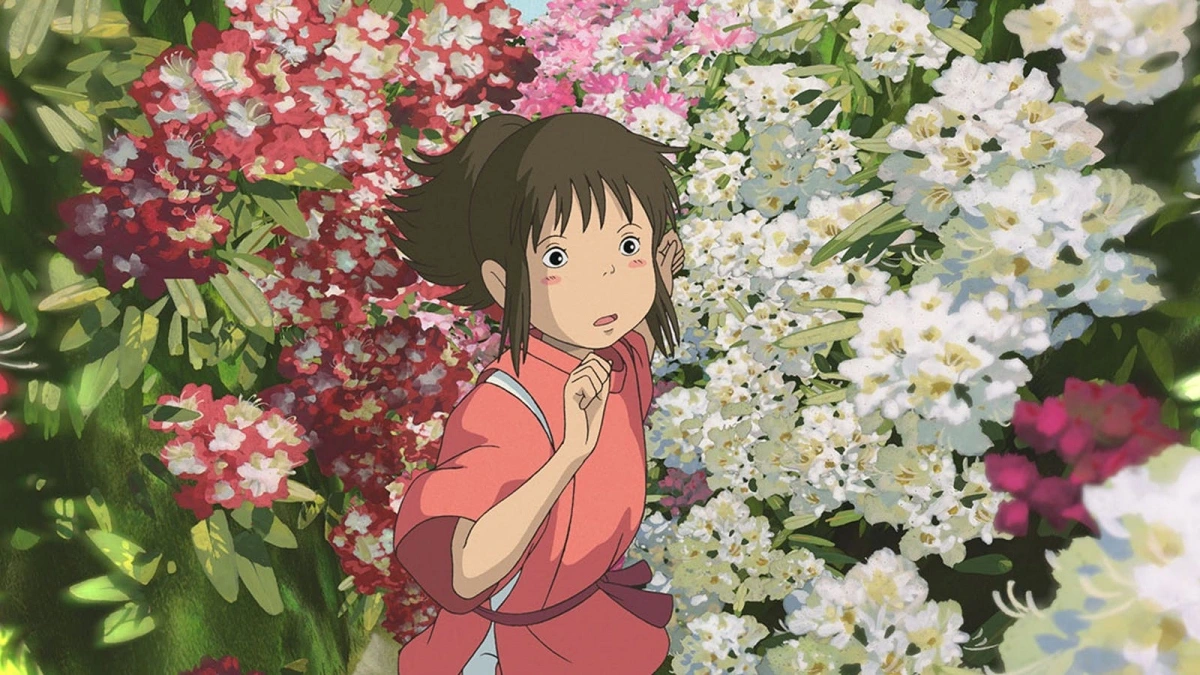
However, Chihiro’s parents shouldn’t simply be deemed as “greedy”. In fact, they planned on paying like regular customers, and even asked loudly for the stall owners to come forward, only to be greeted by no one. It therefore should be more proper to refer to them as impolite.
On the other hand, the bathhouse owner, Yubaba, is a direct depiction of greed. To explain, the film itself shows that the transformation of Chihiro’s parents into pigs wasn’t caused by any poison in the food they consumed or a spell cast on the food itself—it was simply a punishment inflicted on them by Yubaba. According to Yubaba, Chihiro’s parents ate food meant for her customers—essentially consuming the goods she was providing. Without goods to sell, it inevitably means a loss of profits. Thus, she punished those who damaged her own financial interests, which in this case were Chihiro’s parents.
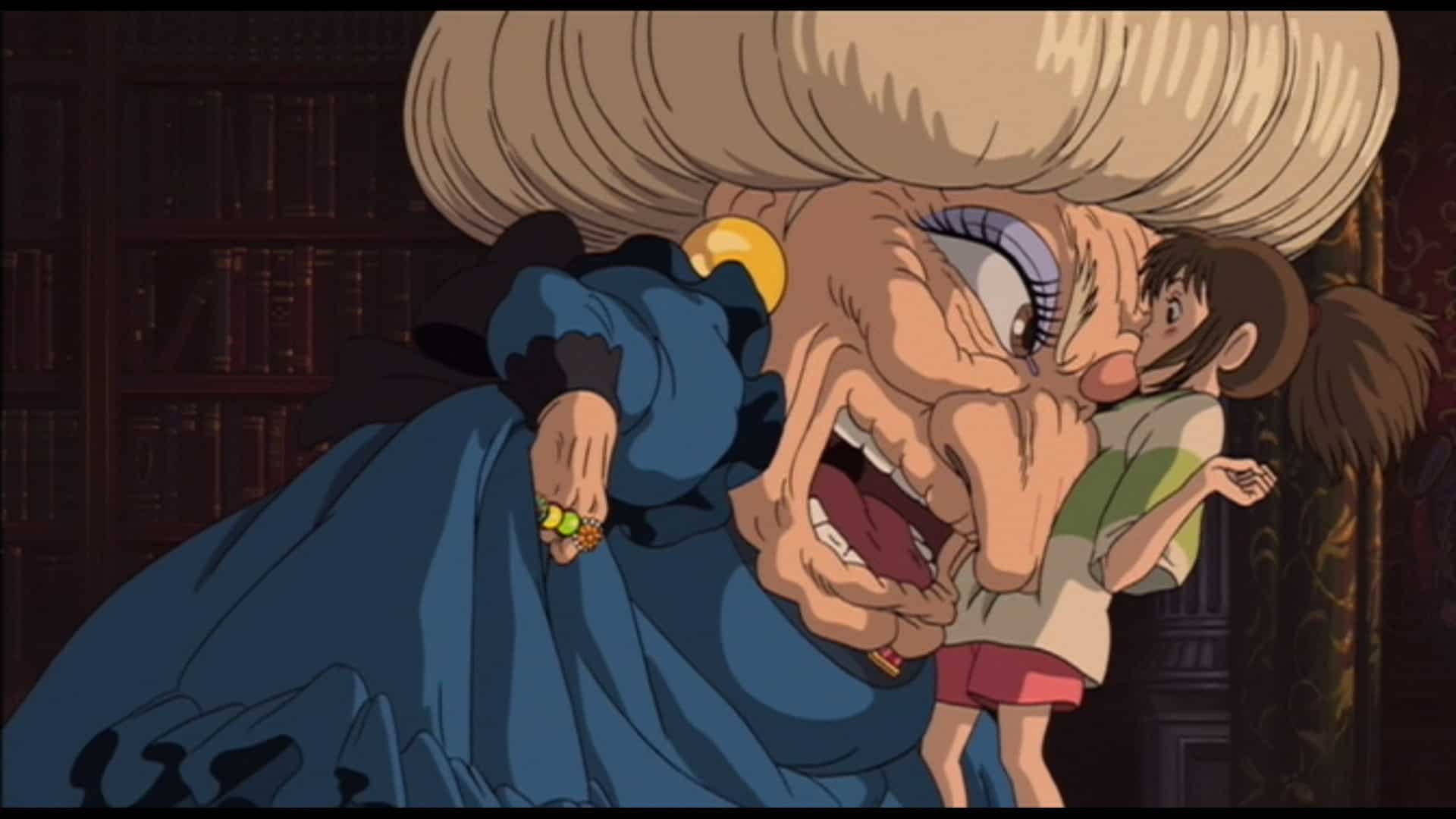
Simply put, anyone who infringes on her rights or profits must pay the price. Throughout the film, we also see plenty of details that highlight Yubaba’s own greed. Most notably, it’s unclear whether the workers in the bathhouse were even paid for their labor or if they were bound by magical contracts, as was the case with Chihiro. Additionally, there are moments when Yubaba instructs Chihiro to take every last coin from No-Face.
Praising the Spirit of Hard Work
While “Spirited Away” critiques human flaws, its brilliance also lies in celebrating positive virtues, one of which is the spirit of hard work. Almost every character in the movie works diligently and seriously. From the elderly Kamaji to the tiny soot sprites, everyone in the bathhouse is hard at work. Even the first time the audience sees Yubaba, she is focused on her tasks, deeply engrossed in her work.
Additionally, the first action of Chihiro to save her parents was to beg Yubaba for a job in the bathhouse, even agreeing to the condition of having her name taken away in the process. And, of course, hard work must bear results. Due to her serious, brave, and determined attitude, Chihiro overcomes her fears to save the polluted River Spirit, who was buried under mud and waste. For her effort, she receives a well-deserved reward: a magical dango. Though it wasn’t money or material wealth, this dango proved invaluable to Chihiro as she continued her journey to rescue her parents.
No-Face
Among the many characters inspired by mythical creatures from Japanese folklore, No-Face is entirely original, created by director Hayao Miyazaki alongside the soot sprites. With a faceless appearance, a mask resembling a traditional Noh theater mask, and unique abilities, No-Face has become one of the most haunting, fascinating, and beloved characters in “Spirited Away”. Due to its strange actions and behavior, No-Face has sparked much discussion and is thought to symbolize deeper metaphorical meanings.
However, rather than the theme of greed, No-Face seems to be a reflection of the pitiable humanity as a whole. Its name, “No-Face,” does not mean it lacks a face but that it has no identity, no recognition, no place in the eyes of the inhabitants of the spirit world.

No-Face is lonely. Because no one acknowledges its existence, No-Face tries to gain attention by offering everything it has. It sneaks into Yubaba’s bathhouse and attempts to fulfill the desires of those around it to earn their approval. When Chihiro struggles to obtain water tokens, No-Face turns invisible and hands her not one but several tokens. The bathhouse workers, desiring wealth and gold, are lured by the gold that No-Face creates. Sadly, not everyone treats No-Face kindly in return. Since No-Face is “no one,” it mirrors the actions of others toward it, much like a reflection in a mirror. When it swallows a bathhouse worker, it immediately begins to behave like a frog.
Ultimately, No-Face is not inherently greedy, but if someone approaches No-Face driven solely by their desire for gold, he transforms into a being consumed by greed. He revels in the attention, creating more and more gold, while the people around him treat him like a king. At this point, his greed spirals out of control. He eats and eats endlessly, with no sign of stopping—until Chihiro’s sincere presence interrupts his destructive path.
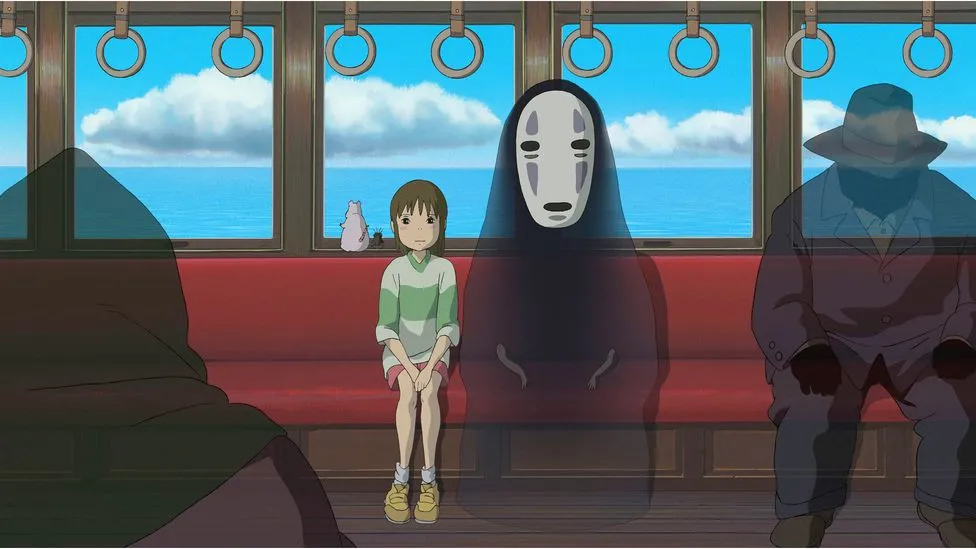
Chihiro realizes that No-Face is not inherently evil but has been corrupted by the atmosphere of greed saturating the bathhouse. When she gently asks him about his home and parents, her question hits him like a slap to the face. That moment forces No-Face to confront a harsh truth: people are drawn to him only because of the superficial things he provides, yet they still see him as a frightening monster. Nothing has truly changed—No-Face remains as lonely as ever.
It is Chihiro’s genuine kindness that redeems the monstrous version of No-Face. She sacrifices her last remaining piece of the magical dango, something she had planned to use to save her parents, and offers it to No-Face without any greed or calculation. That dango purges No-Face of everything corrupting him, causing him to vomit up all the toxicity he had absorbed. Afterward, No-Face transforms into a friendly, lovable character.
It seems that No-Face is indeed all of us – who sometimes feel overwhelmingly lonely, desperately seeking someone to share our feelings with. There are times when the harsh treatment from others pushes us to retaliate, and there are instances when we feel grateful for the kindness and love shown to us, responding with all the affection we have. This is why this character truly stands out amid the diverse cast of “Spirited Away”.
Message About Environmental Pollution
One of the most prominent metaphors in “Spirited Away” is the issue of environmental pollution. During her first day at work, Chihiro has to serve an extremely challenging guest. This guest, initially referred to by Yubaba as the “Stink Spirit,” enters the bathhouse with an incredibly terrifying appearance, moving sluggishly like a walking mud swamp. The stench emanating from him is so overwhelming that anyone who comes near is repulsed, and his mere presence causes two bowls of rice in the vicinity to instantly grow moldy.
The Stink Spirit requests to use the largest bath, and when he plunges in with delight, the water in the tub immediately turns into mud. After much struggle and countless buckets of water, Chihiro discovers that the Stink Spirit has a large object lodged in his body—something resembling the handlebar of a bicycle. Yubaba, quickly realizing what’s happening, conjures a rope and rallies everyone in the bathhouse to help pull the foreign object out. It turns out it’s not just a single item stuck inside him—it’s an entire heap of garbage that had been dumped into the river.
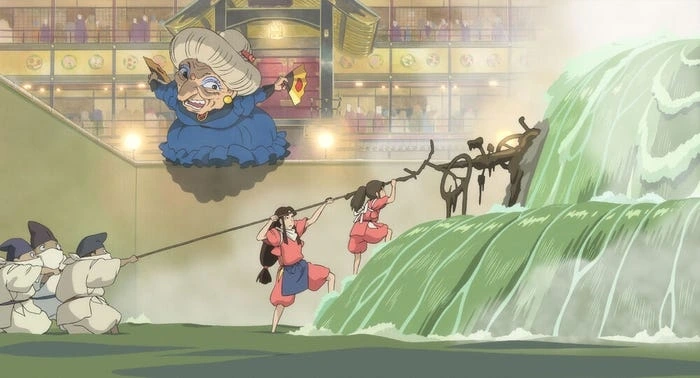
From this, we can draw a clear conclusion: the spirit was once a revered and majestic river god, but humans treated him horrendously. To say it was “horrible treatment” might even be an understatement – and this reflects in our reality, with pollution becoming more severe day after day. Now, even ages after the film was first released, the issue of environmental pollution still has no definitive solution even today. That’s why the metaphors director Hayao Miyazaki conveys remain relevant and will never become outdated.
As a matter of fact, in an interview, the director himself shared that the scene was inspired by his real-life experience. He once joined ten other locals to pull a bicycle that was stuck in a river near his hometown. Besides the bicycle, they had to remove an overwhelming amount of trash to clean the river.
“Spirited Away” is a “Feminist” Film?
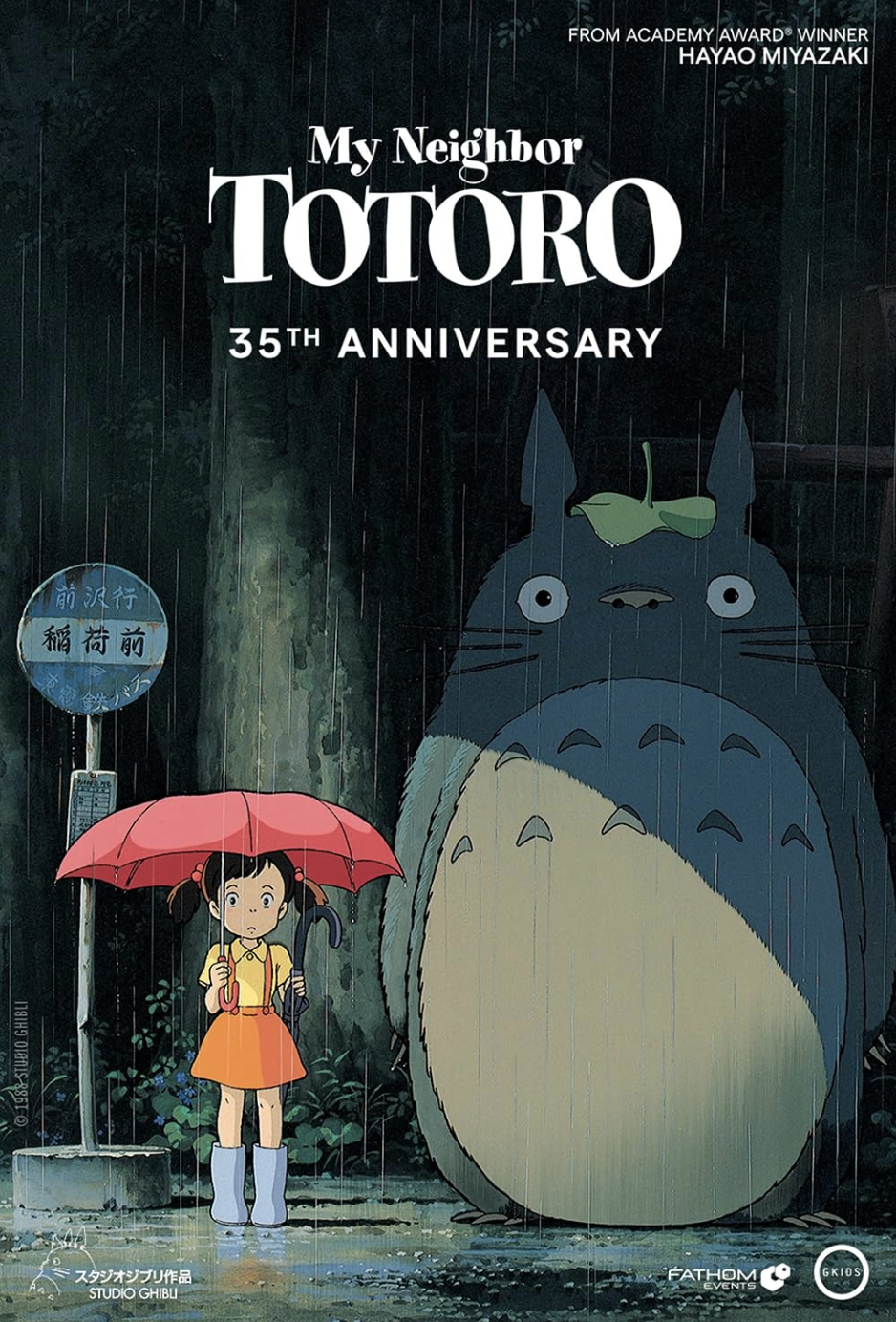
Let’s rewind to the time when director Hayao Miyazaki was nurturing his initial ideas for Spirited Away. At that point, Miyazaki simply wanted to create a film that young girls aged 10 to 13 could fully enjoy. He explained that Studio Ghibli had already produced many films with various themes targeting different audiences. For example, “My Neighbor Totoro” was a story for very young children, and “Kiki’s Delivery Service” centered on a teenage girl trying to live independently. However, there hadn’t yet been a movie specifically for girls around the age of 10—a period when children’s psychology begins to undergo significant changes.
Miyazaki then turned to shojo manga—a genre tailored for young girls entering adolescence—for inspiration. However, contrary to his expectations, he was disappointed by what he found. The stories were saturated with overly romantic and dreamy narratives, which, based on his observations of real children, felt unrealistic and unrepresentative of their aspirations and thoughts. So, he decided to create a film with a young girl as the protagonist who, more importantly, would also be a hero. And thus, Chihiro was born, crafted to align with Miyazaki’s original vision and intentions.
Miyazaki wanted a protagonist who wasn’t just a young girl but a hero. However, there’s no evil villain threatening the world in “Spirited Away”, Chihiro doesn’t have any combat skills, and there isn’t even a clear division between good and evil. This is because Miyazaki didn’t design Chihiro to answer the typical questions posed by action movies. Instead, he created a character as human as possible, with traits and behaviors that closely mirror those of an ordinary 10-year-old girl.
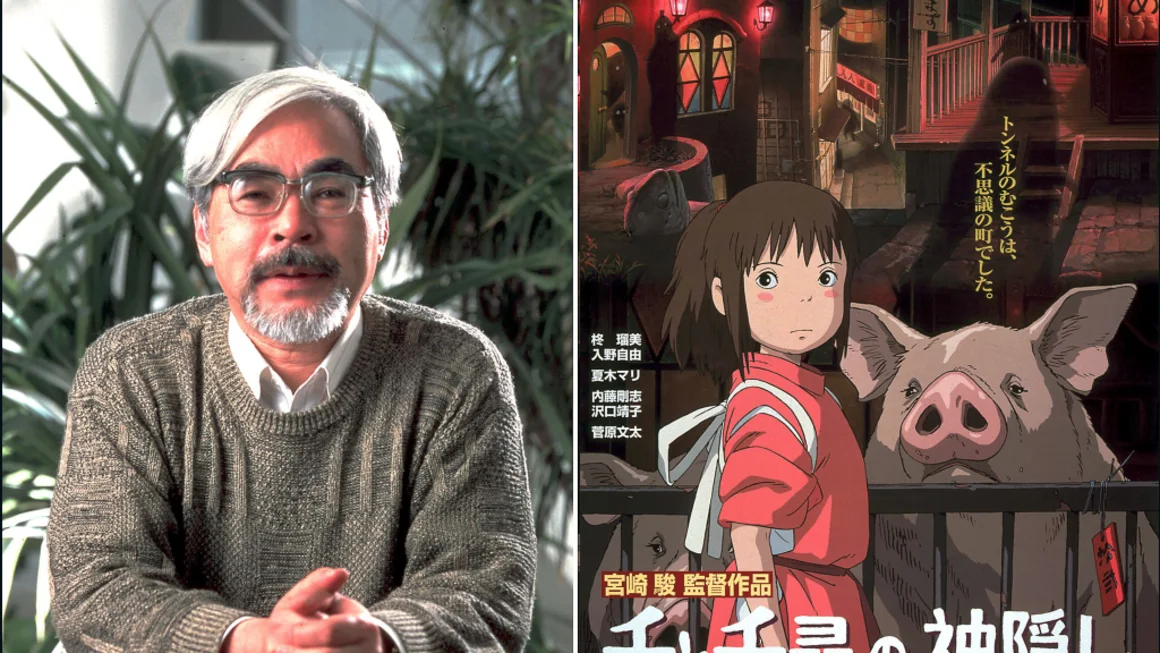
As a result, we met a Chihiro who is whiny, weak, fearful, and cautious about the strange things she encounters on her journey. Her extreme ordinariness was once a concern for the film’s production team, as they worried that she wasn’t special enough to captivate the audience. However, when the final product was completed, Miyazaki was completely satisfied with his female hero.
This is because he created an ordinary girl, someone that any viewer could relate to. This isn’t just a story about the characters’ growth; it’s a story where the characters discover something that was already within their hearts, which is revealed in certain circumstances. Chihiro doesn’t fight any enemies; she fights her own flaws. Through the challenges she overcomes, even those that are life-threatening, Chihiro does extraordinary things. From a whiny little girl, Chihiro becomes brave enough to save her parents and make Haku remember his true name. To achieve these incredible results, Chihiro had to conquer herself, accept hardships and struggles, overcome fear, wipe away her tears, and summon tremendous willpower.
To achieve these incredible results, Chihiro had to conquer herself, accept hardships and struggles, overcome fear, wipe away her tears, and summon tremendous willpower. To start with, Boh opens up much more, even though he had never interacted with the outside world before. Yubaba learns a deep lesson about sincerity and honesty, realizing how greedy and unpleasant she had been. No-Face also sees Chihiro as a friend during the long period of loneliness it endured.
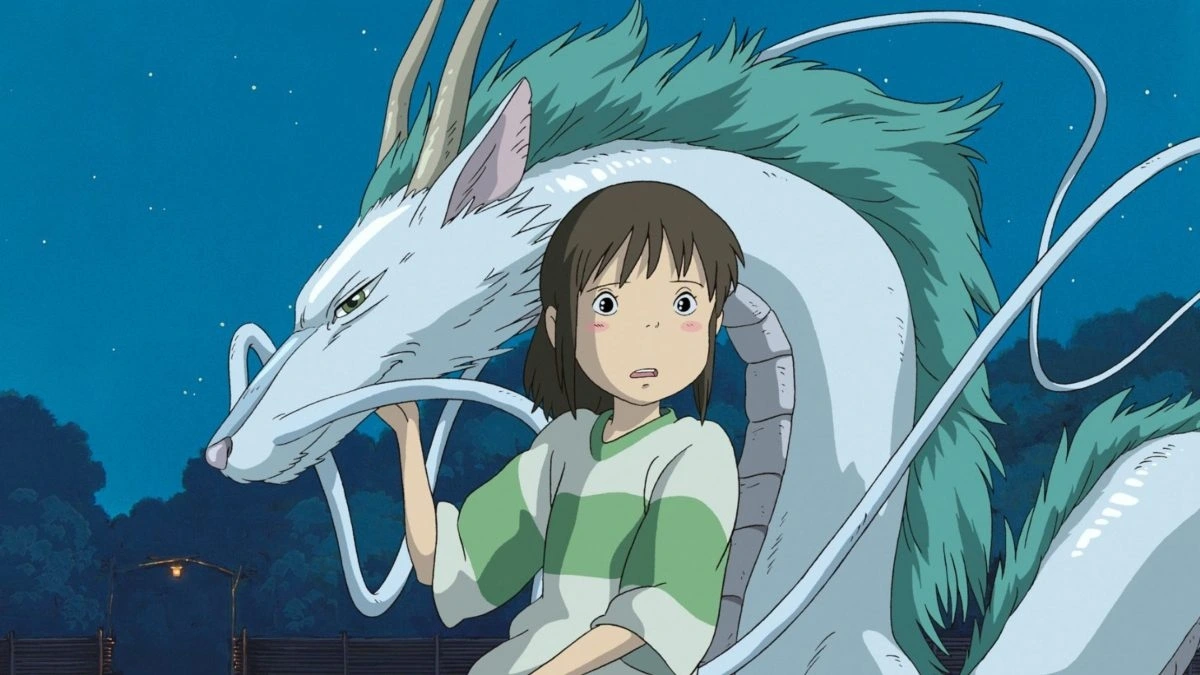
Chihiro’s presence in this world turns out to be a change where everything improves for the better. Chihiro is one of the greatest characters ever written, with immense strength, subtly and wonderfully celebrating femininity. She made the film highly educational, showing that it’s perfectly fine for children to make mistakes, as long as they recognize and correct them. This girl is not only relatable and easy to empathize with, but I think Hayao Miyazaki also wants children to follow her noble character.
Additionally, there’s a small detail that may have hinted at Chihiro’s development, which lies in the original title of the film, “Sen to Chihiro no Kamikakushi”, which can be roughly translated as “Sen and Chihiro in the Hidden World of the Gods.” Apart from describing the main plot, the appearance of both names—Chihiro and Sen— intrigues the thoughts.
Chihiro is the name our main character has in the human world. After Yubaba takes her name, she becomes Sen. Through a long journey, Chihiro regains her name and returns to normal life. However, it seems that the time she spends in the spirit world is much longer than her physical aging. That’s the time she went on a journey from Chihiro to Sen, and then back to Chihiro, as if it were a journey of self-discovery. Moreover, it’s a journey of addressing flaws and enhancing strengths. Even as Sen, she doesn’t allow that to keep her in the spirit world. She has to find herself and return to where she truly belongs.
You must be logged in to post a comment.