

Rosé of BLACKPINK made a striking appearance at the world’s most prestigious music awards, the Grammy Awards, on February 2. Despite high expectations, Rosé and her global hit APT. ultimately walked away without a trophy, a result that quickly fueled intense discussion across social media.
Shortly after the ceremony, some netizens turned their attention to BTS leader RM’s latest Instagram Story and began speculating that he was subtly mocking Rosé’s Grammy loss. RM posted a photo of himself at the gym wearing a cap emblazoned with the phrase “We rose everywhere.” Although the phrase carries a positive and motivational meaning, the word “rose” coincidentally matches Rosé’s stage name, prompting users on X (formerly Twitter) to read into the timing and wording of the post.
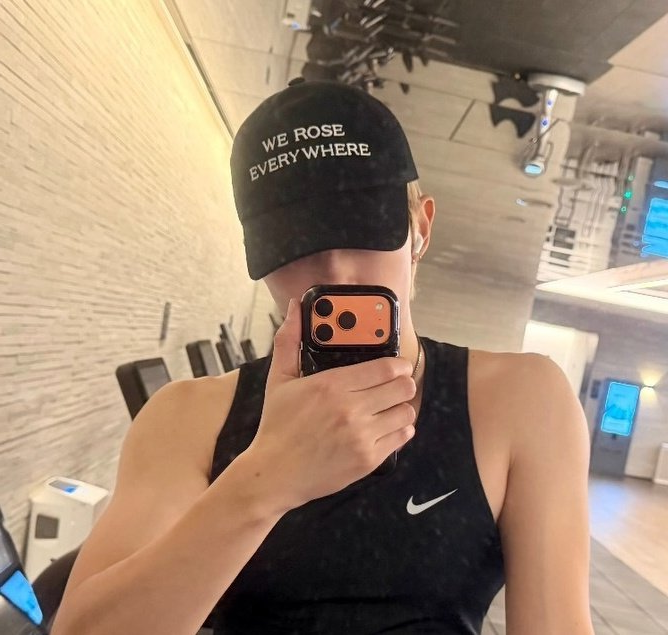
Comments such as “I know he wore that hat on purpose, I just can’t prove it,” “RM, not that hat,” and “This can’t be a coincidence” quickly spread online. Some fans argued that since BTS have been nominated for Grammys but never won, Rosé also failing to secure a Grammy meant she had not surpassed BTS’ record—adding fuel to the narrative of rivalry.
However, many others pushed back strongly against this interpretation, insisting it was nothing more than an unfortunate coincidence. They urged fans to stop overanalyzing a single accessory and “putting labels” on RM, warning that such speculation only damages the BTS leader’s image and unnecessarily reignites fan wars.

In K-pop history, few rivalries have been as dazzling, tense, and endlessly fascinating as the perceived competition between BTS and BLACKPINK. This is not merely a battle between two idol groups, but a symbolic clash between two global powerhouses representing the peak of the Hallyu wave. BTS, known for their deeply personal, healing messages, and BLACKPINK, celebrated as fashion icons with a powerful girl-crush image, have continuously broken each other’s records on YouTube, Billboard, and major international stages like the Grammys and Coachella.

On social media, the rivalry is even more intense, with ARMYs and BLINKs—two of the largest fandoms in the world—often clashing over views, trophies, chart rankings, or even magazine covers. Every achievement can become a spark for heated debate, as fierce loyalty drives fans to defend their idols’ “number one” status at all costs.
Yet, in stark contrast to the intensity of fan conflicts, the real-life relationships between the artists themselves often tell a different story. Rather than hostility, there is mutual respect among those who understand the pressures of standing at the top. Friendships such as Lisa and J-Hope, and even rumored romantic connections like Jennie and V, reveal genuine human bonds that exist beyond charts and awards.
Ultimately, the rivalry between BTS and BLACKPINK has been a blessing for K-pop. Their parallel rises have pushed the industry’s standards higher than ever before, opening doors and setting new benchmarks for global success—proof that competition, when driven by excellence, can elevate an entire genre on the world stage.
Sources: K14
You must be logged in to post a comment.