
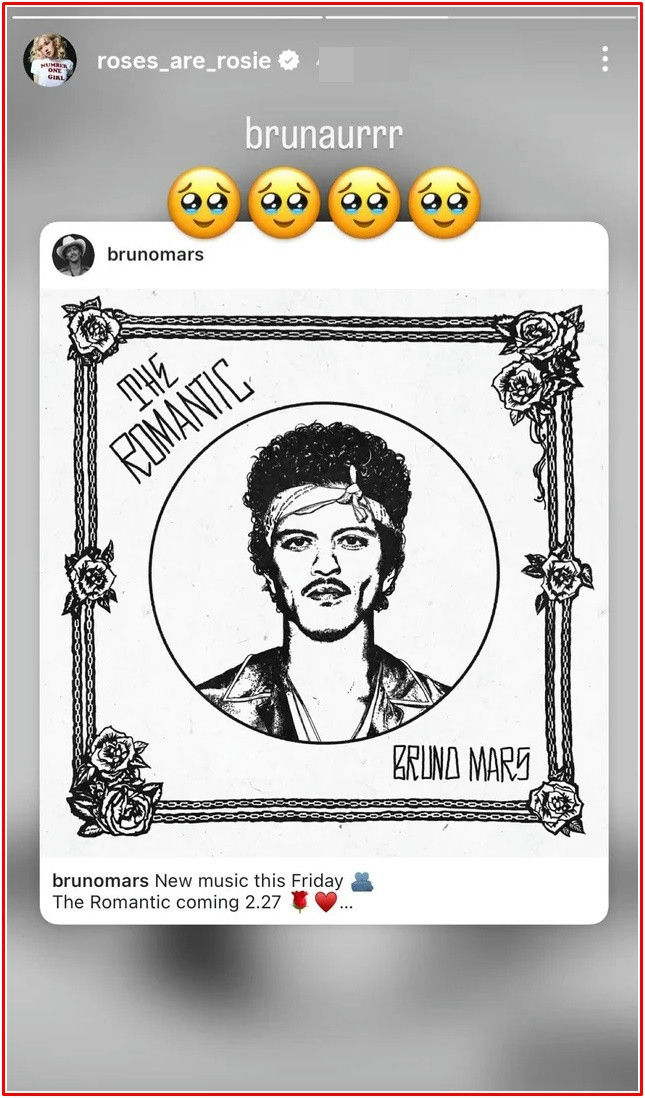
Recently, Rosé shared an Instagram post in support of her close friend and musical collaborator Bruno Mars, ahead of his upcoming release scheduled for late February. The gesture was widely interpreted as a simple show of friendship and professional respect—until screenshots of the post began circulating online, triggering a wave of harsh criticism from a segment of netizens.
The backlash has left many fans and neutral observers puzzled.
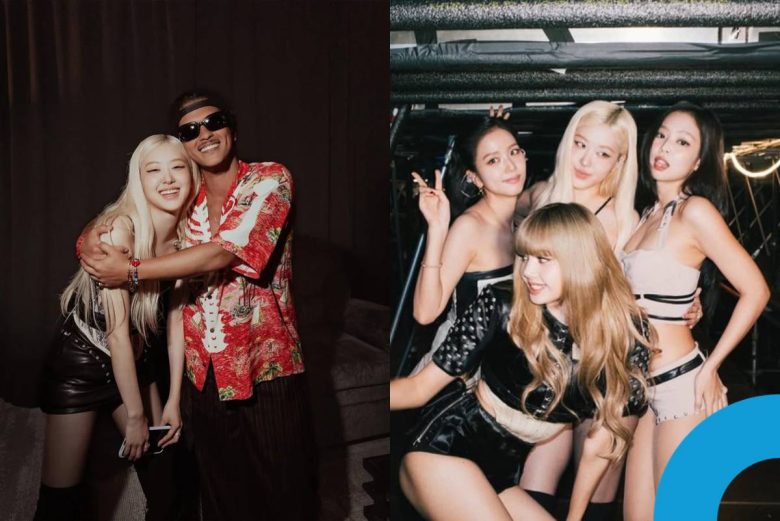
After the massive success of their collaboration “APT,” Rosé and Bruno Mars have been praised as one of the most compatible and high-profile cross-industry pairings in recent international music. Their musical chemistry earned acclaim from both critics and audiences, making Rosé’s public support during Bruno Mars’ promotional period appear entirely natural.
However, some online users chose to frame the interaction negatively, accusing Rosé of being “too focused” on collaborators outside BLACKPINK. More extreme comments went as far as claiming she was neglecting or showing less concern for her group members—an interpretation that quickly fueled a wave of aggressive commentary and unnecessary controversy.
In response, many fans and neutral commentators stepped in to defend Rosé, arguing that artists—regardless of their group affiliations—are entitled to personal relationships, independent social lives, and professional networks beyond their bands. Supporting a former collaborator, they noted, is not only common practice in the music industry but also a sign of mutual respect.
Critics of the backlash questioned whether the level of scrutiny directed at Rosé had crossed a reasonable boundary. When every social media interaction is dissected and assigned malicious intent, the line between genuine interest and excessive control becomes increasingly blurred.

This incident is far from unique. Rosé, like many A-list stars, operates under constant public observation, where even the most mundane actions can be amplified into controversy. The situation highlights a recurring tension in modern fandom culture: fans celebrate idols’ global reach and international collaborations, yet sometimes react negatively when those same idols express individuality beyond the familiar “group-centered” image.
Seen from a wider perspective, the debate surrounding Rosé’s Instagram post exposes an underlying contradiction within contemporary fandoms. There is a desire for idols to grow, expand, and collaborate on the world stage—while simultaneously expecting them to remain confined to narrowly defined roles and behaviors.
Amid the praise and criticism, one question stands out: are idols being burdened with unnecessary restrictions under the guise of love and loyalty?
Regardless of the ongoing debate, the success of Rosé’s collaboration with Bruno Mars remains undeniable. And perhaps this controversy serves as a timely reminder that before leaving a critical comment, it may be worth asking whether the issue truly warrants condemnation—or is simply a reflection of unrealistic expectations placed on public figures.
You must be logged in to post a comment.