
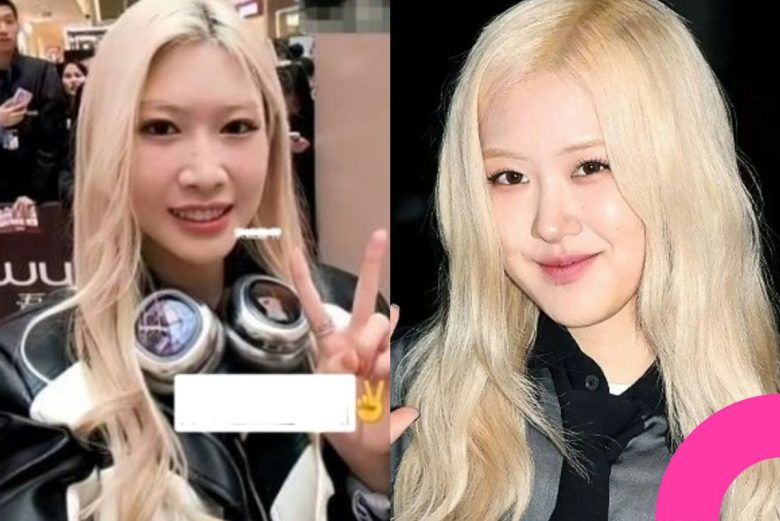
A controversy has erupted following BLACKPINK member Rosé’s popup store event in China, after a Chinese influencer appeared to take center stage prompting backlash from global fans.
According to Hype Malaysia on December 15, an official popup store celebrating Rosé was held earlier this month in Chengdu, China. The event was designed to showcase official merchandise and themed photo zones centered entirely around the artist. However, controversy arose when a Chinese influencer known as “Daisy” was invited to attend the popup’s closing event.
During the event, the on-site host reportedly introduced Daisy in a manner that made her appear like the main figure of the occasion. Videos and photos that later circulated online showed the influencer posing for photos with fans and even signing Rosé’s official merchandise actions that many fans found inappropriate.


What further fueled criticism was Daisy’s outfit choice. Fans pointed out that her styling closely resembled Rosé’s signature fashion aesthetic, leading some to accuse her of intentionally imitating the idol. Online reactions quickly followed, with comments such as “The popup lost its focus,” and “The guest overshadowed the artist.”


As the backlash spread, Daisy released a statement on her social media accounts. She explained, “After seeing the controversy, I felt it was necessary to clarify.” According to her statement, she was invited by the shopping mall hosting the event and followed a format that had been discussed in advance with the organizers.
She emphasized, “All of my actions were intended to promote Rosé, and I did not receive any financial compensation.” Daisy also acknowledged fan concerns, adding, “I fully understand that Rosé and her fans should always be at the center. If any of my actions appeared inappropriate, I sincerely reflect on that and will be more cautious in the future.”

Despite the explanation, criticism has not subsided. Many fans continue to express discomfort, arguing that admiration and imitation should have clear boundaries. “There’s a difference between being a fan and trying to replace the spotlight,” some commented, while others insisted the influencer’s behavior seemed more focused on personal exposure than genuine promotion.
The incident has reignited discussions about brand control, fan sensitivity, and the risks of involving influencers in artist-centered events particularly when global fandoms are deeply invested in preserving an idol’s image and space.
Sources: 네이트 뉴스
You must be logged in to post a comment.