
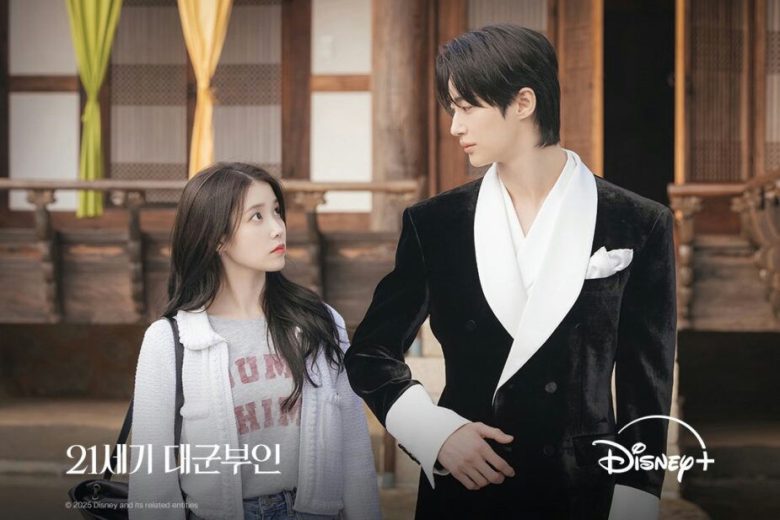
On April 28, Shim uploaded a video titled “Historical Analysis and Fact Check of the Drama Perfect Crown” to his YouTube channel “Currently Living Shim Yong-hwan.” In the video, he analyzed the drama’s alternate-history setting, its use of Korean royal imagery, and the historical logic behind its fictional constitutional monarchy.
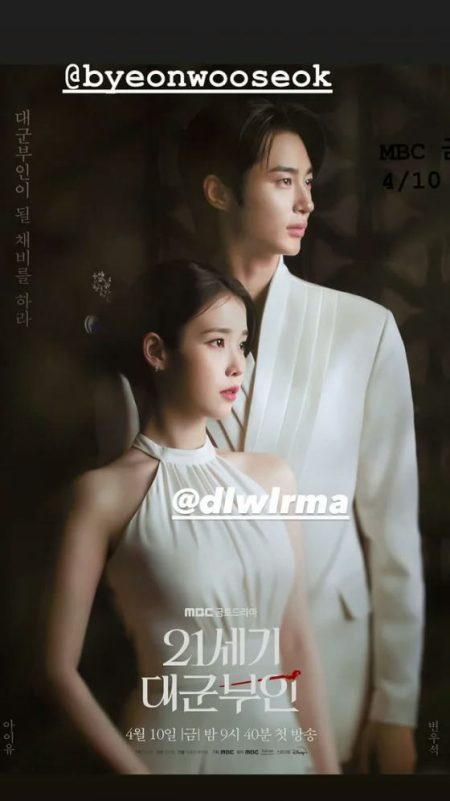
Perfect Crown stars IU and Byeon Woo-seok and is set in a fictional 21st-century South Korea where a constitutional monarchy still exists. The drama follows Seong Hui-joo, a wealthy chaebol heiress with commoner status, and Grand Prince I-an, a royal figure played by Byeon Woo-seok. The series has aired 6 episodes so far and recorded a peak nationwide rating of 11.2 percent for episode 6, according to Nielsen Korea.
Shim Yong-hwan Questions The Historical Logic Behind Perfect Crown
Shim explained that alternate-history works like Perfect Crown have become increasingly popular in Korean webtoons and web novels. He noted that the genre’s strength lies in expanding imagination but added that the result becomes more refined when the story is supported by stronger historical reasoning.
He pointed out that some parts of Perfect Crown, including a palace fire scene and certain royal customs, felt weak from a historical research perspective. Regarding the drama’s central premise of a constitutional monarchy surviving into modern Korea, Shim argued that such a setup would be difficult to justify historically. He stated that Korea’s royal family did not maintain enough political or symbolic power after the fall of the Joseon dynasty to continue as a modern constitutional monarchy.
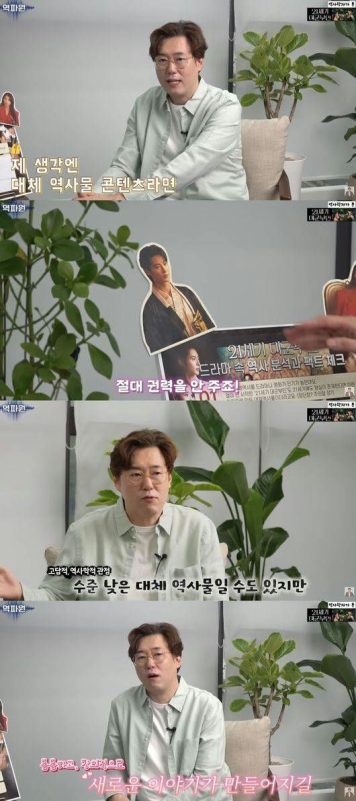
He also addressed the character of Grand Prince I-an holding real political influence despite not being the king. Shim said this would be historically unlikely because Joseon strictly limited the political interference of royal relatives after major succession conflicts. “Historically, it is impossible. Joseon was a country that thoroughly blocked interference from royal relatives,” he explained, before joking that the drama had little choice because “the main character is Byeon Woo-seok.”
Shim also discussed the drama’s use of royal titles and costumes. He explained that terms such as “yeonggam” and “daegam” historically referred to official ranks, not simply noble status. He also noted that mixing official robe patterns or wearing royal clothing improperly would have been a serious violation of court etiquette in the Joseon era. However, he did not dismiss the drama entirely. Shim said that costume choices and visual reinterpretations can also be understood as part of the production’s design process.
Perfect Crown Seen As A Hallyu Cultural Experiment
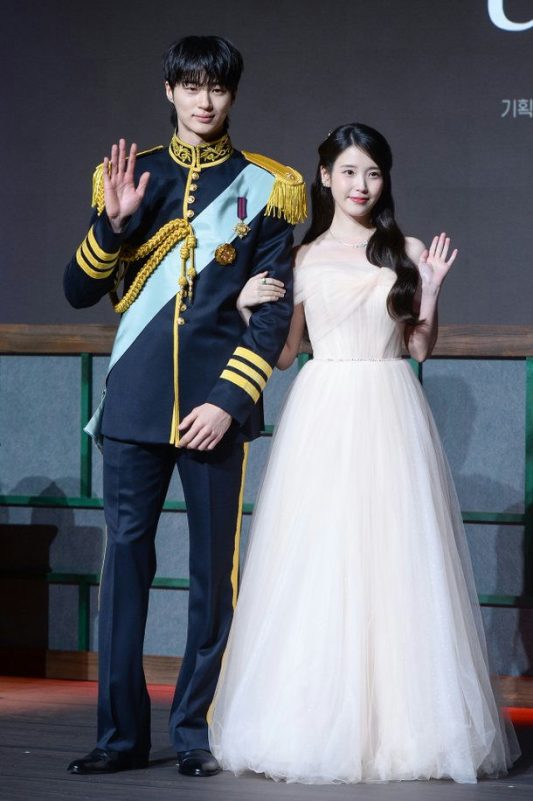
Toward the end of his analysis, Shim offered a more balanced view of Perfect Crown. He said that while the drama may look like a “low-level alternate-history work” from a strict historical perspective, it remains an interesting cultural experiment within the broader expansion of Hallyu.
He emphasized that modern Korean cultural symbols such as Gyeongbokgung Palace, Hangul, and Admiral Yi Sun-sin are connected to Joseon history, but many of their current meanings were reconstructed and reinterpreted in modern history.
“Even if a work like Perfect Crown may seem historically low-level, it is an interesting experiment in creating a new culture called Hallyu,” Shim said.
The discussion has drawn attention because Perfect Crown is currently one of MBC’s most talked-about dramas, boosted by IU and Byeon Woo-seok’s star power, strong viewership ratings, and public interest in its bold alternate-reality premise.
Sources: Daum | OSEN
You must be logged in to post a comment.