
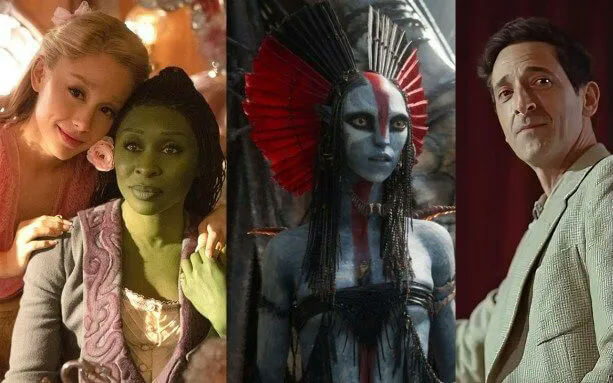
In recent years, blockbuster films have increasingly featured extended runtimes, often exceeding three hours or even being split into multiple parts. While long movies may require audiences to invest more time and may limit the number of daily screenings, these films are finding remarkable success. Titles like Avatar, Wicked, and other modern epics prove that viewers are willing to sit through longer narratives when the story demands it.
Films Not for the Faint of Heart
Some of the longest films ever made include experimental works such as Logistics (2012) at 857 hours and Gérard Courant’s Cinématon, which runs over 150 hours. But even mainstream releases are pushing the boundaries of length:
- The Brutalist – 3 hours 35 minutes (with a 15-minute intermission)
- Oppenheimer – 3 hours
- Killers of the Flower Moon – 3 hours 26 minutes
- The Irishman – 3 hours 29 minutes
James Cameron defended Avatar: The Way of Water, explaining that longer runtimes allow for deeper exploration of character relationships and emotions. His upcoming sequel, Avatar: Fire and Ash, is set to run 3 hours 15 minutes, slightly longer than its predecessor, further emphasizing the narrative scope.
Splitting Stories Into Two Parts
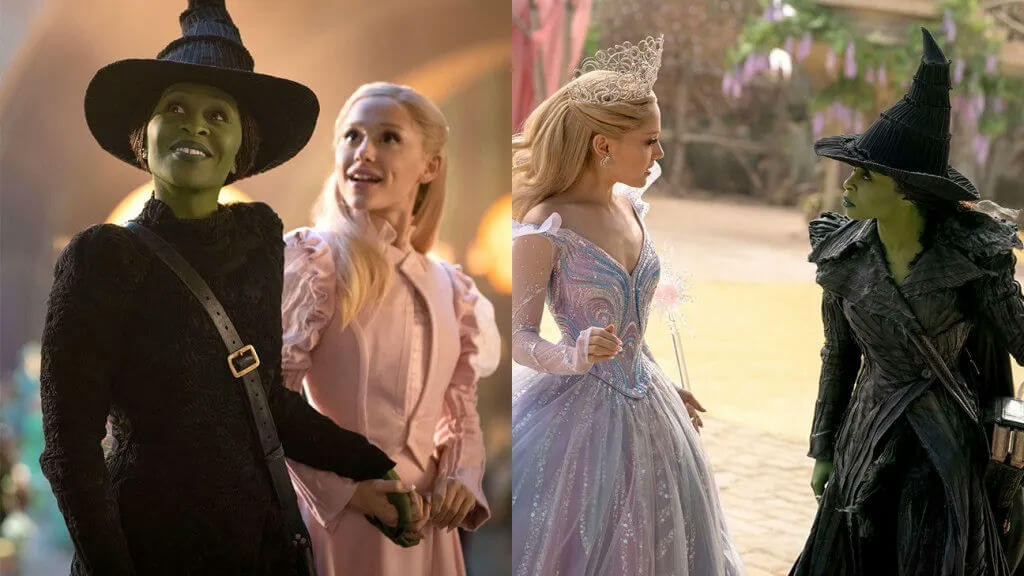
Some films are intentionally split into multiple installments to preserve narrative integrity. The musical adaptation Wicked is a prime example. The first part, Wicked, ran 2 hours 40 minutes, followed by Wicked: For Good at 2 hours 17 minutes. Director Jon M. Chu explained that dividing the story into two parts was necessary to maintain the Broadway musical’s original storyline and give audiences a fully immersive experience.

Other iconic films have taken a similar approach:
- Dune (2021) – 2 hours 35 minutes / Dune: Part Two (2024) – 2 hours 46 minutes
- Harry Potter and the Deathly Hallows – Part 1: 2 hours 26 minutes / Part 2: 2 hours 10 minutes
Chu emphasized on social media: “The cast and crew promised to create an experience that honors the world of Wicked for all fans, delivering a magical, thrilling story with dynamic characters, even for those new to the story.”
Creative Choices Behind Longer Runtimes
Directors argue that longer runtimes are not arbitrary but essential for storytelling. James Cameron noted that the extended length of Avatar: The Way of Water allowed him to focus on emotional arcs and relationships while exploring the vast, immersive world of Pandora. The film became a commercial triumph, grossing $2.343 billion, currently ranking as the third highest-grossing film of all time. Avatar: Fire and Ash is expected to surpass $2 billion based on franchise popularity.

Denis Villeneuve, director of Dune, chose to split the adaptation into two films from the outset to maintain fidelity to Frank Herbert’s complex narrative. He even considered filming both parts simultaneously but was prevented by production costs.
Risks and Rewards
Splitting films poses financial risks. Universal Pictures invested $300 million in production and $250 million in marketing for Wicked and Wicked: For Good. Yet, the gamble paid off:
- Wicked (Part 1) – $758 million globally, highest-grossing Broadway adaptation at the box office
- Wicked: For Good – $147 million in North America and $223 million worldwide in its opening week
- Streaming and VOD sales added an additional $70 million in the first week alone
- 10 Oscar nominations combined for both parts

Jon M. Chu explained in 2022: “The story before, during, and after the events in the land of Oz is too expansive to condense into a single film. To tell it properly, we needed to create space, which meant making not one, but two movies.”
As filmmakers continue to explore complex narratives and immersive worlds, long runtimes and multi-part releases are becoming a creative necessity rather than a marketing gimmick. While audiences may need patience, these extended epics allow for richer storytelling, emotional depth, and unforgettable cinematic experiences.
Sources: The Hollywood Reporter,Universal Pictures
You must be logged in to post a comment.