
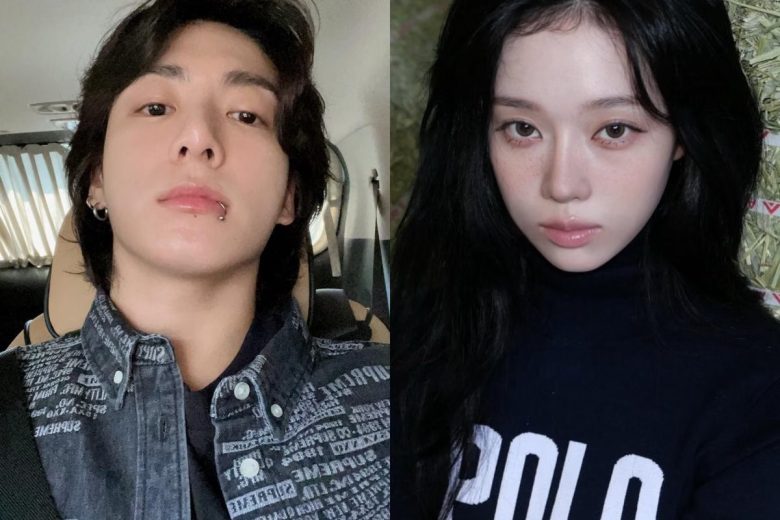
As dating rumors involving BTS’s Jungkook and aespa’s Winter continue to circulate, the situation has escalated beyond online speculation reaching the extreme measure of truck protests organized by fans. While neither party has issued an official statement, the controversy has exposed deep divisions within fandoms and reignited debate over the fragile balance between idol privacy and fan culture.
The rumors originated from online communities and social media platforms, quickly gaining traction. Despite the growing buzz, Jungkook’s agency BigHit Music and Winter’s agency SM Entertainment have chosen silence, neither confirming nor denying the claims. This lack of response has only intensified fan reactions.


Fan opinion has since split into two opposing camps. Some argue that if the rumors are true, the artists’ personal lives should be respected. Others, however, insist that dating scandals negatively affect group activities and public image. Tensions peaked when certain fans organized so-called “truck protests,” sending LED trucks to both agencies’ headquarters.
Messages displayed outside BigHit Music included statements such as, “If you won’t remove couple tattoos, leave BTS activities,” and “Are you out of your mind betraying fans and harming the group?” Meanwhile, trucks sent to SM Entertainment read, “If you want to date loudly, live as a civilian Kim Minjeong, not aespa’s Winter.”

This phenomenon is not isolated. Just last year, aespa’s Karina faced similar backlash when dating rumors with actor Lee Jae Wook surfaced, prompting intense opposition from parts of the fandom.
The relationship between K-pop idols and fans differs fundamentally from that of other music markets. One of the driving forces behind K-pop’s global success is “communication” a system where idols and fans engage in constant, two-way interaction. This dynamic goes beyond music, fostering emotional closeness and a strong sense of collective identity.

In the K-pop ecosystem, fan–idol interaction often resembles the formation of a communal consciousness. The term “fandom” itself reflects this, merging fans into a cultural collective closely intertwined with the artist. However, excessive closeness can also become a source of harm. It can lead to obsession with idols’ private lives and attempts to control artists as individuals rather than respecting them as autonomous people.
Extreme reactions to dating rumors are a clear example of this imbalance. Before any “group” or fandom exists, there must first be respect for the individual. In a society where personal boundaries are not protected, communication becomes a tool of control rather than mutual understanding. Treating idol dating as taboo is, at its core, another form of restricting personal freedom.

K-pop is no longer a culture consumed only within South Korea. It is a global, mainstream phenomenon. As such, fandom culture must also evolve. Rather than maintaining a precarious dynamic that seeks to regulate artists’ private lives, the industry and its fans must move toward a more mature form of engagement one where genuine, equal communication includes respect for personal boundaries.
The Jungkook–Winter controversy ultimately highlights a crucial question for the future of K-pop: can fandoms grow alongside the artists they support, or will the line between support and control continue to blur?
Sources: Daum
You must be logged in to post a comment.