
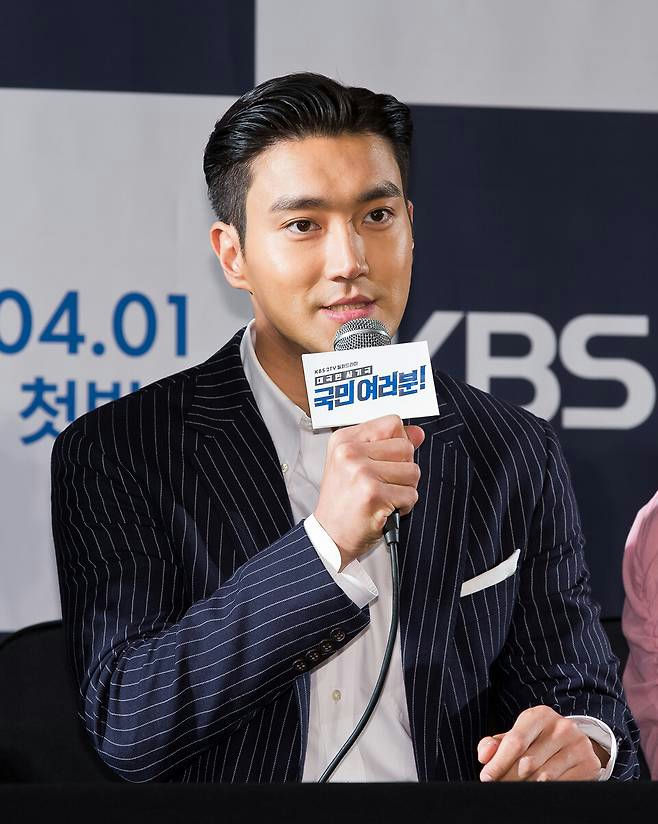
Super Junior member and actor Choi Siwon has taken legal action against anonymous online users who allegedly posted malicious comments about him, and recently succeeded in obtaining a U.S. court order to identify them.
According to reports published on July 3, the U.S. District Court for the Northern District of California approved Choi Siwon’s request for discovery on July 2. The order allows him to seek identifying information for 10 anonymous users on overseas platforms, including X (formerly Twitter) and YouTube.
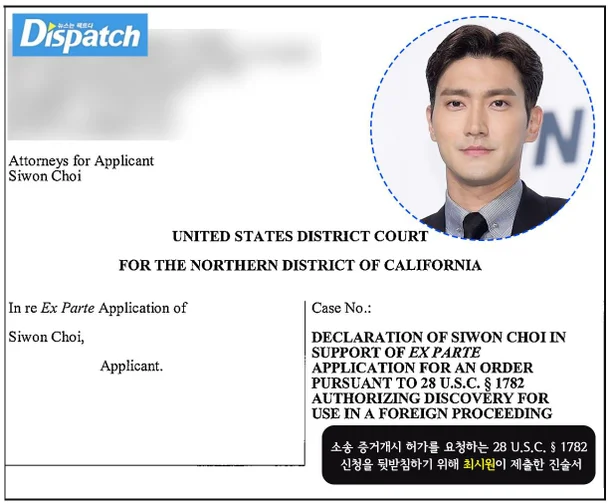
Court documents obtained by local media reveal that Choi Siwon has been subjected to sustained online abuse since former South Korean President Yoon Suk Yeol declared martial law on December 3, 2024. The attacks intensified after Yoon was sentenced to life imprisonment in February on charges related to leading an insurrection. Around that time, Choi Siwon posted the Chinese idiom “Injustice will inevitably perish, collapsing like crumbling earth and shattered tiles,” along with a Bible verse on social media.
Many internet users interpreted the post as carrying a political message, triggering heated debate. The controversy escalated further after conservative YouTuber Jeon Han Gil publicly expressed support for the singer.
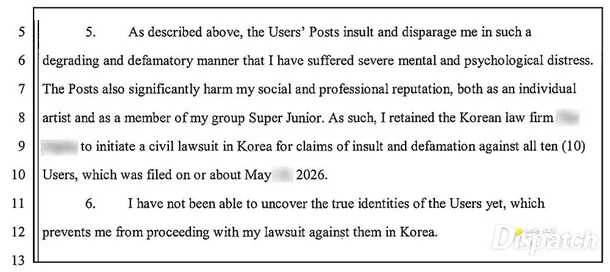
Following the incident, X and YouTube were flooded with insulting comments targeting Choi Siwon’s political views, religious beliefs, appearance, and career. Some users urged him to leave Super Junior, while others mocked him by saying he should become a politician if he wanted to express political opinions. Additional comments accused him of clinging to his idol career for financial reasons and criticized him based on his religion.
In May, Choi Siwon filed a civil lawsuit with the Seoul Central District Court, seeking damages against the 10 anonymous users for defamation and insult. To move forward with the case, he later requested that the U.S. court compel X and Google to disclose identifying information such as names, birth dates, and addresses linked to the accounts.
His legal team argued that the language used in the posts and the available account information strongly suggested that none of the defendants were U.S. citizens or residents. They therefore requested the court’s assistance in identifying the individuals so the lawsuit could proceed in South Korea.
The court granted the request. In its ruling, the judge cited legal precedent stating that First Amendment protections for freedom of speech do not apply to foreign nationals outside U.S. territory under these circumstances. The court also found no evidence that the anonymous users were American citizens and noted that the posts concerned a South Korean public figure. It further ruled that the request was narrowly tailored, seeking only the information necessary to identify the defendants rather than excessive personal data.
With the ruling in place, Choi Siwon can now continue pursuing the lawsuit in South Korea. His agency, SM Entertainment, has previously stated that it is collecting evidence against those responsible for spreading false information and malicious content targeting its artists, adding that it plans to expand legal action against confirmed offenders in stages.
Sources: Daum
You must be logged in to post a comment.