
As reports of kidnapping and cyber fraud targeting Korean nationals in Cambodia continue to emerge, growing attention is being drawn to Chinese organized crime syndicates that are said to control much of the region’s sprawling criminal operations.
According to findings by the United Nations Office on Drugs and Crime (UNODC), the Triads (三合會)—notably the 14K and Sun Yee On factions—have become deeply entrenched in Cambodia, Myanmar, and other parts of Southeast Asia, orchestrating a network of human trafficking, confinement, torture, and large-scale online fraud.
Triads Move South After Crackdown in China
UNODC reports that many Chinese criminal organizations originally operated through Macau’s gambling and entertainment industries, but relocated to Southeast Asia following Beijing’s intensified crackdown on illegal gambling and money laundering.

Sihanoukville, Cambodia’s coastal economic zone, has since become a major hub for Triad-linked crime groups, particularly the 14K and Sun Yee On syndicates. The area’s weak regulatory oversight, rapid influx of foreign capital, and loosely enforced laws created an environment ripe for casino-based money laundering and online scam operations.
These organizations often function outside institutional control and in some cases, under protection from local elites or corrupt officials, allowing them to expand their illegal enterprises across the region.
From Casinos to Online Crime
During the 2010s, vast amounts of Chinese investment poured into Cambodia’s casino and real estate industries. By the early 2020s, however, the rise of COVID-19 and border restrictions forced criminal syndicates to pivot online.

They shifted focus to cyber-enabled crimes such as:
- Online gambling and cryptocurrency fraud,
- Romance scams,
- Investment fraud, and
- Voice phishing schemes.
Victims were often lured with promises of high-paying jobs, only to be kidnapped or trafficked, then forced to participate in scam operations under harsh confinement and physical abuse.
The 14K and Its Infamous Leader
Among the Triads, the 14K is most frequently mentioned in connection with these transnational crimes. Its notorious leader, Wan Kuok-koi (尹國駒), widely known as “Broken Tooth Koi”, was once Macau’s most feared crime boss.
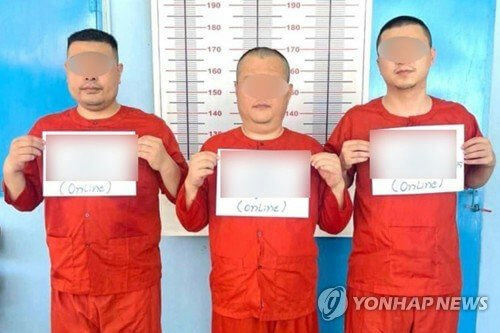
After serving 14 years in prison following his 1998 arrest, Wan was released in 2012 and claimed he intended to retire. However, he soon resumed business activities, expanding his network across Cambodia, Myanmar, and other Southeast Asian nations.
In 2018, he founded the World Hongmen History and Culture Association in Cambodia, which reportedly engaged in cryptocurrency development, real estate ventures, and private security services connected to China’s Belt and Road Initiative (BRI) projects.
Wan is also linked to the Dongmei Group in Hong Kong and the Palau China Hongmen Cultural Association, suggesting the Triads’ growing global reach.
Global Sanctions and Expanding Influence
In 2020, the U.S. Department of the Treasury imposed sanctions on Wan and three affiliated entities, citing their involvement in illegal business expansion and corruption across Southeast Asia.
The Treasury claimed the Hongmen organization had successfully infiltrated political and business elites in both Cambodia and Malaysia.
UNODC warns that Triad activities are no longer confined to Southeast Asia. Organized crime groups operating in Cambodia, Myanmar, and Laos are now expanding into Africa, the Middle East, and the Pacific, including Zambia, Angola, Namibia, Fiji, Palau, Tonga, and Timor-Leste.
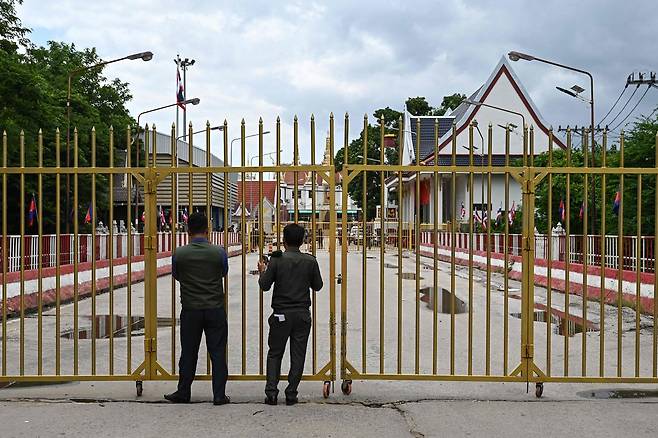
According to Shim In-sik, senior analyst at UNODC:
“While most of these networks are Chinese-led, criminals and victims from dozens of countries are now involved. The ecosystem combines fraud, kidnapping, narcotics, money laundering, and cybercrime all interconnected.”
The situation underscores the transnational evolution of organized crime, with Chinese Triads leveraging corruption, weak regulation, and digital technology to build a global underworld empire stretching far beyond Southeast Asia.
Sources: nate
You must be logged in to post a comment.