
The UEFA Champions League continues to deliver drama, elite football, and record-breaking revenues. Yet behind the spectacle, a growing concern is becoming harder to ignore: the same clubs keep going deep, season after season.
In the last three campaigns, Real Madrid, Barcelona, Bayern Munich, Paris Saint-Germain, and Arsenal have all reached the quarter-finals consistently. This is no longer just stability—it is sustained dominance.
Even as other names like Atlético Madrid, Liverpool, or Sporting Lisbon rotate into the final eight, the broader structure remains largely unchanged. The Champions League, in many ways, is quietly narrowing.
The numbers underline this shift. Bayern Munich have reached the quarter-finals for seven consecutive seasons, while Real Madrid have done so six times in the same span. Clubs like Arsenal and Barcelona have also maintained strong, recurring presence. These patterns are not coincidental—they reflect widening gaps in financial power, squad depth, and elite-level experience.
Looking at UEFA rankings over the past decade, most of the top 10 clubs are regularly present in the latter stages. Only a few exceptions—such as Manchester City, Chelsea, or Juventus in certain seasons—fail to break through. The trend is clear: the strongest clubs almost always advance.
The inclusion of Sporting Lisbon offers a rare disruption, representing leagues outside Europe’s traditional top five. But isolated breakthroughs are not enough to alter the overall balance. The competition remains theoretically open, yet practically restrictive.
Recent format changes have further intensified this divide. With more matches, higher revenues, and increased global exposure, the stakes have never been higher. But these changes also favor clubs with deeper squads and stronger infrastructure. Elite teams rotate players more effectively, manage high-intensity schedules, and leverage experience in decisive moments.
Meanwhile, smaller clubs may still produce early surprises, but as the tournament enters knockout rounds, the gap in quality becomes evident. Over the past five years, 17 different teams have reached the quarter-finals—a figure that suggests diversity. In reality, very few of those teams manage to return consistently.
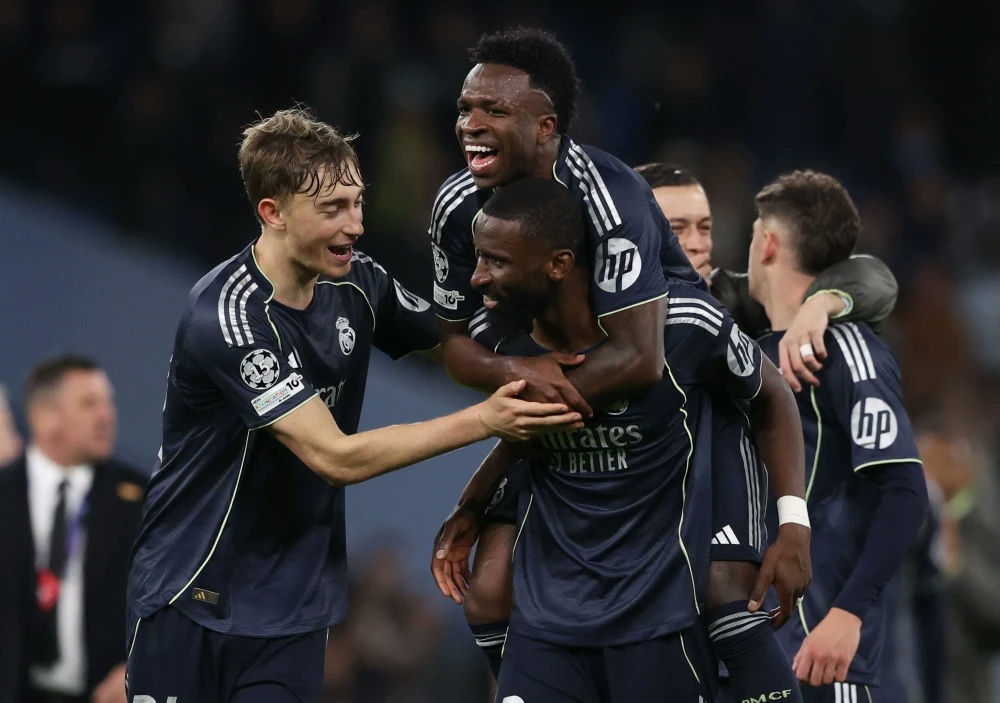
Interestingly, since Real Madrid’s historic three consecutive titles between 2016 and 2018, no club has successfully defended the trophy. This highlights that competition at the very top remains fierce—but only within a limited circle of elite teams.
This raises a broader question: is the Champions League evolving into an unofficial “Super League”? Not in structure, but in outcome. The same powerful clubs continue to dominate the latter stages, sharing financial rewards, global visibility, and influence. Others may participate, but rarely penetrate the inner circle.
Paradoxically, this does not reduce the competition’s appeal. Matches between Europe’s giants often deliver the highest level of football. But it does challenge the idea of equal opportunity—suggesting that modern European football may be drifting toward greater concentration of power.
The Champions League is bigger and richer than ever. Yet at the same time, it may also be becoming more closed—and that could be its most defining transformation in the modern era.
Sources: UEFA,Opta,ESPN
You must be logged in to post a comment.