

Kyoto’s Arashiyama Bamboo Grove, one of Japan’s most iconic tourist destinations, is facing an alarming case of vandalism.
City officials revealed that over 350 bamboo trees along the scenic walking path have been carved with names, initials, and heart symbols by tourists — many of them couples leaving “souvenir marks.”
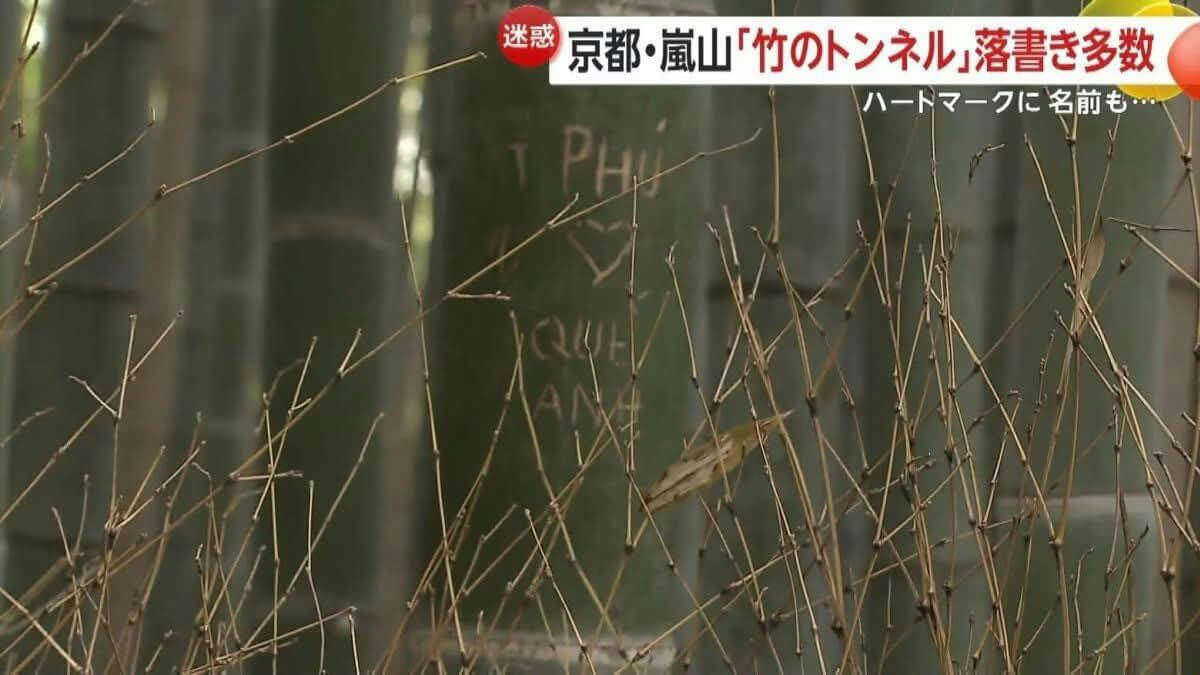
The famous “Bamboo Forest Path” in Arashiyama, known for its towering green stalks and tranquil beauty, now bears scars from visitors who etched messages in English, Korean, and Japanese.
Photos shared by local media show carvings like “June 2025” and “We’ll be back” engraved on the stalks, alongside heart shapes and initials.
Despite warning signs clearly stating “Do not carve into the bamboo,” the damage has continued to spread.


Officials estimate that at least 350 stalks are now affected more than triple the damage reported in 2018, when roughly 100 bamboo trees were vandalized.
According to Masashi Nakai, a plant specialist at the Kyoto Botanical Garden, the damage poses both ecological and safety risks.
“Once the bamboo surface is carved, the cells cannot regenerate,” Nakai explained. “The color will not return, photosynthesis is disrupted, and in severe cases, the stalks can weaken and collapse.”

Workers from Ebisu Rickshaw Company, which helps maintain the grove, have been temporarily covering damaged bamboo with tape but experts say it’s only a short-term fix.
“If the bamboo continues to weaken, it could fall and injure visitors,” Nakai added.
In response, Kyoto city officials are considering cutting down heavily damaged bamboo to prevent further harm and introducing fines of 50,000–100,000 yen for vandalism. Increased patrols and stricter monitoring are also being discussed.

Many Japanese citizens and tourists expressed disappointment and frustration.
“This is a cultural treasure,” one visitor told local media. “It’s heartbreaking to see people disrespect such beauty.”
Another commented, “I can’t understand why anyone would destroy something so peaceful and natural.”
The Arashiyama Bamboo Grove is one of Japan’s most photographed landscapes, celebrated for its whispering soundscape and otherworldly light. It represents tranquility and harmony in Japanese aesthetics, drawing millions of visitors annually.
However, with increasing tourism and social media influence, the grove’s serenity is being replaced by overcrowding and irresponsible behavior.
Experts warn that without stronger conservation measures, this symbol of Kyoto’s natural heritage may gradually fade away both physically and spiritually.
Sources: K14
You must be logged in to post a comment.