
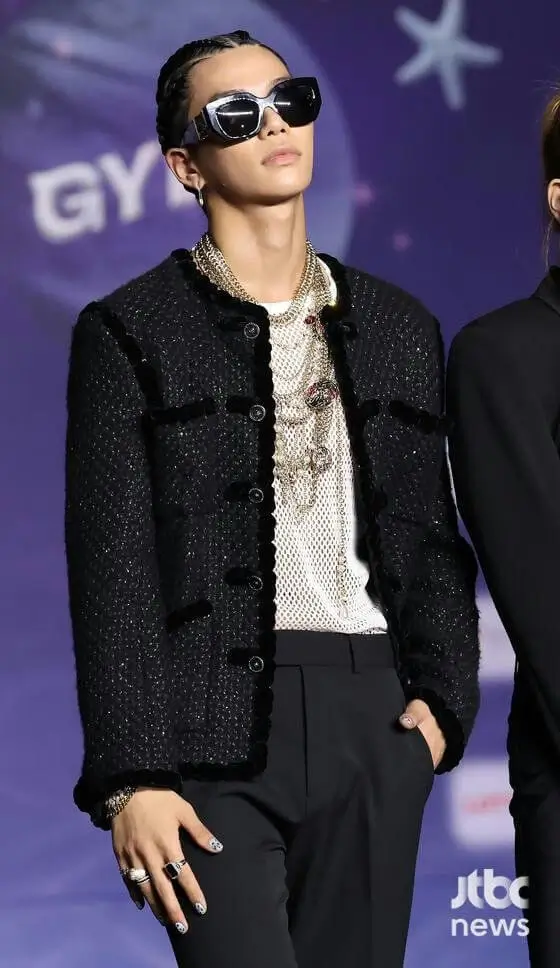
Rookie group AllDay Project has found itself in the middle of controversy after member Tarzzan used profanity on a fan communication platform, sparking heated debate among fans and netizens.
The incident began when a fan left a playful message— “Love for Annie is like armpit hair, no matter how much you cut it, it grows back”. Fellow member Annie responded warmly, calling it poetic. However, Tarzzan replied with “Wow this is f **ing funny”—opting to write the expletive in English.

Fans quickly expressed disappointment, arguing that “idol-fan platforms should remain safe spaces”. Annie herself commented, “Tarzzan, I told you—no swearing”, to which Tarzzan attempted to brush it off with a joke about a friend’s name. Annie followed up with a frustrated remark: “Shouldn’t have logged off early, can’t control this.”
The backlash has been strong. Netizens wrote:
- “Annie saved the situation, but the agency must have intervened behind the scenes.”
- “If he wrote it in Korean, maybe we could excuse it as careless. Writing it in English feels deliberate.”
Adding to the criticism, Tarzzan had previously stirred negative attention after photos surfaced of him raising his middle finger at a club event. Now, with “profanity” appearing as a related search term for his name, concerns about his image are mounting.
AllDay Project debuted only two months ago with “FAMOUS”, a track that quickly rose to the top of music charts, earning them the title “monster rookies.” The group gained attention for its diverse lineup, including Annie, daughter of Shinsegae president Chung Yoo-kyung, and Tarzzan, a former modern dancer turned hip-hop performer.
Industry insiders note that such controversies highlight the importance of agency management. While The Black Label gave the group unusual freedom by allowing personal SNS accounts early on, this incident has led some to question whether that decision backfired.

One entertainment official commented, “Fan communication is crucial, but it comes with risks. Most agencies restrict personal SNS until idols are more experienced. Tarzzan’s case shows why oversight is still necessary.”
As criticism continues, fans fear the group’s rising popularity may be overshadowed by repeated controversies. Some netizens even warned: “If the agency doesn’t step in, bigger problems could arise.”
With K-pop idols wielding growing cultural influence worldwide, many argue that artists must balance authenticity with responsibility—both on and off stage.
Sources: Nate
You must be logged in to post a comment.