
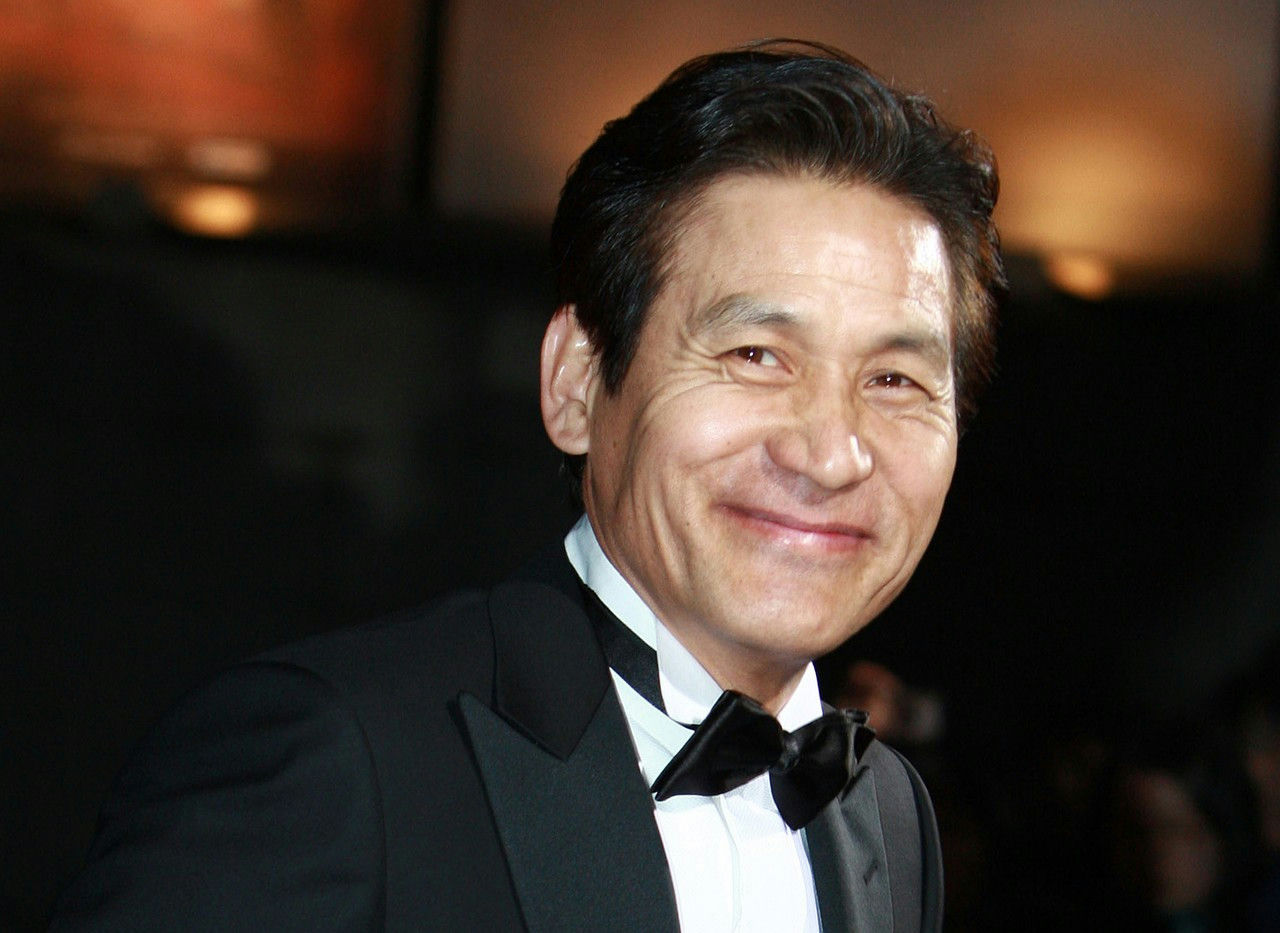
Ahn Sung Ki’s journey into acting was never a deliberate choice it was fate. What began as a childhood opportunity during wartime became the very force that saved him from uncertainty and ultimately turned him into one of the greatest legends in the history of Korean cinema.
The sudden passing of veteran actor Ahn Sung Ki has left colleagues and millions of fans in deep mourning. Over the course of his life, he appeared in more than 140 works, many of which are now considered milestones of Korean film history, earning him the most prestigious acting awards the industry has to offer. Reflecting on his career, Ahn once said, “Acting was neither my parents’ expectation nor my own decision. It came to me as destiny.”
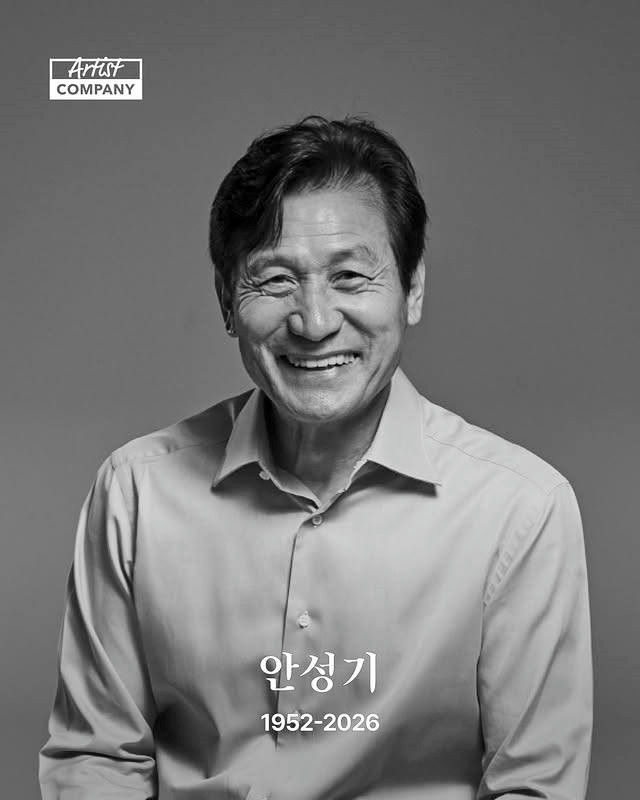
Born in 1952 amid the chaos of war, Ahn Sung Ki entered the film world almost by accident. In 1957, as the country was still recovering, director Kim Ki Young struggled to find a child actor for Twilight Train. In an urgent situation, Ahn was brought in to audition. His sharp intelligence and natural talent stood out immediately, and he delivered a remarkable performance. The film’s success quickly made him a well-known child actor, and during his youth, he appeared in nearly 70 productions. By the age of seven, he had already won an award at the San Francisco International Film Festival.
Despite early fame, Ahn paused his acting career during high school to focus on his studies. In 1970, influenced by the realities of war, he chose to study Vietnamese at Hankuk University of Foreign Studies. However, by the time he graduated, the war had ended, and his field offered few job prospects. As Korea’s economy rapidly changed, Ahn struggled to find work and faced repeated failures, leaving him uncertain about his future.

At 25, with no clear direction in life, he made the pivotal decision to return to acting. The early years were difficult, but his extraordinary ability to embody complex characters soon set him apart. Within just three years of his comeback, Ahn Sung Ki had re-established himself, rising to prominence in the 1980s as one of Korea’s most respected actors.
From that point on, his achievements were nothing short of extraordinary. In 1980, he won Best New Actor at the 19th Grand Bell Awards for A Fine, Windy Day. The following year, his portrayal of a monk in Mandala earned him Best Actor honors at both the Korean Film and Television Awards and the Baeksang Arts Awards. Between 1982 and 1985, he dominated the awards circuit, winning multiple Best Actor trophies across all major Korean film awards, often repeatedly and without serious competition.

Throughout his career, Ahn Sung Ki amassed a total of 15 Best Actor awards from Korea’s three major film ceremonies: eight Baeksang Arts Awards, five Grand Bell Awards, and two Blue Dragon Film Awards. He portrayed an astonishing range of characters beggars, monks, soldiers, detectives, assassins, presidents, gangsters, fathers, husbands across commercial films, independent cinema, action, fantasy, and romance alike.
“I never choose roles based on genre,” Ahn once said. “If the story is sincere and well-made, I will take it.” This philosophy allowed him to continue winning major acting awards across multiple decades, from the 1980s through the 2010s, earning him the rare distinction of remaining relevant and acclaimed across generations. For this reason, he became widely regarded as the living symbol of Korean cinema.

In recognition of his immense contributions, Ahn received the Lifetime Achievement Award (for Social Contributions) at the Baeksang Arts Awards in 2013, with the Korean Film Council praising him as “the one actor in a century who can represent Korean cinema.” His performances were often described as “timeless, with profound humanistic power.” In 2005, he was also awarded the Bogwan Order of Cultural Merit on Korea’s Culture Day.
According to Naver, Ahn Sung Ki passed away at 9 a.m. on January 5. He had been hospitalized after choking while eating on December 30, 2025, which led to cardiac arrest. Despite intensive care treatment, he did not recover.

His funeral will be held on January 9 following official cinematic funeral rites, jointly organized by the Shin Young Kyun Arts and Culture Foundation and the Korea Film Actors Association. Actors Lee Jung Jae and Jung Woo Sung will serve as pallbearers, a final tribute from the industry to a senior figure whose influence shaped generations of Korean filmmaking.
Ahn Sung Ki’s life stands as proof that destiny, when met with sincerity and perseverance, can create a legacy that transcends time.
Sources: TP
You must be logged in to post a comment.