

Thai singer Jung has issued an apology after social media users pointed out striking similarities between his promotional images and TXT member Yeonjun’s solo campaign, prompting widespread discussion among K-pop fans and Korean netizens.
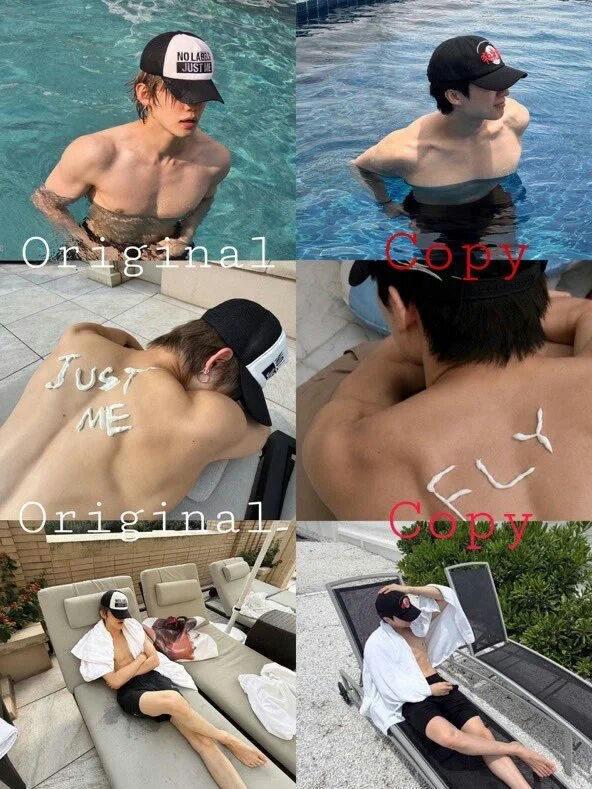
The comparison quickly gained traction online, with many users arguing that several of Jung’s promotional photos closely resembled Yeonjun’s official concept images.
The controversy began after side-by-side comparisons of the two artists’ promotional images circulated on Korean online communities. Many netizens claimed that the composition, poses, styling, and overall visual concepts appeared remarkably similar to Yeonjun’s solo promotional materials. The images spread rapidly across social media, fueling accusations that Jung’s campaign lacked originality.

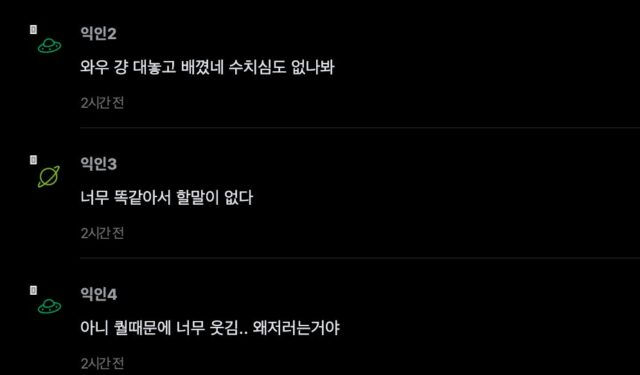
The photos became a hot topic on Korean community forums, where many users criticized the similarities between the two campaigns. Some of the reactions included:
- It’s so bad that it’s actually funny.
- I heard he apologized and took the photos down.
- I wish it were just a parody… The quality difference is obvious.
- He copied it almost exactly.
- I have nothing to say because they look so similar.
- The quality difference makes it even funnier.
While many criticized the promotional campaign, others simply expressed surprise at how closely the concepts appeared to match.
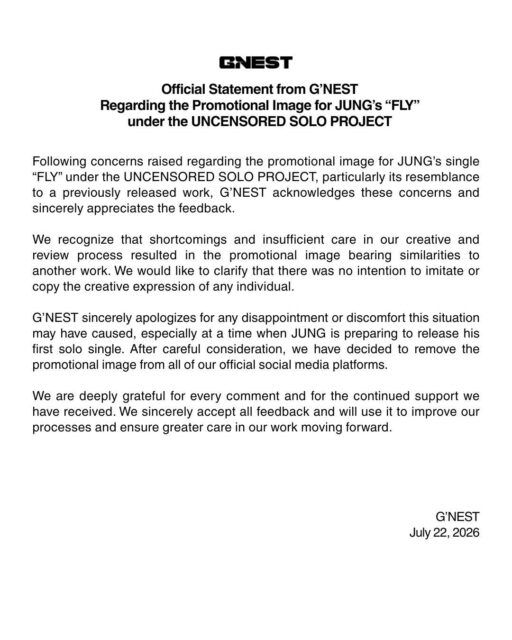
Following the growing controversy, Jung’s agency released an official statement addressing the matter. Jung also personally posted a message on his social media account, taking full responsibility for the situation and apologizing for the controversy. Although the full statement was not included in the report, Korean netizens noted that the singer acknowledged the issue after the comparisons gained widespread attention.
The incident has reignited discussions about originality and creative inspiration in the music industry, particularly when promotional concepts closely resemble those of other artists.
While some fans viewed the similarities as too significant to ignore, others argued that visual concepts can sometimes overlap unintentionally. As of now, neither HYBE nor TXT has publicly commented on the controversy.
Sources: Koreaboo
You must be logged in to post a comment.