

Japan’s national team has once again become a major talking point at the World Cup after another controversial incident involving goal-line technology.
Four years ago in Qatar, Japan found itself at the center of global football debate when it scored a decisive goal against Spain. Many viewers believed the ball had already crossed the goal line before being cut back into play.
However, camera footage and officiating technology confirmed that a tiny portion of the ball was still touching the vertical plane of the line. The goal stood and played a crucial role in Japan’s victory over Spain.
At the 2026 FIFA World Cup, the Asian side has once again been involved in a remarkably similar situation. During their match against Tunisia on June 21, a shot in the 12th minute appeared to many fans inside the stadium and watching on television to have completely crossed the line.
Despite those initial impressions, goal-line technology determined that the ball had not fully crossed the line, and the goal was disallowed.
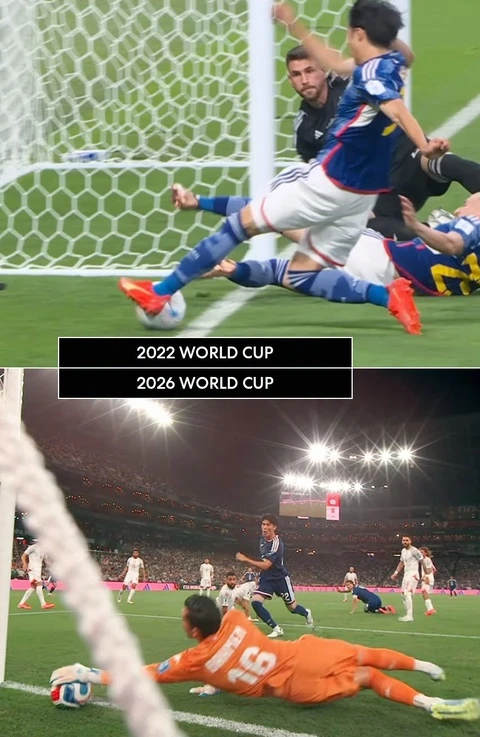
While the technology worked in Japan’s favor at the 2022 World Cup, this time it denied them a goal. The common thread in both incidents is the increasingly important role of technology in helping referees make accurate decisions down to the smallest margins.
The continued development of high-speed camera systems, semi-automated offside technology, and advanced goal-line detection has significantly reduced the kinds of disputes that have long been part of football.
Images released by FIFA showed that even when the difference is measured in mere millimeters, final decisions are based on precise data and visual evidence rather than human interpretation alone.
Despite the controversial moment, Japan comfortably defeated Tunisia 4-0 and now shares the top spot in Group F with the Netherlands after two matches.
Sources: Znews
You must be logged in to post a comment.