

Released on June 19, Netflix’s Husbands in Action (directed by Park Gyu Tae) is a comedy-action film about an ex-husband and a current husband who reluctantly join forces to rescue a wife kidnapped by a criminal organization. The film marks the latest work from director Park Gyu Tae, known for 6/45, and stars Jin Seon Kyu, Gong Myung, Kim Ji Seok, Yoon Kyung Ho, Lee Da Hee, Kang Han Na, and Jeon So Min.
At first glance, the concept itself is genuinely appealing. The idea of an ex-husband, Choong Sik (Jin Seon Kyu), and a current husband, Min Seok (Gong Myung), being forced to cooperate has plenty of comedic potential. The problem is that the film never fully explores that potential and instead seems determined to undermine it.
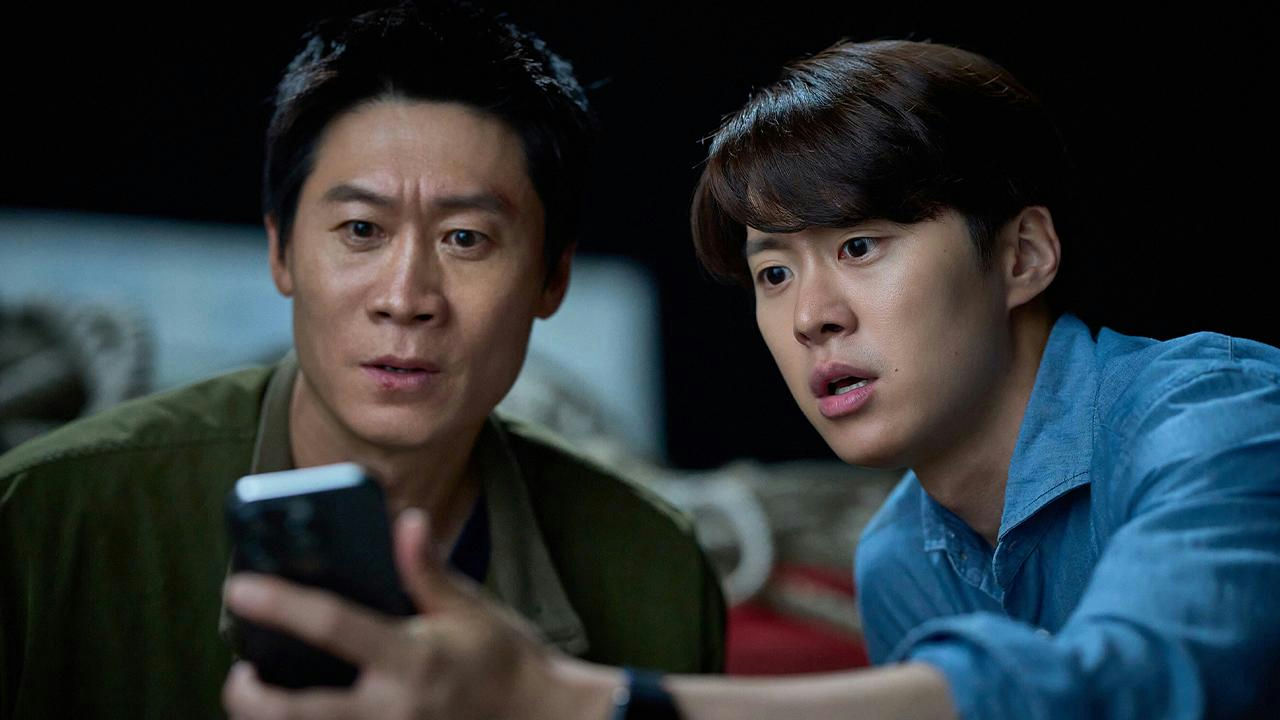
The biggest weakness lies in the character construction and overall narrative dynamics. The characters are one-dimensional, and the relationships feel overly simplistic. The two husbands, who should drive the story forward, are trapped in a tired setup where they dislike each other for no particularly convincing reason. Meanwhile, the conflict involving a new drug cartel and the Yonggang gang feels overly familiar. The film relies on a dated contrast between a modern criminal organization embracing new methods and an old-school gang clinging to outdated tactics. As a result, the characters lose individuality and exist merely as plot devices.
As a comedy, the film’s success rate is even more disappointing. Outdated wordplay and exaggerated performances desperately attempt to generate laughs but fall far short of modern audience expectations. One particularly frustrating running gag revolves around people confusing gang leader Yonggang’s name with “Yeonggwang.” The joke is barely amusing the first time and becomes exhausting through endless repetition.
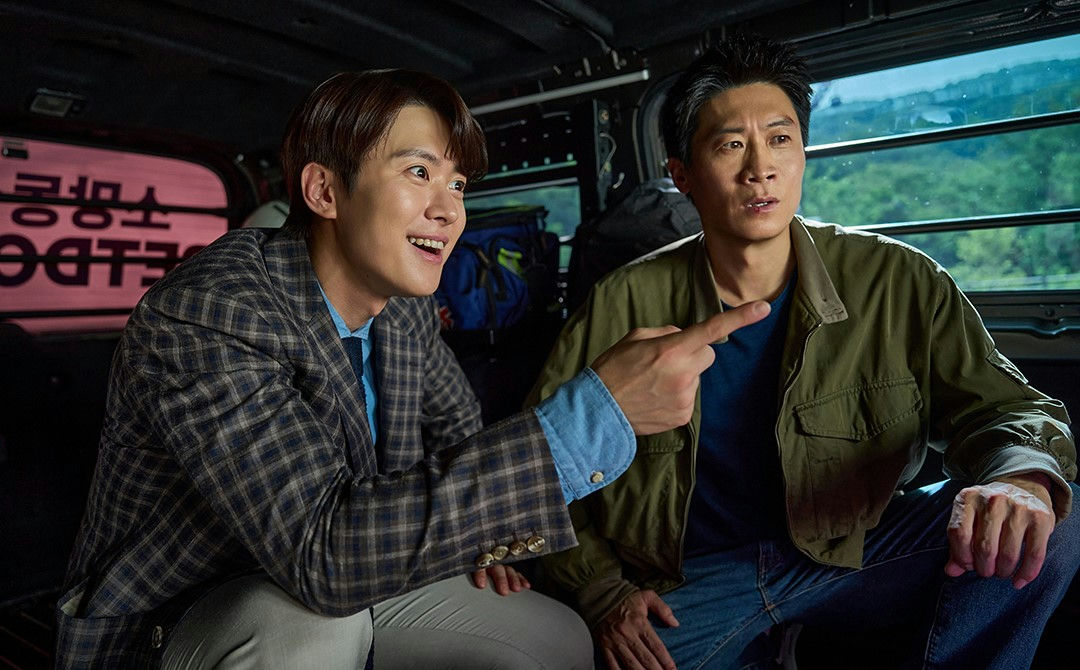
The character Yonggang, played by Yoon Kyung Ho, perfectly illustrates the film’s comedic shortcomings. His overly dramatic, old-fashioned gangster persona might have worked in comedy films from decades ago, but here it feels awkward and irritating rather than funny. The film repeatedly begs for laughter through absurd situations and exaggerated dialogue, yet it rarely earns even a chuckle.
By the time the story reaches its warehouse sequence in the final act, that irritation peaks. The slapstick scene in which Choong Sik and Min Seok desperately struggle to remove plastic bags from each other’s faces becomes more uncomfortable than entertaining. Watching the actors try their best to salvage an inherently awkward sequence is almost painful. One cannot help but sympathize with the performers who are clearly working hard under difficult material.
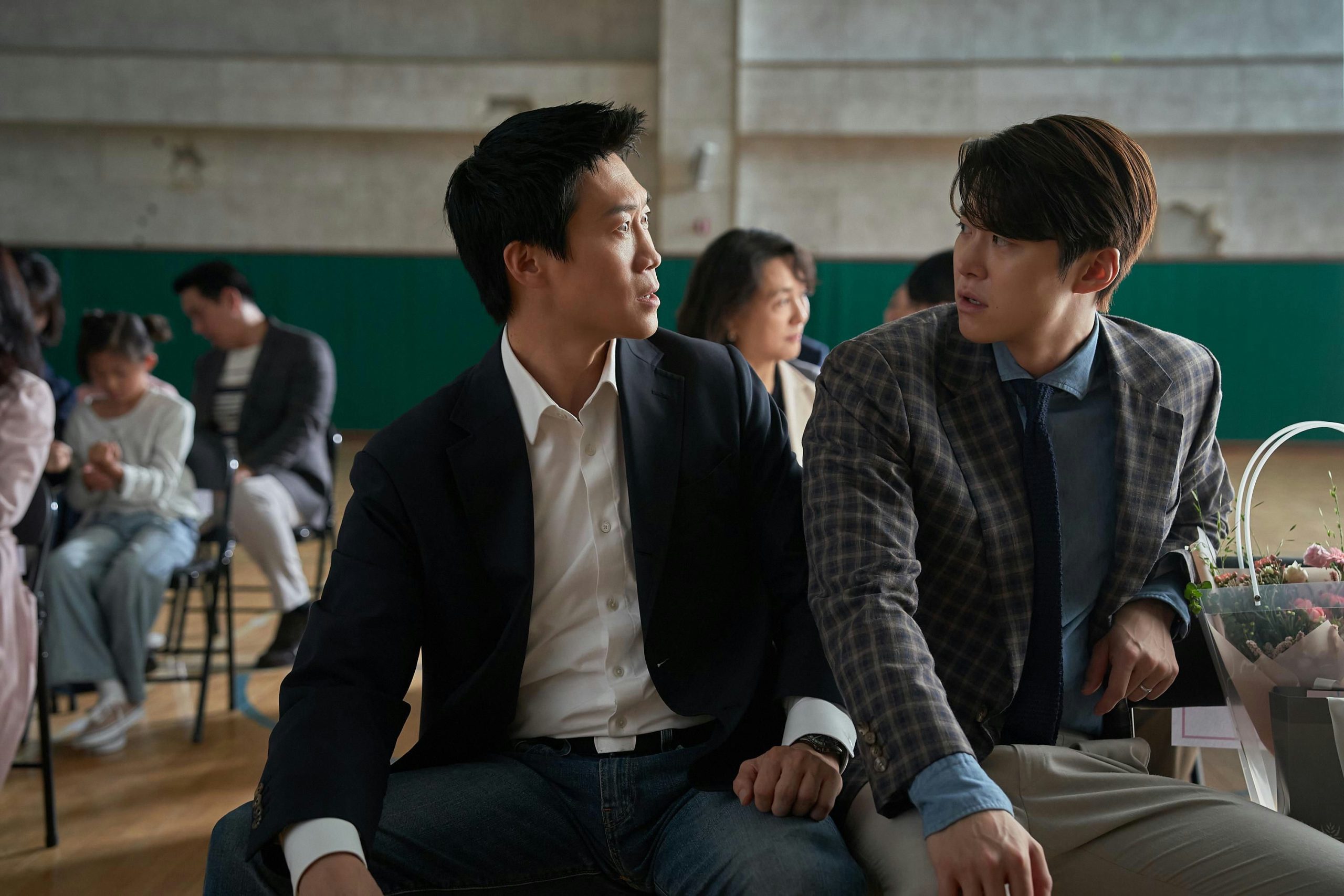
The narrative structure itself is equally flimsy. A supposedly valuable AI program serves as the story’s central driving force, yet the film never adequately explains why it is so important. The motivations of drug cartel leader Do Jun (Kim Ji Seok) and his wife Hye Ran (Lee Da Hee), who go to extreme lengths to protect it, remain vague and unconvincing. Without a solid foundation, the film’s central chase loses much of its tension and emotional investment.
The ending also remains firmly within predictable territory. The conclusion, in which unrelated individuals overcome extreme circumstances, resolve past conflicts, and emerge as a true family, feels far too safe and conventional. It is remarkable that a film with such fresh ingredients manages to produce such an outdated final product in nearly every aspect, from storytelling to execution.

Ultimately, even the relatively modest 107-minute runtime feels exhausting. Not once did the film genuinely make me laugh. There were several moments when I wanted to press pause and stop watching altogether, but I stayed because the cast’s efforts deserved respect. At the same time, I have little desire to hit play again.
The most disappointing aspect is that Husbands in Action had all the necessary ingredients for success: an entertaining premise and a talented ensemble cast. Producing such a thin and uninspired result from those strengths is a significant misstep. The issue extends beyond the film itself. It also raises serious questions about Netflix’s content selection process. As the platform continues expanding its library, one cannot help but wonder whether quantity is beginning to take priority over quality.
Sources: Naver
You must be logged in to post a comment.