

On March 18, reports confirmed through the National Police Agency that there is currently no legal framework in Korea requiring private event organizers to pay for police personnel or equipment deployed at major events.
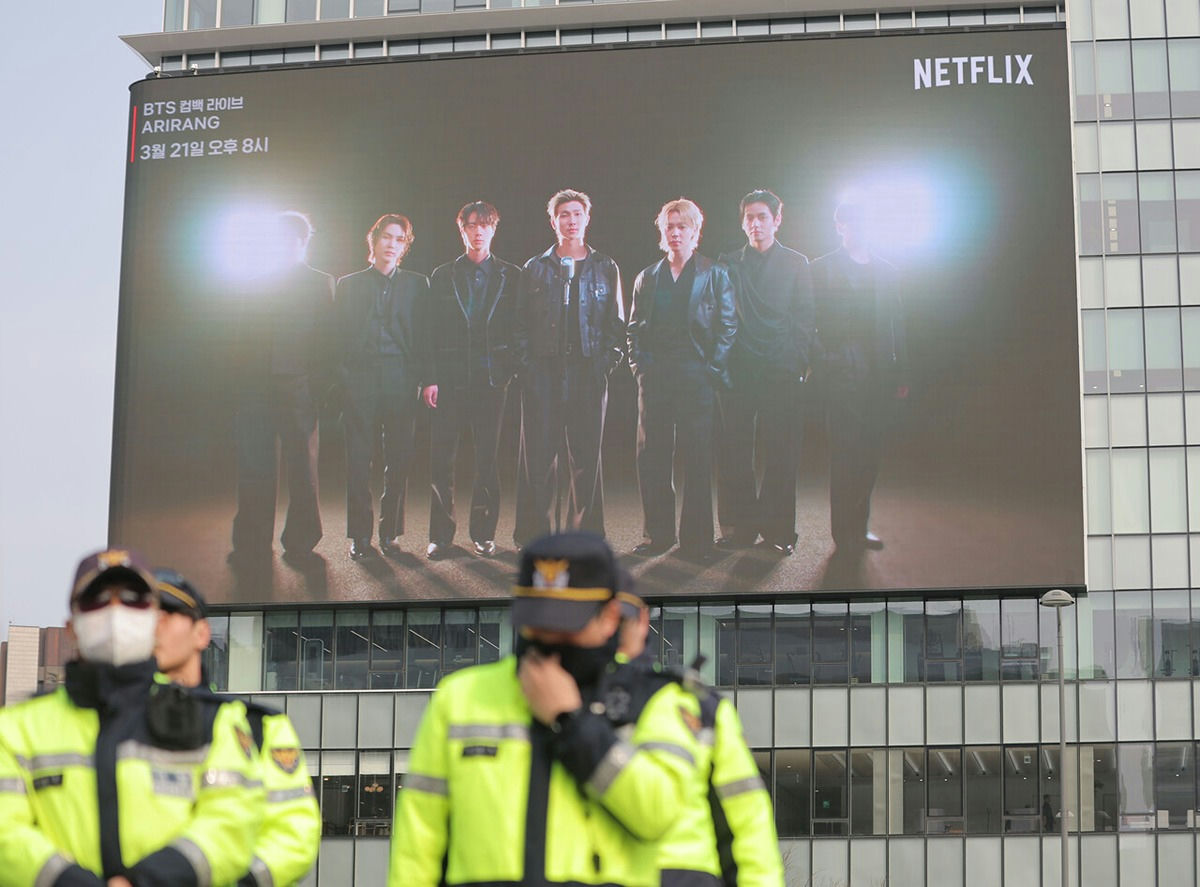
A police official explained, “Safety is fundamentally a public role of the state. Police forces are being deployed to protect citizens from dangers that may arise from large crowds.” This policy has now become the center of debate, especially when applied to large entertainment companies generating significant revenue.
“Free” Concerts, But Massive Profits?
While some of these performances are marketed as free events, critics argue that companies like HYBE still generate substantial indirect profits. These include global streaming deals with platforms such as Netflix, merchandise sales, and international promotional campaigns.

As a result, many are questioning whether it is fair for public resources, funded by taxpayers, to support events tied to corporate profit models. An office worker interviewed expressed frustration, stating, “It’s difficult to accept that taxpayers’ money is being heavily invested into events that are presented as free, but ultimately lead to indirect corporate profits.”
Netizens React Strongly
Online communities, particularly on platforms like theqoo, have seen a surge of criticism directed at HYBE. Many users argue that large corporations should bear the cost of ensuring safety at their own events.

Some of the reactions include:
- “Korea has become a doormat for Netflix and HYBE’s money-making business.”
- “I mean, is BTS going to give me their money…”
- “The organizer should pay for it… what is wrong with them?”
- “Stop using taxpayers’ money and have HYBE pay for it all.”
- “HYBE should be paying!”
The controversy highlights growing public concern over the balance between public safety responsibilities and corporate accountability.
The issue has sparked broader discussions about whether Korea should introduce a system requiring private organizers to contribute to security costs for large-scale events. As K-pop continues to expand globally, with companies like HYBE at the forefront, the debate over who should fund public safety at massive concerts is likely to intensify.
Sources: Theqoo
You must be logged in to post a comment.